by Megan | May 11, 2026 | AAC, aided language input, aided language stimulation, blog, book recommendations, books, continuing education, core vocabulary, emergent literacy, fringe vocabulary, modeling, Sensory, Sensory extension activities, tips, training
We Finished the Book… Now What?
Stop!
Don’t put the book away yet!
You have finished your shared reading activity, but that is just the beginning! The connection that is created during shared reading can be used as a springboard for follow-up activities that turn a single story into a week-long learning experience.
Follow-up activities help deepen the connections between the reader and the story while promoting generalization of core vocabulary and bringing other themes, concepts, etc., to life. In this post, we will discuss five simple, no-prep activities that focus on engagement over “work” and show you how the learning doesn’t “stop” once the book is finished.
Activity 1: Predictable Chart Writing
Predictable chart writing is a collaborative writing activity where each learner completes the same sentence frame based on a concept or idea from the book that was read during shared reading (e.g., “On Monday, I ate _____”). The repetitiveness of this structure allows for consistent and repeated modeling of core and fringe vocabulary, lets the learner see their spoken words turned into text, and provides practice for emergent writing.
The full concept of predictable chart writing includes additional steps and teaching strategies focused on building print knowledge and sentence-building skills, etc., and you can dive even deeper into it here: https://project-core.com/professional-development-modules/.
While there are multiple steps to completing the full predictable chart writing process, you can start simple, writing your sentence frame on a whiteboard, poster paper, construction paper, or even a digital tablet. The focus should be on deepening the connection between the reader and the story and building their literacy skills through emergent writing and expression.
Activity 2: The “Story Retell” Sensory Bin
In the post “How Sensory Supports Can Make Shared Reading More Accessible and Engaging,” we talked about creating “literacy kits” or “story bins” to keep learners engaged during shared reading and build connections between the learner and the story. Providing learners access to these story bins after shared reading, during a center or open-ended play time, is a great way to encourage them to retell the story in their own way and deepen their connections to the story.
While observing their open-ended play and interactions with these literacy kits, we have additional opportunities to model core and fringe vocabulary that matches what they are doing in play, as well as reference back to the story and what they might be retelling through their play. If you need some reminders on what to model during these activities, this post might be helpful.
Activity 3: Text-to-Self Connections (The Photo Hunt)
Building connections between the text within a story and the lives of readers is a very powerful way to help readers engage with stories and see that the things they read about are all around them. One fun way to do this is to go on a photo scavenger hunt, looking for things that they read about in the story.
For example, if they read about a “big” dog, go on a scavenger hunt for other “big” things, and snap a picture of one when you find it. This brings what could be abstract concepts back to concrete thinking and shows how these concepts appear within the readers’ real lives. A bonus activity could be compiling all the pictures into a book to add to their bookshelves to revisit at a later date.
Activity 4: Digital “Book Trailers” or Recaps
One of my favorite things about being a reader is telling other people about my favorite books and why they should read them. Why not give that same experience to your learners?
There are many ways that you can do this using apps such as Pictello, Canva, Google Slides, or just your camera roll, taking pictures of the learners’ favorite parts of the book and pairing those pictures with the learner sharing about that part of the book in their own words.
This activity builds narrative skills and gives the learners a “product” they can show off to others through their AAC device. (Bonus points if you embed the video into a button on their device for them to show others!)
Activity 5: Character “Check-ins”
Social-emotional learning and teaching descriptive vocabulary lend themselves to acting and experiencing. Often, characters are described by what they look like, what they are doing, or what they are feeling. While illustrations can sometimes show these descriptions and emotions clearly, other times they are more difficult to determine from illustrations alone.
This is where the character “check-ins” can be really helpful, not to mention fun! Learners can act out the emotions that the character is feeling. If the character is “mad”, everyone can make their “mad” face and find “mad” on their AAC system. If they are being “silly”, everyone can show what they think “silly” looks like and find that word on their AAC system as well.
Not only does acting these things out help deepen the connection between the characters and the readers, but it also teaches them how to locate and use these important words in calm and engaging environments so that they will learn to use them in environments when they are feeling “mad” or “silly” themselves.
Which one will you try first?
After reading through these different ideas, I hope that you see how much more learning and fun can be done once you reach the last page of the story. Remember that shared reading is just the beginning of the lesson, and the connection that you create during that routine can be deepened and continued long after you close the book.
If you are looking for some “ready-to-go” literacy kits with interactive extension activities prepped and ready to go without any extra work on your end, check out my sensory-based literacy kits available as full kits with the book included, kits with just the materials, and digital downloads.
Before you go, share in the comments which activity you are excited to try first with your learner(s) as a way to extend and deepen your connection to the story!
by Megan | May 2, 2026 | AAC, aided language input, aided language stimulation, blog, books, continuing education, core vocabulary, emergent literacy, fringe vocabulary, modeling, Sensory, tips, training
“Are We Doing This Wrong?”
We’ve all been there. You have planned and prepped an engaging shared reading lesson and activity, and as soon as you start, you feel like you have failed. The child won’t look at the book, they walk away, they don’t imitate your models on their device, nothing.
I took the time to plan this lesson, and they aren’t even interested? Maybe I should stop trying shared reading.
WAIT! Before you let that false thought take over, think about this. Who said that kids have to sit still during reading? Why is that something we look for to prove attention? Do you always sit still and “look” like you are paying attention when you are listening? My guess is, especially if you are like me, the answer is “no”.
There are unwritten and unspoken (and unproven) “rules” out there telling us what shared reading “should” look like or what a successful lesson “looks” like, but I’m here to bust these myths, shoulds, and rules. I’m going to bust five of the most common myths about shared reading and help us all focus on what matters most: connection.
The 5 Myths
- Myth #1: The “Sitting Still” Requirement
- Truth: Movement is sensory regulation and often helps neurodivergent learners process information.
- Remember: If they are in the room, they are participating. Focus on the connection instead of the movement. We took a deep dive into why movement is so important in our Sensory Supports guide.
- Myth #2: The “Adapted Book” Necessity
- Truth: AAC devices provide the symbols; books provide the stories.
- Remember: Don’t limit their library to books with icons. All books are fair game for shared reading.
- Myth #3: The “Reading as a Test” Habit
- Truth: Questions create pressure; comments create conversation.
- Remember: Switch from “What’s that?” to “I love that part!” When we focus on creating connection, we decrease pressure and increase engagement. If you aren’t sure what to say instead of a question, check out my post on What to Model During Shared Reading
- Myth #4: The “Prerequisite Skills” Barrier
- Truth: Literacy is a right, not a reward.
- Remember: You don’t get “ready” for reading by waiting; you get ready by reading. Engaging in shared reading builds emergent literacy skills, waiting does not.
- Myth #5: The “Button Press” Metric of Success
- Truth: Multi-modal communication (eyes, smiles, gestures) counts.
- Remember: Success is joint attention, not just a data point on a device. Communication comes in many forms; don’t pigeonhole it into needing to look one specific way.
The Mindset Shift: Engagement > Compliance
Do these myths sound familiar? Do they sound like something you have heard before?
You might be thinking, if these are all myths and there are better ways of doing shared reading, then why are these myths still being shared? That’s a really good question.
Myths are often rooted in “old-school” trains of thought and compliance-based therapy techniques. Things we used to think worked well. However, as we have continued to grow as a field and hopefully as professionals, listening to AAC users and learning from their experiences, we have learned to do better.
When we look at the world through a neurodiversity-affirming lens, our mindset quickly changes, and we see the importance of following the learner’s lead instead of the “rules” of society or a textbook.
Next steps
If these myths have been holding you back, you aren’t alone. After reading this, I encourage you to continue learning and asking questions if something doesn’t feel or seem “right”. Most of all, use these myths as motivation to start doing shared reading in a new way, a way that works and is fun for everyone! If you’re interested, I wrote a guide to help you navigate the ‘real life’ side of shared reading that you can check out here.
Before you go: Which of these myths was the hardest for you to unlearn? Let’s talk in the comments.
by Megan | Apr 27, 2026 | AAC, aided language input, aided language stimulation, blog, book recommendations, books, continuing education, core vocabulary, emergent literacy, fringe vocabulary, modeling, tips, training, Uncategorized
Shared Reading at Home: Simple Ways Parents Can Support AAC Without Pressure
Parenting can be exhausting. There is so much to do, and it often feels like time is running faster and faster each day. As a parent of an AAC user, this feeling may be amplified as you have even more on your plate. Between therapy, school, and daily life, “Shared Reading” can feel like just another chore on a long to-do list. Instead of adding more to your already overflowing plate, I want to reassure you that shared reading can easily fit into your daily routines, just as they are. Your home doesn’t have to look like a classroom; shared reading can be anywhere, from the backyard to the bathroom. Remember, the goal of shared reading is connection, not perfection. It doesn’t have to be a 20-minute session; it can be 2 minutes.
Reading in the “In-Between” Moments
Shared reading doesn’t only happen at a desk or a dedicated “circle time.” When we remember that the goal of shared reading is the connection between us and the learner, instead of the location or what it “looks” like, we can see that there are many different opportunities to engage in shared reading throughout the day and in various routines. Some actionable routine ideas that can be implemented into your already established routines include:
- Bath Time: Using waterproof books and modeling “wash,” “bubbles,” or “all clean.”
- Snack Time: Reading a cereal box or a simple book while eating.
- Bedtime: The traditional time, but keeping it low-pressure—focusing on cuddles and one or two core words like “sleep” or “turn.”
Don’t forget all the reading that can happen naturally while you are outside the home as well. Letters and words are everywhere, you can read:
- Labels at the grocery store
- Signs on a walk
- Logos of our favorite restaurants or places to go
Literacy is all around us, all the time!
Make Literacy Available, Not Mandatory
Have you ever been somewhere and find yourself picking up an item (or book), just because it is there and available? When we make books a part of the environment, something that is there “just because”, it helps make reading feel less forced and more natural. Children are more apt to initiate interactions with books if there is not a “demand” or “request” to use them. Leave some books out in various places, the car, by the toy bin, in a basket in the living room, at the kitchen table, even in the bathroom. I think you’ll be surprised how often you see your child gravitating towards the books, just because they can.
While we are talking about low demands surrounding reading, don’t feel pressure to read the whole book. It is perfectly ok for a child to read only one or two pages before moving onto the next, flips through the book quickly seemingly not reading, and/or move around the room while listening to you read. All of this counts as reading and should be celebrated!
Modeling Without Expectation
Now that we have access to books throughout the day and know that we are focusing on connection and embedding literacy into daily routines. Let’s talk about how to bring the AAC into this literacy party! I promise this one is easy and low demand too!
As a parent, your job is to show your child how they could use their AAC during shared reading, not to test. If you are not sure what to model, choose one word on the AAC device that matches something from the text or the illustrations on a page. Rest assured any word you pick is wonderful – there is no right or wrong word or words to model. After you model that word, wait for a moment, or don’t and keep reading. If your child doesn’t respond, that’s okay! They are engaged and connecting with you. They may still be “soaking it all in” and listening and not ready to respond yet. Don’t worry, the more they engage in shared reading, the more they will start to use their AAC too. Your model is the gift; their response is the bonus.
The Home Routine Planner
Need more ideas? Here are some specific examples of routines you can add a book to this week and core words that you could model during that routine:
Breakfast (or any meal time)
- Read: The Very Hungry Caterpillar
- Model: “eat”, “hungry”, “more”
Bathroom
- Model: “go”, “help” “all done” or “finished”, “on”, “off”
Play time
- Read: books about topics they enjoy – literally any book will work here
- Model: “turn”, “more”, “like”, “don’t like”, “again”, “look”
Car rides
- Read: Go Dog Go, Little Blue Truck series, Construction Site series
- Model: “go”, “fast”, “slow”, “turn”, “like”, “stop”
Bath time
- Read: Five Little Monkeys Jump in the Bath, waterproof books work great here too!
- Model: “in”, “on”, “off”, “like”, “more”, “out”
Bed time
- Read: books about topics the enjoy – literally any book will work her
- Model: “turn”, “more”, “like”, “don’t like”, “again”, “look”
Remember, you don’t have to do all of this at once, you can take it one routine at at time. And if modleing on the AAC in the routines seems overwhelming, know that you can stick to the “one word” rule: pick one core word for any routine and stick with it for the week. By the end of the week I can guarantee you that you will feel more comfortable modeling that word while reading and incorporating the AAC into shared reading overall!
If you’d like to learn more about shared reading and AAC users, my e-book, Shared Reading with AAC users, gives tangible examples and ideas on how can get started with shared reading with your AAC user.
Before you go, share in the comments: “What is the most ‘unusual’ place your child has ever asked you to read a book?”
by Megan | Apr 20, 2026 | AAC, aided language input, aided language stimulation, blog, book recommendations, books, continuing education, core vocabulary, emergent literacy, fringe vocabulary, modeling, Sensory, Sensory extension activities, tips, training
When “Just Reading” Isn’t Enough
You picked the book, prepped the materials and set up the environment and feel ready to start shared reading with your AAC user. But, when you get started, the learner keeps moving around, wants to stay on the same page, flip through pages quickly and closes the book again and again.
Before you take this as a sign that the learner is “checked out”, not interested or that you need to revamp your entire lesson, take a moment to reflect and think about why they are doing those things. I can guarantee you that they are not doing those things to make the shared reading experience more difficult. They are showing you what they need in order to keep their body calm and regulated and allow themselves to focus on the AAC device and/or story.
When we provide sensory supports for the learner during the shared reading experience, we not only help learners stay calm and regulated, we provide anchors that keep them present in the experience.
Proprioceptive & Vestibular Input (Moving while Reading)
For some learners, movement is a prerequisite for attention—they literally need to move their bodies to process what they hear. If your learner struggles to sit still, try these shifts:
- Adaptive Seating: Offer a bean bag, wiggle cushion, stool, or even a swing during storytime.
- Action Modeling: Incorporate movement into the story itself (e.g., “The bear is jumping! Let’s jump!”).
- Change of Scenery: Move to different parts of the room for different chapters or pages.
Remember: Just because a learner is moving doesn’t mean they aren’t listening. For many, the movement is exactly what allows them to stay tuned in.
Tactile Anchors (The “Touch-and-Feel” Beyond the Book)
Other learners may need or prefer additional tactile stimulation to get and keep them engaged during shared reading. Giving hands something to do often gives the brain more space to focus on language. Here are some ideas to increased tactile input during shared reading:
- Story Bins: Create “literacy kits” with items representing the story, like soft fur for a bear or a small cup for tea time.
- Themed Fidgets: Provide fidgets that match the book’s theme to keep the learner’s tactile system engaged with the topic.
Sensory Minimalism: Reducing the Noise
While we are thinking about the different things we might need to add to help make shared reading more sensory friendly, there are also some things we might need to decrease. While some learners might seek out visual and auditory input, too much of this type of input can also be overwhelming for some. Knowing our learners and their sensory preferences, allows us to reduce the “sensory noise” so that the AAC voice and the book can be the stars. Here are some actionable ideas you can use to help decrease the auditory and visual distractions:
- Lighting: Use a reading lamp instead of harsh overhead lights.
- Auditory: Minimizing background noise
- Visual: Using a dedicated “reading rug” to define the space.
The “Low-Tech” Sensory Kit
Before you start thinking that you need to go out and buy a bunch of new things to revamp your room, area, etc. take a look around your home or classroom, you probably have a lot of items you can use to support sensory needs during shared reading.
-
- Comfort: Pillows, blankets, cushions
- Movement: rocking chairs, wiggle seats, trampoline, swing
- Tactile: Various textures and/or items that the learner can feel and interact with while reading – bonus if they are related to items within the story.
- Tactile: Preferred fidget items
- Movement: Different areas that you can move to throughout the reading if needed or a specific place that is your “reading area’.
- Lighting: dimmable lights or light from lamps instead of overhead lights
- Auditory: quiet space, headphones
The possibilities are endless!
Once you get started seeing things from a “sensory lens” you will come up with many more ideas that are personalized to your learner than I can list here. You are the expert on your learner. These tools simply help their environment match their needs.
If you are interested in learning even more about sensory supports and how they can make shared reading accessible and engaging and want to see some examples of sensory based literacy kits you can check them out in my store.
Before you go
Share with us in the comments: “What is your learner’s favorite sensory support during storytime?”
by Megan | Apr 13, 2026 | AAC, aided language input, aided language stimulation, blog, book recommendations, books, continuing education, core vocabulary, emergent literacy, fringe vocabulary, modeling, Sensory, tips, training, Uncategorized
The “Perfect Book” Trap
If you’ve ever found yourself looking at a bookshelf filled to the brim, feeling overwhelmed and wondering “Is this one right for shared reading with my AAC user?”, you are not alone.
Since “AAC friendly” isn’t a category that books are organized into, at the library or bookstore, we need to shift our way of thinking when browsing. Choosing a book isn’t about it being “AAC friendly”, it’s about it being engaging, interesting and fun for both you and the AAC user.
My goal for this post is to simplify the process of choosing a book to read with your AAC user and reassure you that there is no “perfect book”. Once you realize that, you can spend less time searching for books and more time reading them. Here are the three pillars I use to find books that naturally invite communication.
1. High Predictability
One of the first things I look for is how much predictability is built into the story. Predictability reduces the “work” a learner has to do to follow the story, which leaves more room in their brain to think about what they want to communicate.
This predictability usually looks like repetitive lines or a rhyme and rhythm that creates a natural pause for the AAC user to chime in. Think of classics like:
- “But the bear snores on…”
- “But he was still hungry.”
- “There was an old lady…”
- “Chicka Chicka Boom Boom”
Pro Tip: If you find a book you love that isn’t predictable, you can make it predictable. Simply choose a repeated comment, request, protest or sound effect to say on every single page. Suddenly, any book becomes accessible!
2. Core Word Capacity (Moving Beyond Nouns)
A common mistake is picking books just for labeling (like “dog,” “cat,” or “truck”). While nouns are great, Core Words (verbs and descriptors) are the words that give a learner power across their whole day.
I look for “Action-Heavy” or “Emotion-Heavy” books. For example:
- Go/Stop: Great for any book about transportation or animals moving.
- In/On/Under: Perfect for lift-the-flap books or “hide and seek” stories.
- Like/Don’t Like: Excellent for stories about picky eaters or characters with strong opinions.
Modeling “go” or “scared” gives your learner a word they can use in a hundred other situations outside of this specific book.
3. Visual Clarity & Sensory Considerations
Finally, consider the visual and sensory “load” of the book. This is highly personalized. Some readers may prefer real photographs, while others find very busy, detailed illustrations distracting.
The Sensory Anchor: If a book has different textures or interactive elements, it is almost always a “sure thing” for me. These elements act as an “
My “Three-Question” Quick Filter
Next time you are at the library or bookstore, use these three questions to find your next great read:
- Does it have a repeating phrase (or can I create one)?
- Can I model at least 3 core words easily and repeatedly?
- Is the topic actually interesting to the learner? (This is the most important rule!)
DOWNLOAD THE QUICK-FILTER CHEAT SHEET HERE
Start browsing confidently!
You are ready to start checking out books with confidence, knowing that engagement matters far more than “perfection.”
If you want to dive even deeper into the “how-to” of shared reading, my e-book, Shared Reading with AAC Users: A Neurodiversity-Affirming Guide, walks you through everything from setup to tracking progress.
One more thing before you go… share in the comments: What is the one book your learner requests over and over?
by Megan | Dec 16, 2023 | AAC, aided language input, aided language stimulation, blog, continuing education, core vocabulary, fringe vocabulary, modeling, prompt hierarchy
It’s the busiest time of the year! Wrapping up the year, buying gifts for all you love, finding time to celebrate with all your friends and family, you may feel like you are running around endlessly, the last thing you should have to worry about is making sure you have all of your continuing education units (CEUs) done to renew your licenses and certifications. 🤪
Before you close this window and start running around again, take the time to read to the end of this post, ‘cause I’ve got a way for you to rack up a bunch of CEUs for FREE! **Bonus if you want to learn more about AAC – these CEUs are AAC focused**
Ready to get started? Here we go!

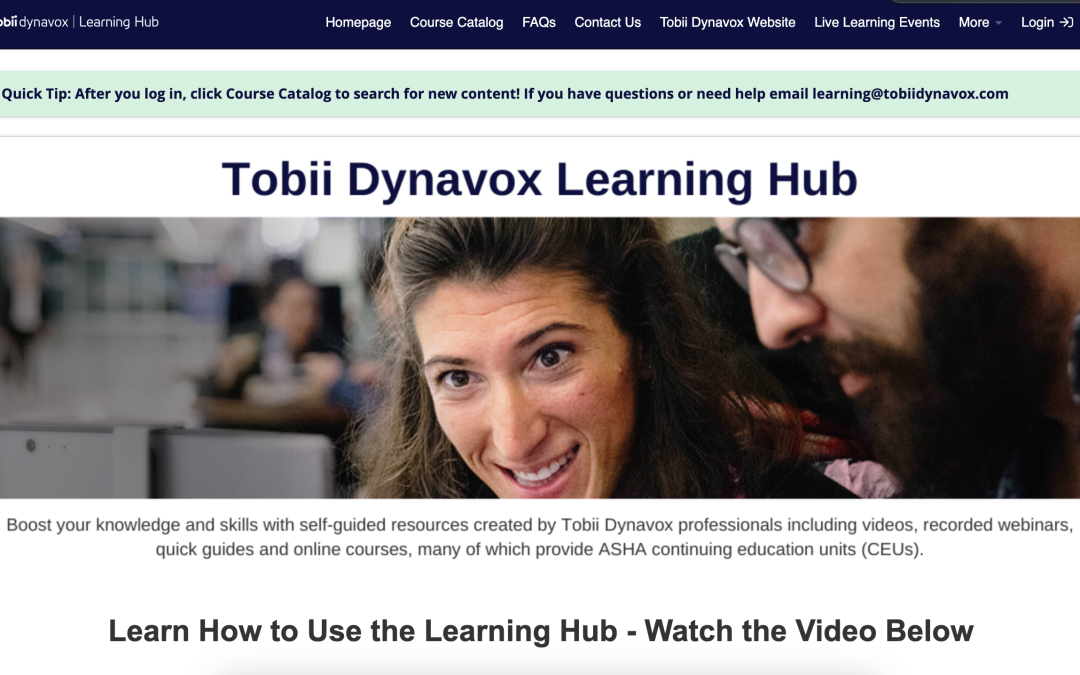
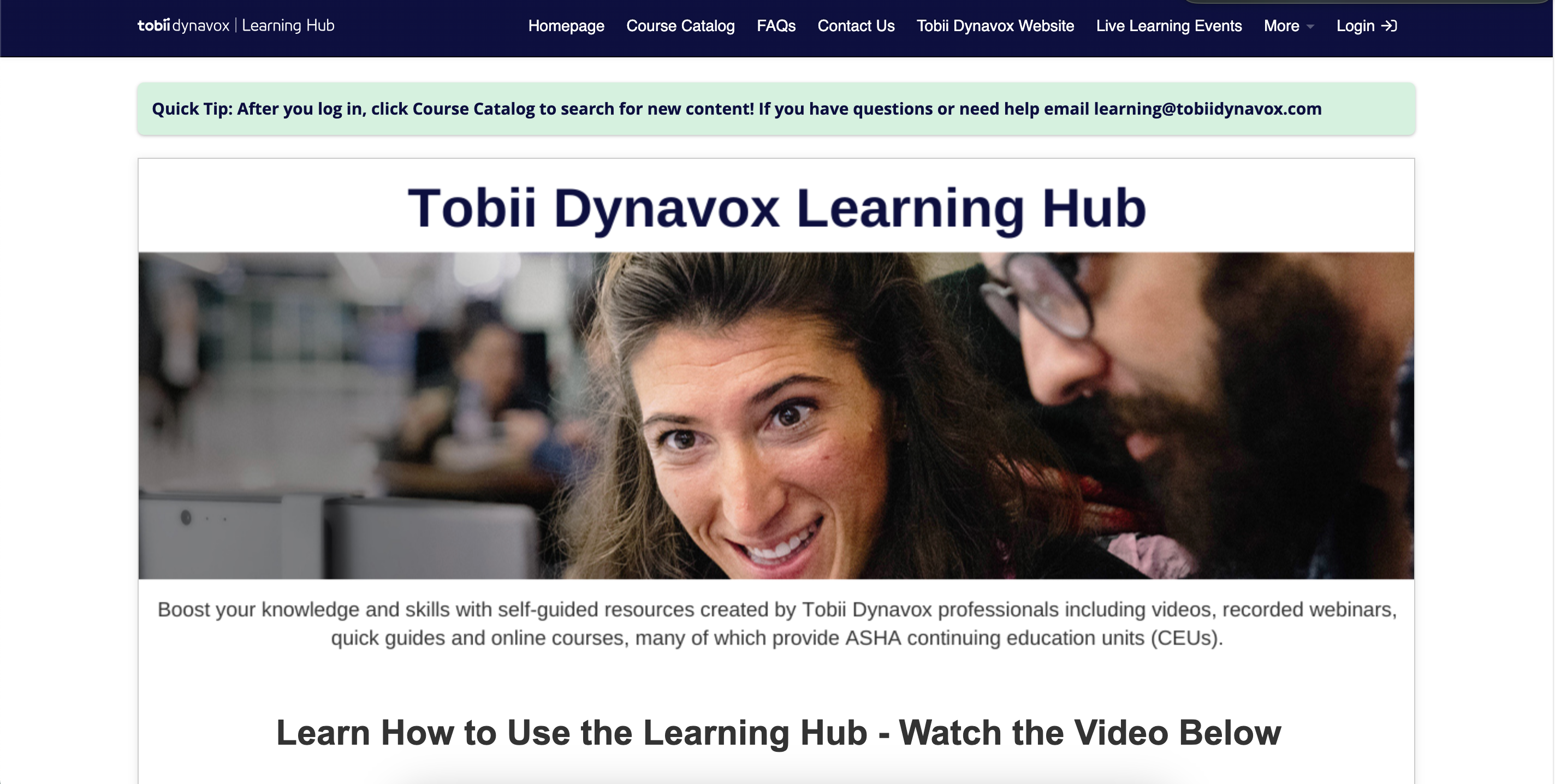
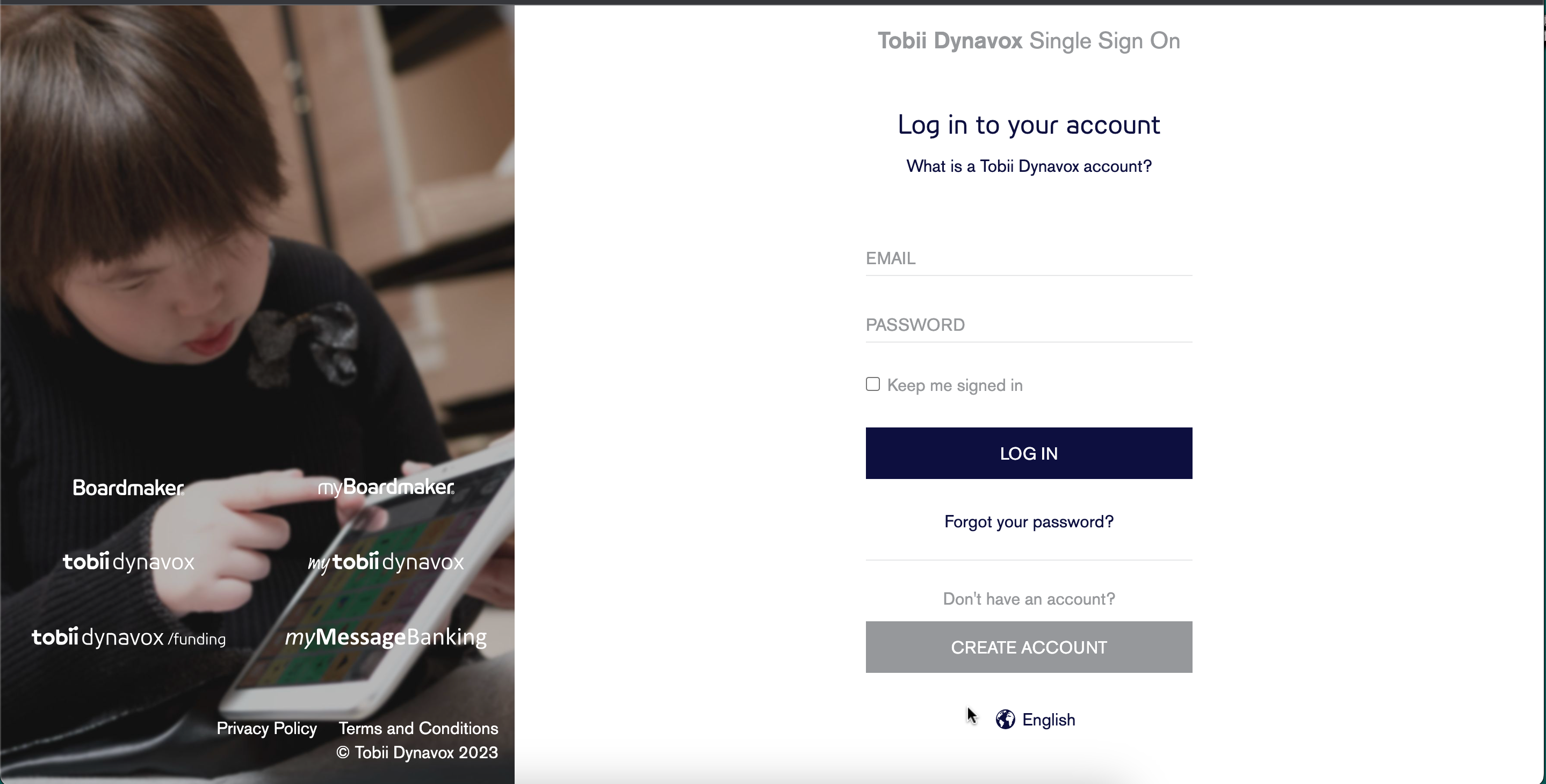
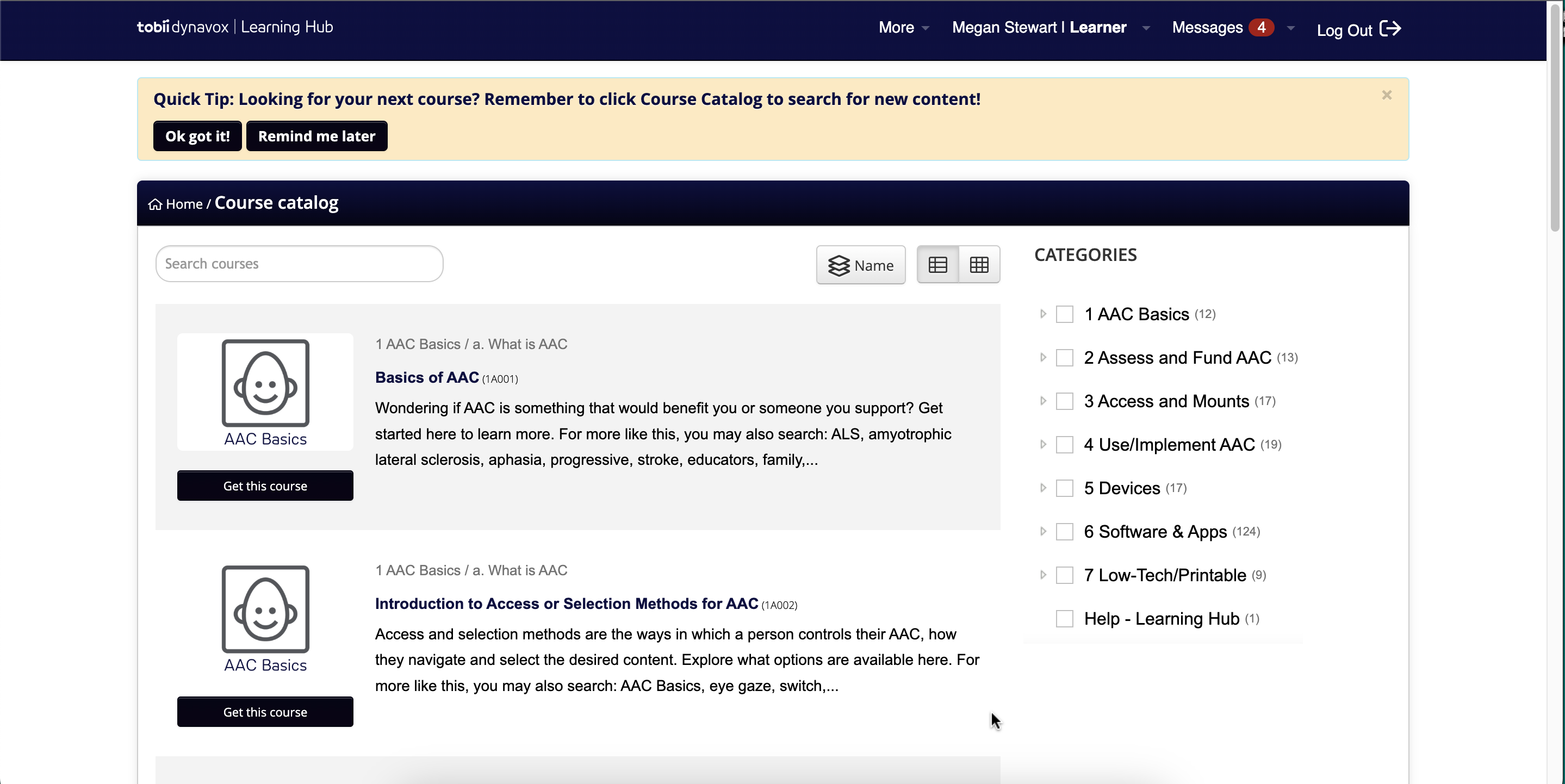
- You will be redirected to a login page where you can create an account or, if you have an account within any Tobii Dynavox or Boardmaker programs, use that account login and password.

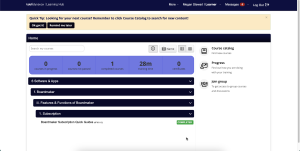
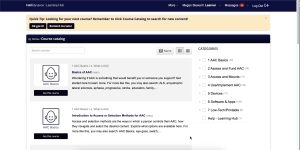
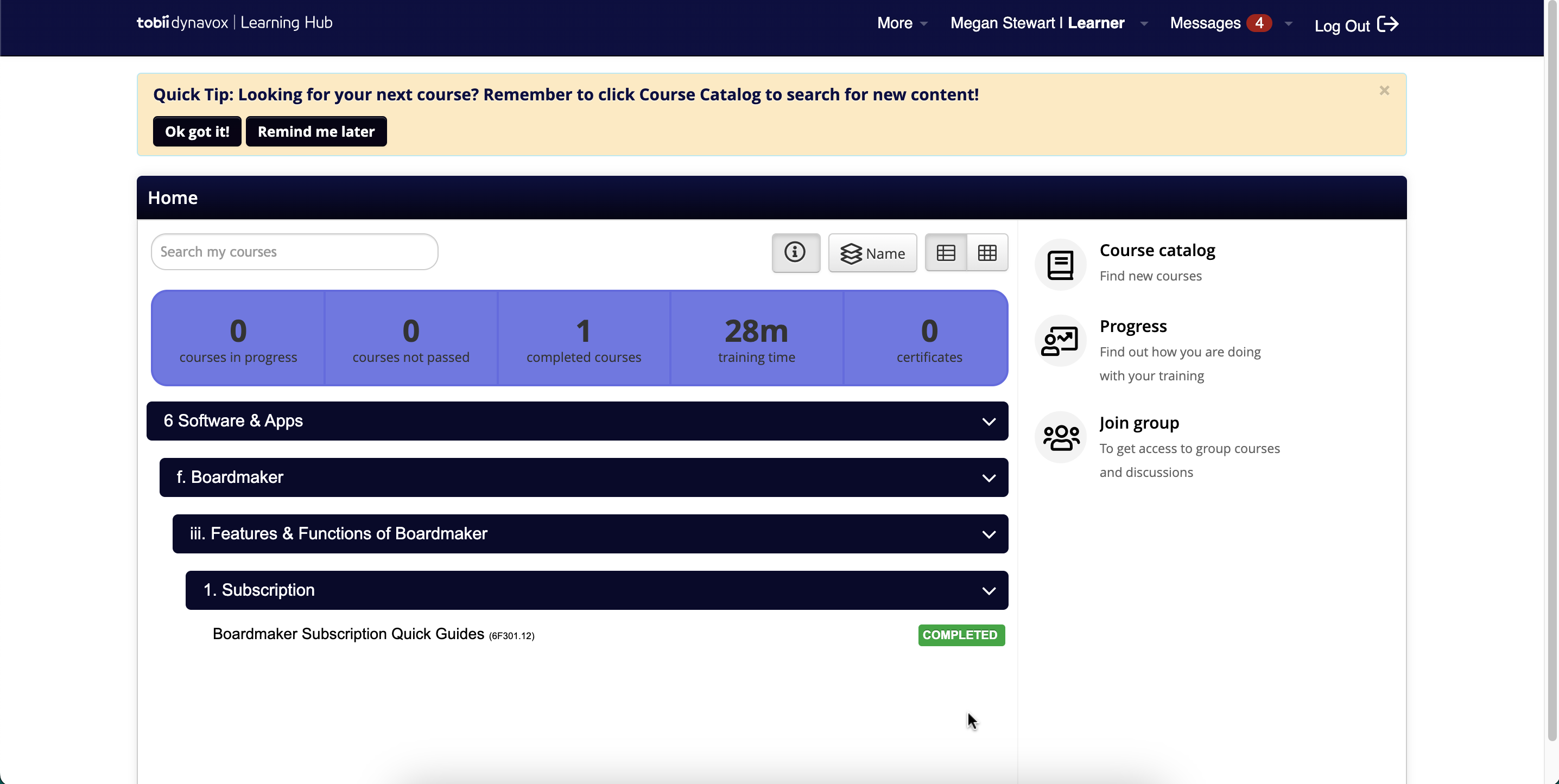
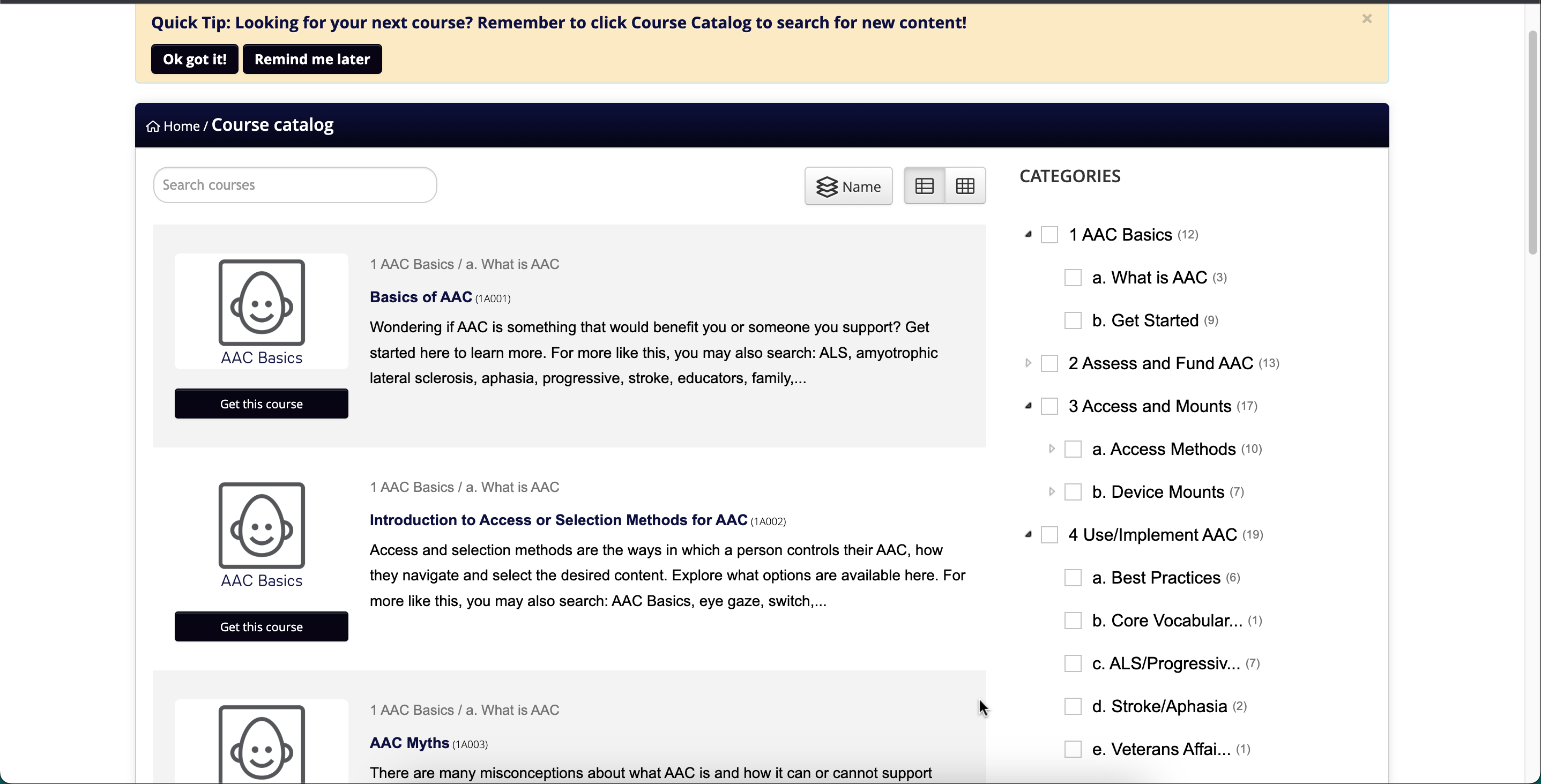
- After you log in you will be redirected to the Learning Hub, where you can start racking up those CEUs! Click on “Course Catalog” to see all the courses offered.
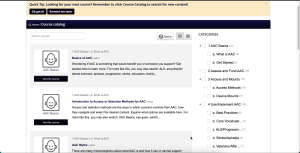
- Once you see the list of courses, you can also open the categories further to see additional specific courses.
That’s it – you are ready to rack up a bunch of free CEUs to finish out your requirements for the end of the year, or whenever you need it!
If you work through any of these courses and find one that you really like, let us know in the comments so we can check it out too!
Recent Comments