by Megan | Mar 23, 2026 | AAC, aided language input, aided language stimulation, blog, books, emergent literacy, modeling, tips, training
When people think about reading with a child, they often picture sitting close, looking at the pages together, listening quietly, answering questions, and making it through the whole book from beginning to end.
But for many AAC users, reading together may not look like that at all.
It may look like glancing at a page and then looking away. It may look like listening while jumping on the trampoline or running around the room. It may look like smiling at a favorite line, reaching toward a picture, vocalizing during a repeated phrase, activating a word on an augmentative and alternative communication (AAC) device, turning a page, repeatedly opening and closing the book, flipping quickly through the pages, or only reading one or two pages.
And all of that is still reading together; it all still counts.
All of these examples are just some of the reasons why I love talking about shared reading, and why it matters so much.
For AAC users, shared reading is about so much more than “reading the story.” It is an opportunity for connection, communication, language modeling, literacy learning, and participation in an experience that should belong to every child.
What is shared reading?
Shared reading is exactly what it sounds like: reading a book together in a way that invites connection, interaction, and participation.
It is not about asking a bunch of questions to quiz them on what they know, getting through every page, expecting one type of response, or any response at all. Instead, shared reading is a back-and-forth experience where the adult and child engage with the book together through pictures, words, AAC modeling, gestures, reactions, repeated lines, page turns, facial expressions, comments, and shared attention and enjoyment.
For AAC users, shared reading can be a powerful way to support both communication and literacy in a meaningful, accessible way.
My favorite part is that shared reading does not have to be rigid to be effective; in fact, it’s better if it’s not. It can be playful. It can be sensory-filled. It can be brief. It can be repeated. It can be adapted to meet the child where they are. It can look different from one child to the next.
That flexibility is part of what makes it so powerful.
Shared reading is more than story time
Shared reading is not a passive activity—something nice to do if there is time, or something mostly meant for entertainment.
Shared reading offers so much more than that.
It’s an opportunity to build language through meaningful language modeling.
It’s an opportunity to expose children to books, print, ideas, and vocabulary.
It’s an opportunity to create predictable routines around literacy.
It’s an opportunity to connect with another person around something enjoyable.
It’s an opportunity for a child to participate in literacy before they can read conventionally.
These are important opportunities for any child, but for AAC users, they are especially vital.
Shared reading creates access to language-rich, literacy-rich experiences right now, not later. It does not ask children to prove they are “ready” before they get invited in.
Shared reading is a literacy experience
Sometimes there is an unspoken belief that literacy instruction begins only after a child can attend for longer periods, identify letters, answer comprehension questions, or use AAC in a more conventional way.
But literacy does not begin only once a child “looks” ready.
Shared reading is a perfect way to introduce and build literacy from the very beginning.
When AAC users are included in shared reading experiences, they are being exposed to:
- books and print
- vocabulary and concepts
- story structure
- repeated language patterns
- connections between spoken language, AAC, pictures, and meaning
They are also learning something deeper: that books are for them too – and that message matters.
Shared reading helps lay the foundation for later reading and writing, but it continues to be valuable as learners continue to build their literacy skills. It gives children access to ideas, language, and literacy experiences before, during, and after conventional reading skills are in place.
Shared reading is also a communication experience
Another reason I love shared reading is that books are an incredibly natural place for AAC modeling.
During shared reading, we can model:
- core words like “look, turn, more, again, go, stop, like”
- fringe vocabulary connected to the story
- comments and reactions
- feelings
- actions
- opinions
- protests
And because favorite books are often read again and again, that language gets repeated in a meaningful context.
That repetition is powerful. It strengthens connections between the reader, the child, and the language being modeled. It also lowers pressure and builds familiarity. It gives learners more opportunities to see, hear, and experience language without needing to perform on cue.
Shared reading gives us another opportunity to use AAC in natural contexts and routines —not just for requesting, or answering questions, but noticing, commenting, enjoying, wondering, and most importantly, connecting.
Participation does not need to look one specific way
When thinking about what shared reading looks like, many of us may need to keep widening our lens.
Too often, shared reading is treated as successful only if a child:
- sits still
- looks at the book the whole time
- answers comprehension questions
- points to the “right” picture
- stays until the very end
But meaningful participation can look very different.
For AAC users, participation might mean:
- leaning in during a favorite part
- anticipating a repeated line
- smiling, laughing, or vocalizing
- turning the page, whether it is “time” to or not
- pressing a familiar word on AAC, even if it doesn’t seem relevant at the time
- choosing the same book again tomorrow
- protesting a part they do not like
- moving in and out of the interaction and/or area while still staying connected
These moments matter. They signal engagement and interest.
They are no less meaningful because they do not fit a narrow or traditional picture of what reading together is “supposed” to look like. In fact, when we recognize these moments as real participation, we make more room for authentic engagement and less room for compliance-based expectations.
Shared reading can support regulation and connection
Those moments are worth noticing.Shared reading is not only about literacy and language skills. It can also be a social and regulating experience.
There is something powerful about sitting with another person, sharing a familiar book, hearing a repeated phrase, anticipating what comes next, and being invited into the experience without pressure.
For many children, that rhythm and predictability can feel grounding.
This is why sensory supports matter. Positioning matters. Pacing matters. Emotional safety matters. Physical comfort matters.
Sometimes the most meaningful part of shared reading is not a correct answer or a measurable response. Sometimes it is that a child stays close a little longer. They relax into the routine. They re-engage after stepping away for a moment. They reach for the book again later. They smile at a favorite page.
Shared reading is a place to presume potential
One of the reasons I care so deeply about shared reading for AAC users is that it reflects something bigger: the belief that all children deserve access to rich literacy experiences.
Not later.
Not once they prove themselves.
Not once they meet a specific goal.
Now.
When we offer shared reading opportunities in thoughtful, accessible, supportive ways, we are sending a powerful message:
You belong here.
Books are for you.
Language is for you.
Literacy is for you.
That is the kind of message all children should receive over and over again.
You do not have to do this perfectly
If shared reading feels intimidating, I want to say this clearly: you do not have to do it perfectly for it to matter.
You do not need the perfect book.
You do not need the perfect setup.
You do not need a child to attend in one specific way.
You do not need to ask all the right questions.
You just need a starting point, a willingness to connect, and the belief that this experience is worthwhile.
Start with one book.
Read it again.
Model a few words.
Slow down.
Notice what the child notices.
Let the experience belong to both of you.
That is enough to begin.
Final thoughts
Shared reading matters for AAC users because it is not just story time; it’s so much more.
It is access.
It is connection.
It is communication.
It is literacy.
It is belonging.
And every child deserves that.
If shared reading with AAC users is something you want to feel more confident about, I created my e-book “Shared Reading with AAC Users: A Neurodiversity Affirming Guide” to help. Inside, I share practical, neurodiversity-affirming ways to make shared reading more accessible, meaningful, and enjoyable so you can feel empowered to start reading with your AAC users right away.
by Megan | Dec 31, 2025 | AAC, blog, modeling, prompt hierarchy, tips, training
It’s 2001, my first year as a speech-language pathologist, and I’m meeting one of the students on my caseload. I can still see her smile, and I remember thinking that she might be the happiest kid I’ve ever met. I was the only SLP assigned to that school, so I knew I’d be supporting a wide range of students. I just never guessed one would change my life forever.
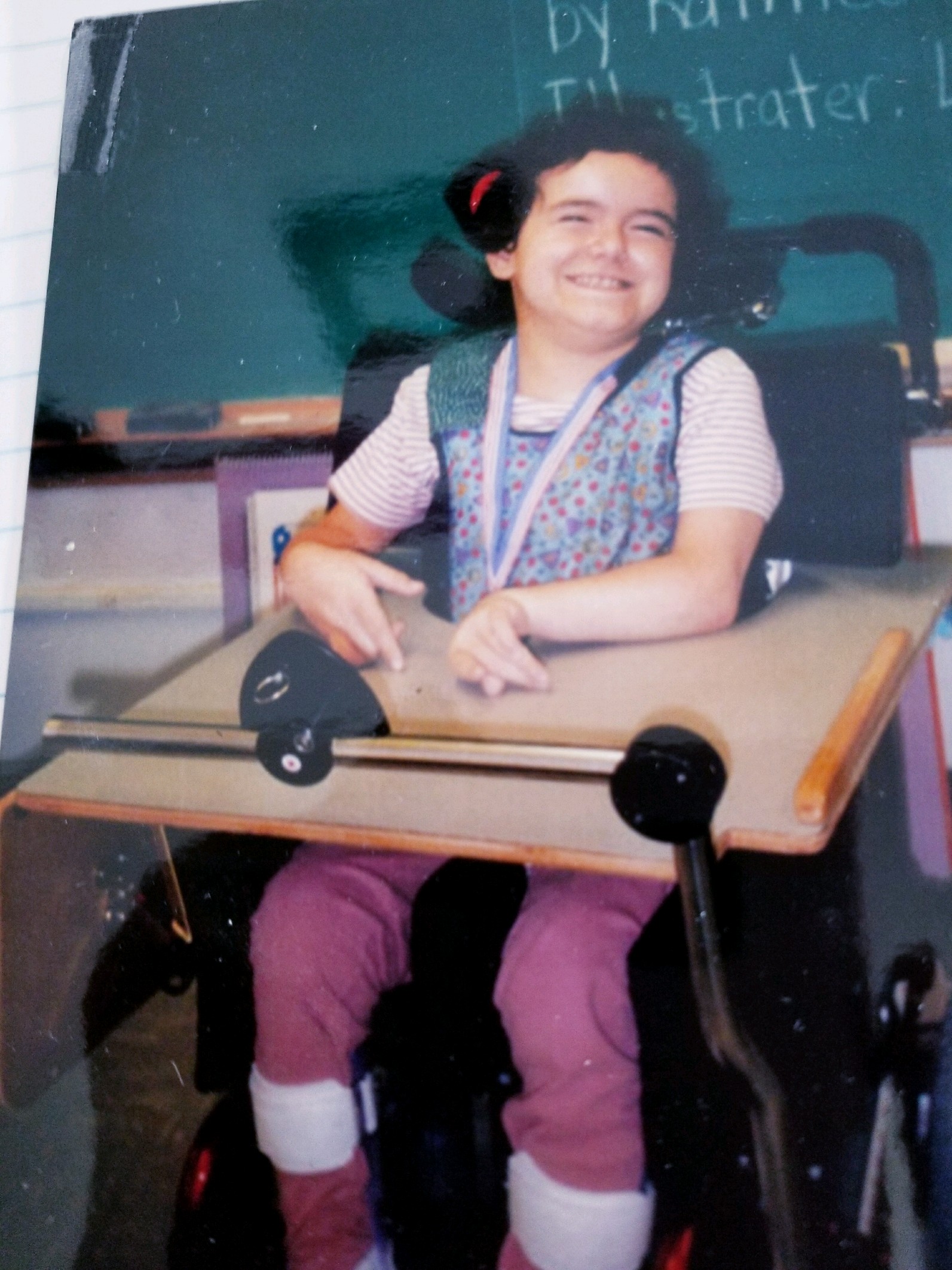
Everything changed the day I met Marianna. She was an energetic third grader who had lots of friends, and it took her forever to get down the hallway as everyone who passed, adults or kids, stopped her to say “Hi”, comment on her outfit, or ask how she was. It didn’t matter that she moved through the hallway in a wheelchair or that she used augmentative and alternative communication (AAC) to communicate. She was a third grader starting another day with her peers.
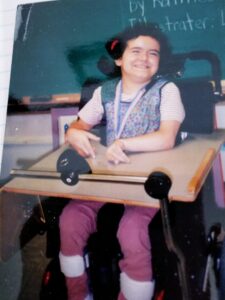
What struck me immediately was how easily she communicated with everyone, even when her AAC device wasn’t within reach. Watching her connect with a look, a grin, a shift of her body made me realize I’d been thinking about communication all wrong.
Marianna was in the general education classroom with a full-time aide, thriving academically and socially. I had never met a student who used AAC who was fully included, sitting beside same-aged peers and participating right alongside them. She sat toward the back of the room for space, her device mounted to her chair, her aide close by, classmates surrounding her at their desks. What I couldn’t stop noticing was how her inclusion felt normal, not performative, not fragile, just expected.
Each time I worked with Marianna, whether it was in the classroom or the speech room, it was clear to me that I was not the only one doing the teaching. I’ll never forget stiing with her, talking about a story that she was writing waiting while she composed the next part on her device. Her body could barely contain the excitement. With each hit of her switch, the anticipation built. She couldn’t wait to share her work with me, and I couldn’t wait to hear it.
I could tell a hundred stories about what Marianna taught me. But if I had to name the one truth that changed my trajectory, it’s this: access isn’t earned, it’s given.
No matter your role or title, you can always be both the teacher and the student.
What’s one thing a client has taught you?
by Megan | Dec 16, 2023 | AAC, aided language input, aided language stimulation, blog, continuing education, core vocabulary, fringe vocabulary, modeling, prompt hierarchy
It’s the busiest time of the year! Wrapping up the year, buying gifts for all you love, finding time to celebrate with all your friends and family, you may feel like you are running around endlessly, the last thing you should have to worry about is making sure you have all of your continuing education units (CEUs) done to renew your licenses and certifications. 🤪
Before you close this window and start running around again, take the time to read to the end of this post, ‘cause I’ve got a way for you to rack up a bunch of CEUs for FREE! **Bonus if you want to learn more about AAC – these CEUs are AAC focused**
Ready to get started? Here we go!

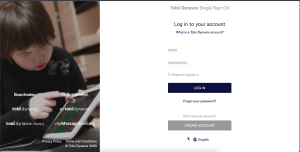
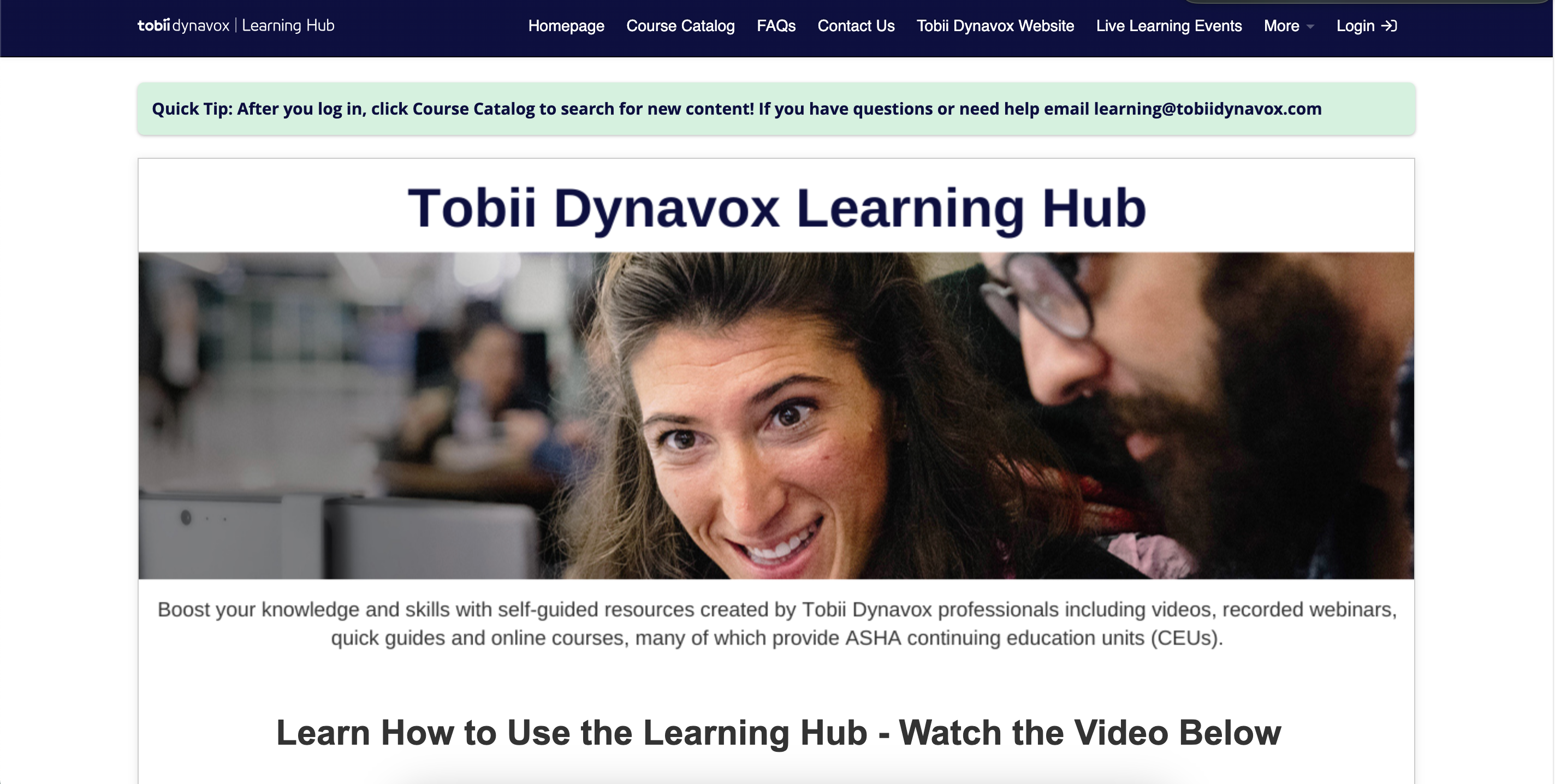
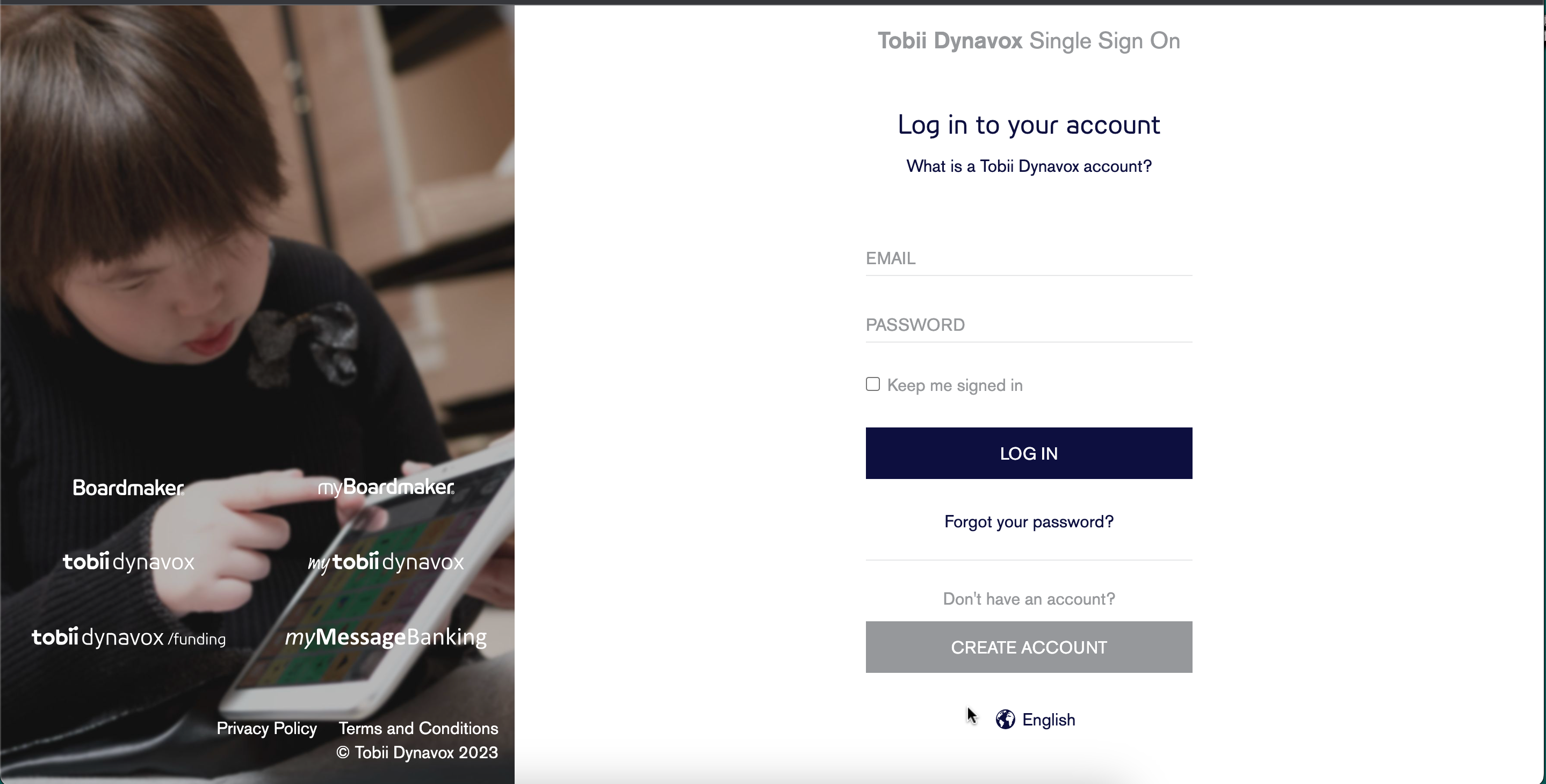
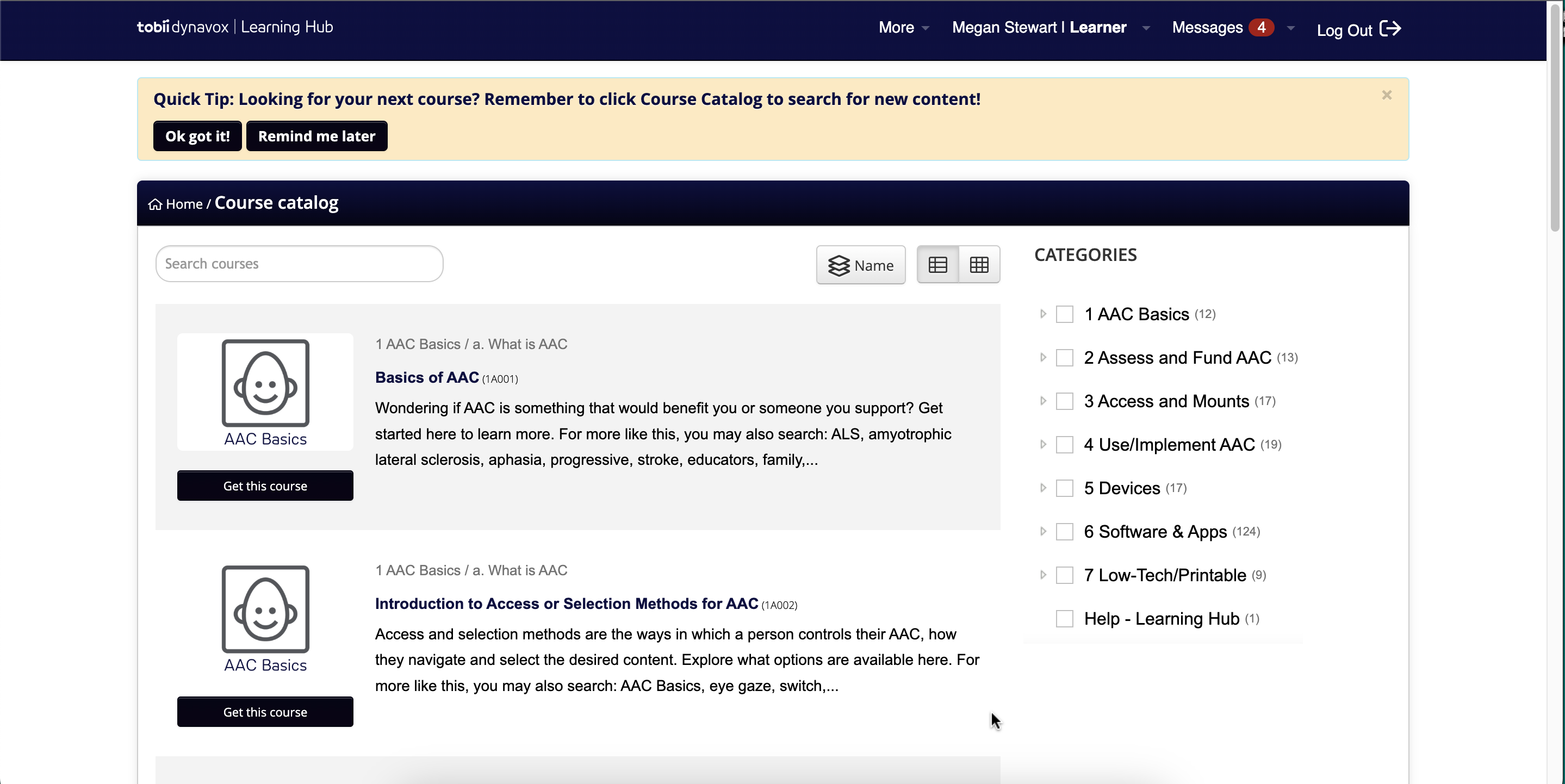
- You will be redirected to a login page where you can create an account or, if you have an account within any Tobii Dynavox or Boardmaker programs, use that account login and password.
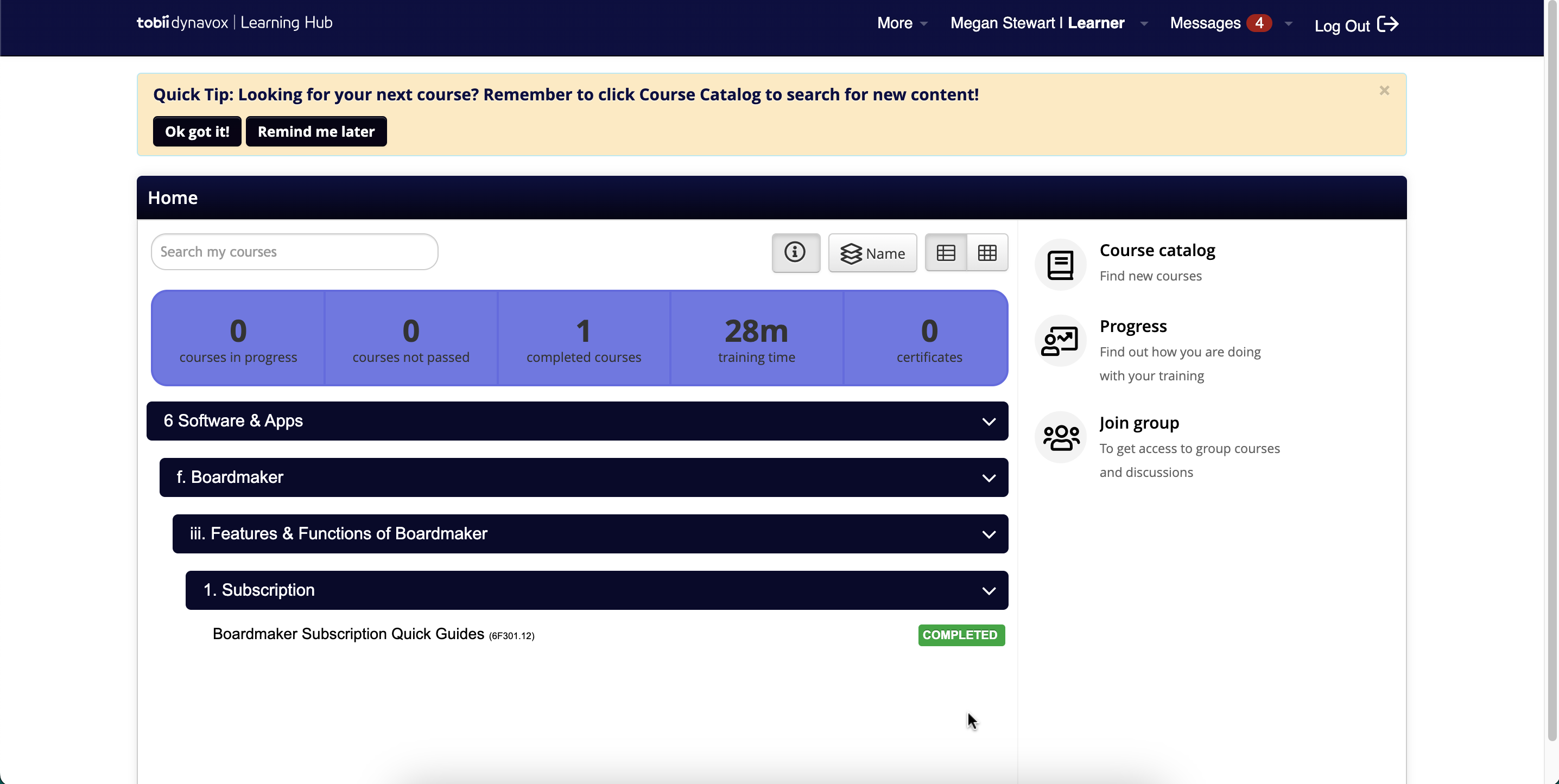
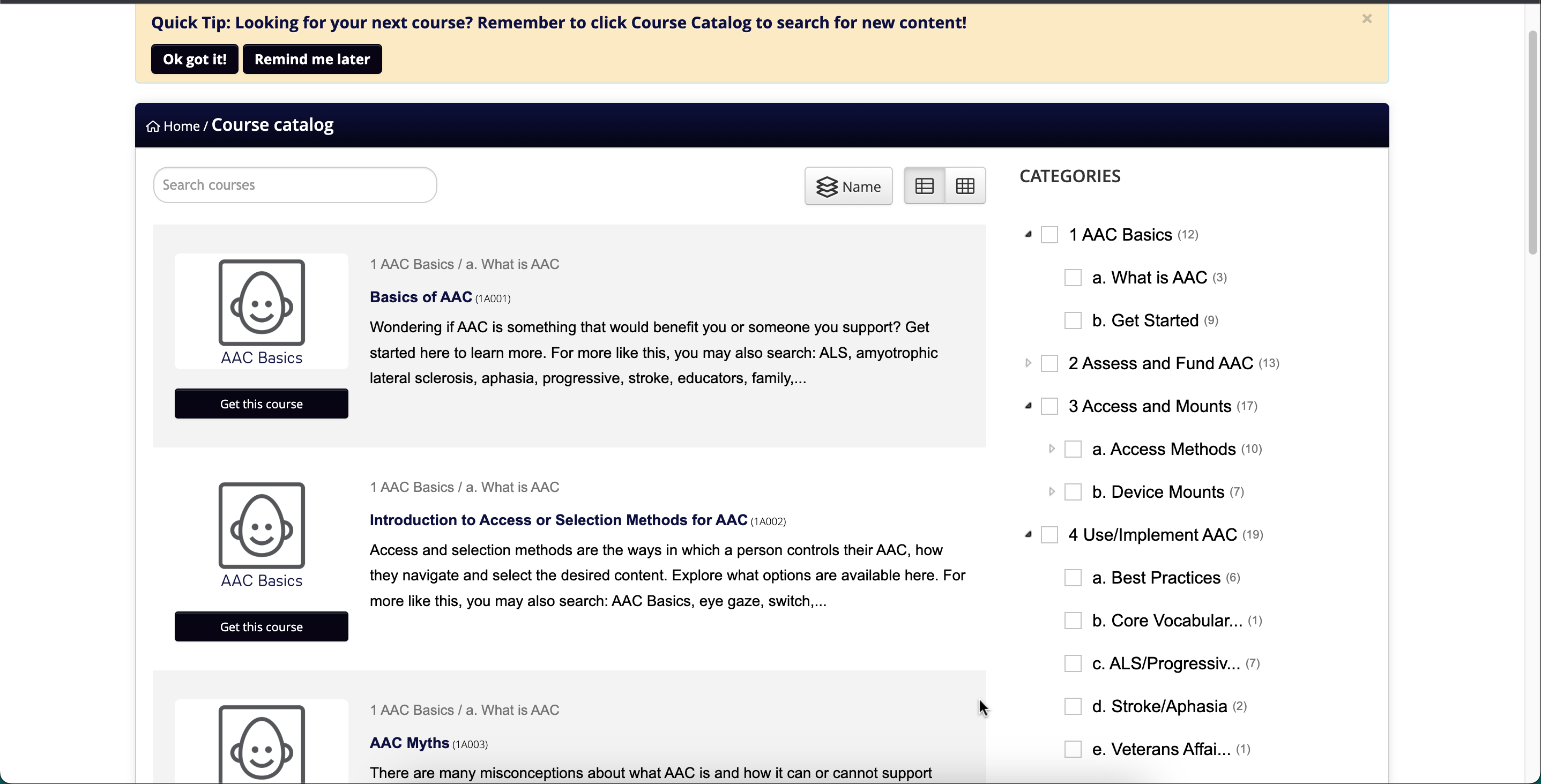
- After you log in you will be redirected to the Learning Hub, where you can start racking up those CEUs! Click on “Course Catalog” to see all the courses offered.
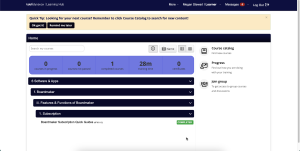
- Once you see the list of courses, you can also open the categories further to see additional specific courses.
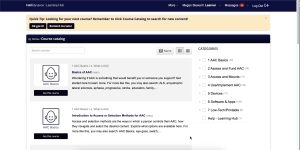
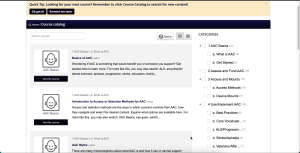
That’s it – you are ready to rack up a bunch of free CEUs to finish out your requirements for the end of the year, or whenever you need it!
If you work through any of these courses and find one that you really like, let us know in the comments so we can check it out too!
by Megan | Jul 15, 2023 | AAC, blog, modeling
Time for an update!
In a previous blog post, I shared how I was working my way through the fantastic chart shared by Angela Moorad, MS CCC-SLP, from Omazing Kids AAC, LLC – Free AAC apps chart. Now, I’m back to update you on my progress, apps that I’ve added to my iPad through the steps in this chart, and the next steps, now that I have access to these apps.
Here are the apps that I have added to my iPad so far:

- TD Snap
- Proloquo
- Grid 3
- Touch Chat
- LAMP Words For Life
- Speak For Yourself
- Proloquo2Go
First and foremost, I want to acknowledge how easy this process has been and I 100% attribute that to the chart referenced above. Download this chart, follow the steps listed for each app and you too can add a variety of AAC apps to your iPad.
Before we move on, I want to be sure that I remind you that, just because you CAN get access to all of these apps, doesn’t mean that you SHOULD, or HAVE to! Let me explain…

While the companies are generous and provide free codes for downloads for their apps, these free download codes are not unlimited. Therefore, if you primarily use one app, want to learn more about a specific app, etc then that would be the app to start with, look at first and then wait on the others. However, if you are an SLP or other professional that provides AAC evaluations, it might make sense for you to have a variety of AAC apps available to you in order to trial them with learners, clients, etc. to determine which app works best for each individual. With that being said, I have downloaded these apps because I am actively providing AAC evaluations for a variety of learners and/or clients.
After being provided access to these AAC apps, my next steps, and what I would encourage you to do as well, is to continue your professional learning about each of these apps. Because, while all the apps provide a way to assist communication for those that need it, each app has its own, individual language system, organization, features, etc. Increasing your knowledge of the different features within systems will assist you when you are completing an AAC evaluation and determining which feature(s) will be best for each individual user.
With the ever-increasing variety of AAC apps available, this task can seem overwhelming, but remember, as I shared in a previous post – it’s ok to take your time. Start with one app, learn the features of that app, practice using that app, etc and then, when you feel confident, move on to a new app, then rinse and repeat.
Have you downloaded the chart yet? Are you working through learning more about AAC apps? Comment below and let us know how it’s going!
by Megan | Jun 24, 2023 | AAC, aided language input, aided language stimulation, blog, modeling
There are so many AAC apps out there – trying to learn all of them so that you can help provide access to those most beneficial for those you work with can be overwhelming, to say the least!
However, let me reassure you that:
- You don’t have to learn ALL the AAC apps/devices simultaneously!
- You don’t have to know ALL the AAC apps/devices before you can start providing AAC therapy.
- You can take your time and learn the apps/devices – building up your knowledge and AAC app repertoire one step at a time!
To illustrate this point, let me share a little bit about my journey as an AAC-loving SLP. Hopefully, this will reassure you that you are doing wonderfully, right where you are.

When I started as an SLP, 20 years ago, my first job was in a small elementary school that had one classroom for each grade K-6, two Exceptional Student Education (ESE) Pre-K classes, and four additional self-contained ESE classrooms and I was the only SLP. My caseload was huge and I was constantly on the run. There were lots of things that were difficult about being the only SLP (I’m sure some of you can relate) but I also learned so many invaluable things that have helped me become the SLP I am today.
You may be thinking, “That’s great, but how does this all relate to AAC?” – I’m getting there I promise – just stick with me. 😉

The majority of the students in the four self-contained ESE classrooms, and some of the students in the ESE Pre-K classrooms were non or minimally speaking and needed access to AAC. Thankfully, I knew in grad school I wanted to work with AAC users, however, as a clinical fellow, I still had a lot to learn. But, I did it scared and jumped in with two feet!
As I was learning, on (and off) the job, Dynavox (before they were Tobii Dynavox) was the company that produced the first high-tech devices that I introduced and used with the students I was working with. There were other devices and companies out there and I knew a little bit about them but not everything or much – and that was ok. I started out learning about ONE system. I started on an even smaller scale, learning one feature, option, use, etc, and then moving on to the next.
See how I’m bringing this all back around?

No matter where you are on your AAC SLP journey, there will always be learning opportunities. Take your time, focus in on what you want to and/or need to learn, and start there.
- Have a learner that is using LAMP? Start there…
- Like the layout of Touchchat? Start there…
- Have a learner that needs bilingual support offered by Coughdrop? Start there…
- You get the idea…😀
Don’t forget that you can learn alongside your AAC users as well! That is definitely what I did during that first year as an AAC SLP – and beyond. I think that it is great to learn alongside your learners. It shows the learners that it is ok that they don’t know how to use the device perfectly immediately. You are demonstrating a growth mindset, problem-solving and so much more!

We don’t have the luxury, or the time, to wait to start providing AAC therapy until we know all the different systems, devices, etc – our learners need us now, just as we are, learning alongside them. So, what AAC system/device are you going to learn next?
by Megan | Feb 10, 2021 | AAC, aided language stimulation, core vocabulary, modeling, Sensory, Sensory extension activities, Storybook Sessions
Storybook Sessions: Garrett Morgan
In each Storybook Sessions post, I highlight a book that I have used, or plan to use in therapy as well as associated, extension activities that can be paired with the book to increase vocabulary comprehension, provide opportunities to express yourself verbally, written, creatively, etc., sensory exploration, fine motor practice, gross motor movements, etc. Some extension activities will focus on all of these components while others will focus more specifically on one area.
Garrett Morgan
Author: Megan Stewart
Illustrator: Symbols by Boardmaker 7
Do you ever have an idea for an activity to do, book to read, etc but can’t find exactly what you are looking for? Anyone else, or is it just me?
This happened to me while I was planning for my February sessions. I knew I wanted to highlight a famous black person from history to celebrate Black History Month with my students but while looking for a book to lead my activity/session, I wasn’t able to find what I was looking for. I will say that there are a TON of great kids books featuring and highlighting famous black people, however I waited too long to put these on hold or check out from my library, so I decided to create my own.
My Book Creation Process
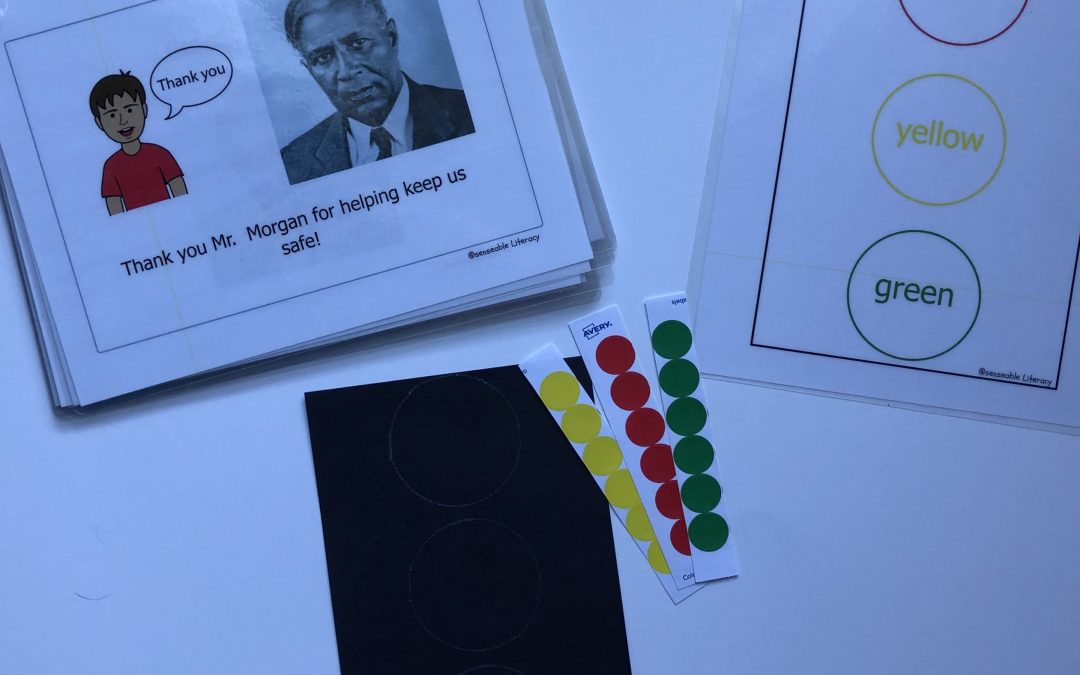
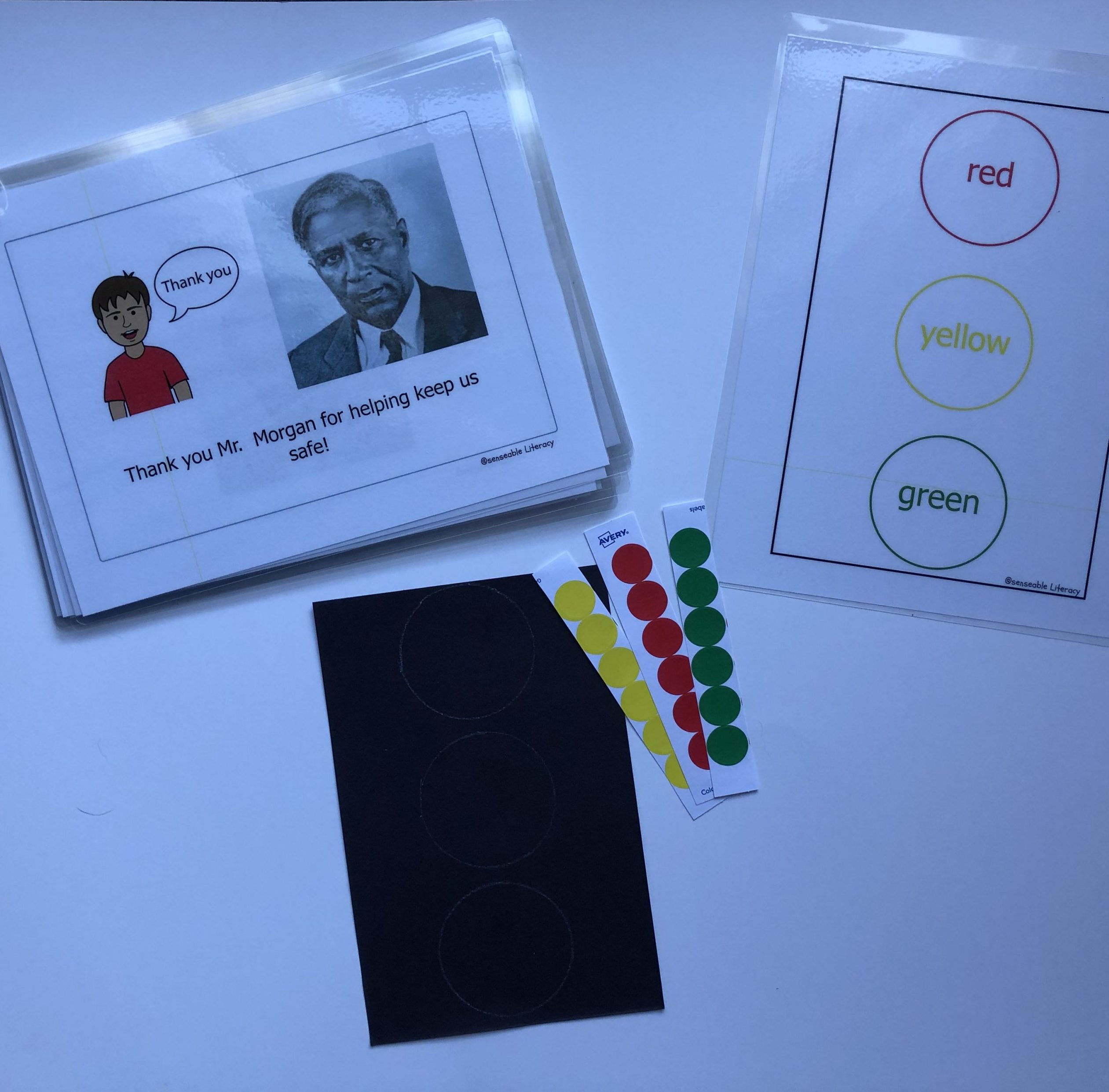
I chose to highlight Garrett Morgan, who added the yellow light to the stoplight as we now know it, within my lesson. With a quick Google search to find a picture of him, and learn a little more about him and his inventions, I took that information, opened Boardmaker 7 software and got to work! Using the printable book template, I was able to easily add in pictures, symbols and text that told the story of who Garrett Morgan was, why we need to learn about him, what his invention was (Mr. Morgan did invent items other than the stoplight, (i.e., the gas mask), but I thought this invention was most appropriate to highlight for my PreK students), and how it has affected our world. Here’s a sneak peek of the book:
Now What?
Now that I had the book, I needed to decide on the extension activities to continue our learning after we read the book. I chose activities that focused on color, shape and number recognition & labeling, spatial concepts, fine motor skills, bi-lateral (both sides) hand coordination, sorting, following directions, and gross motor skills.
Creating A Personalized Stoplight
In the first activity, the students create their own stoplight.
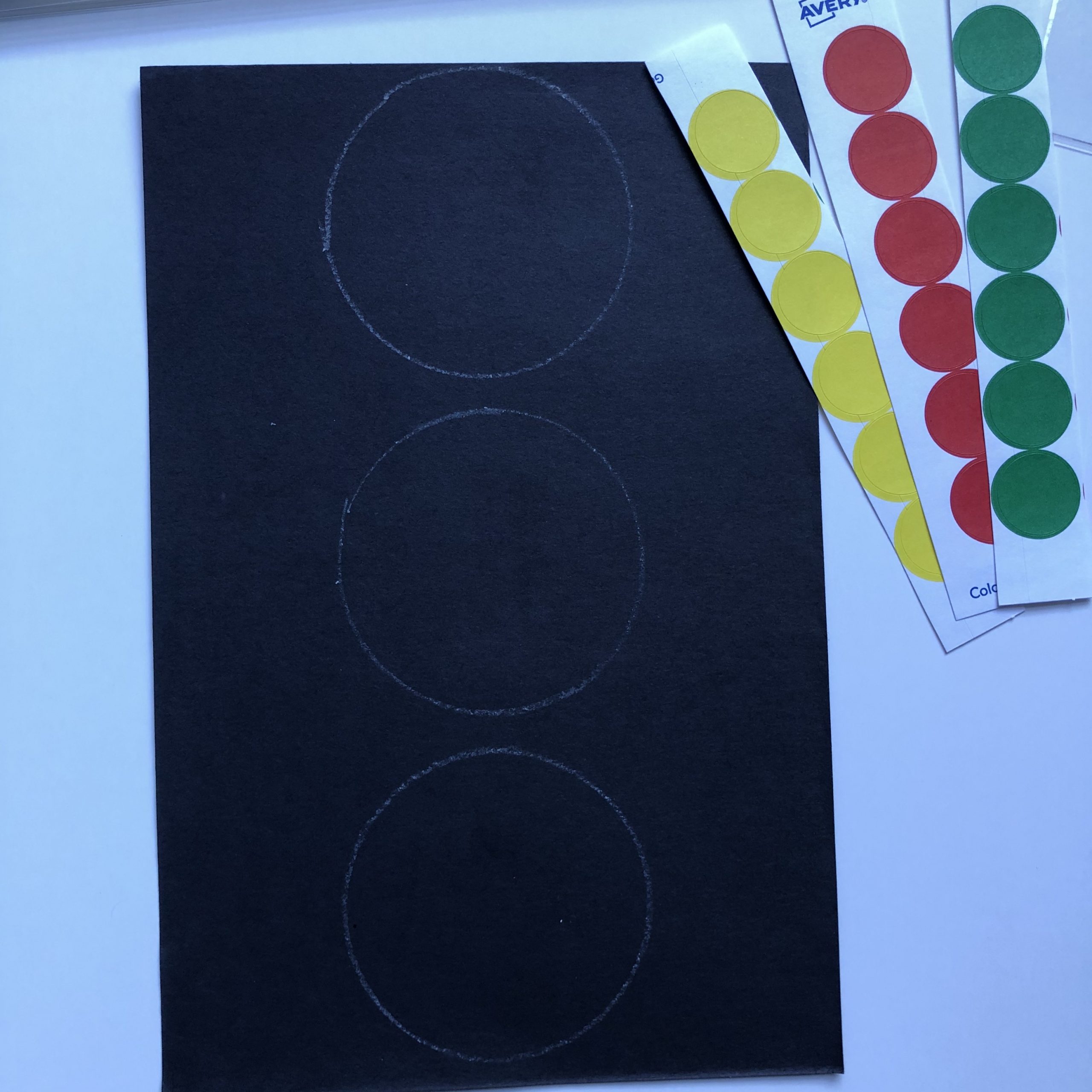
First, I cut black construction paper into rectangles and drew 3 circles down the center with a white crayon.
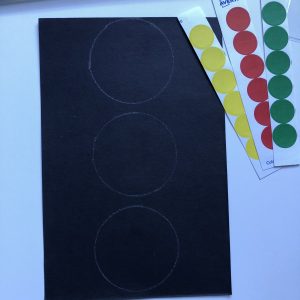
Stoplight template and stickers
Second, I cut color coding stickers from Avery into strips of yellow, green and red.
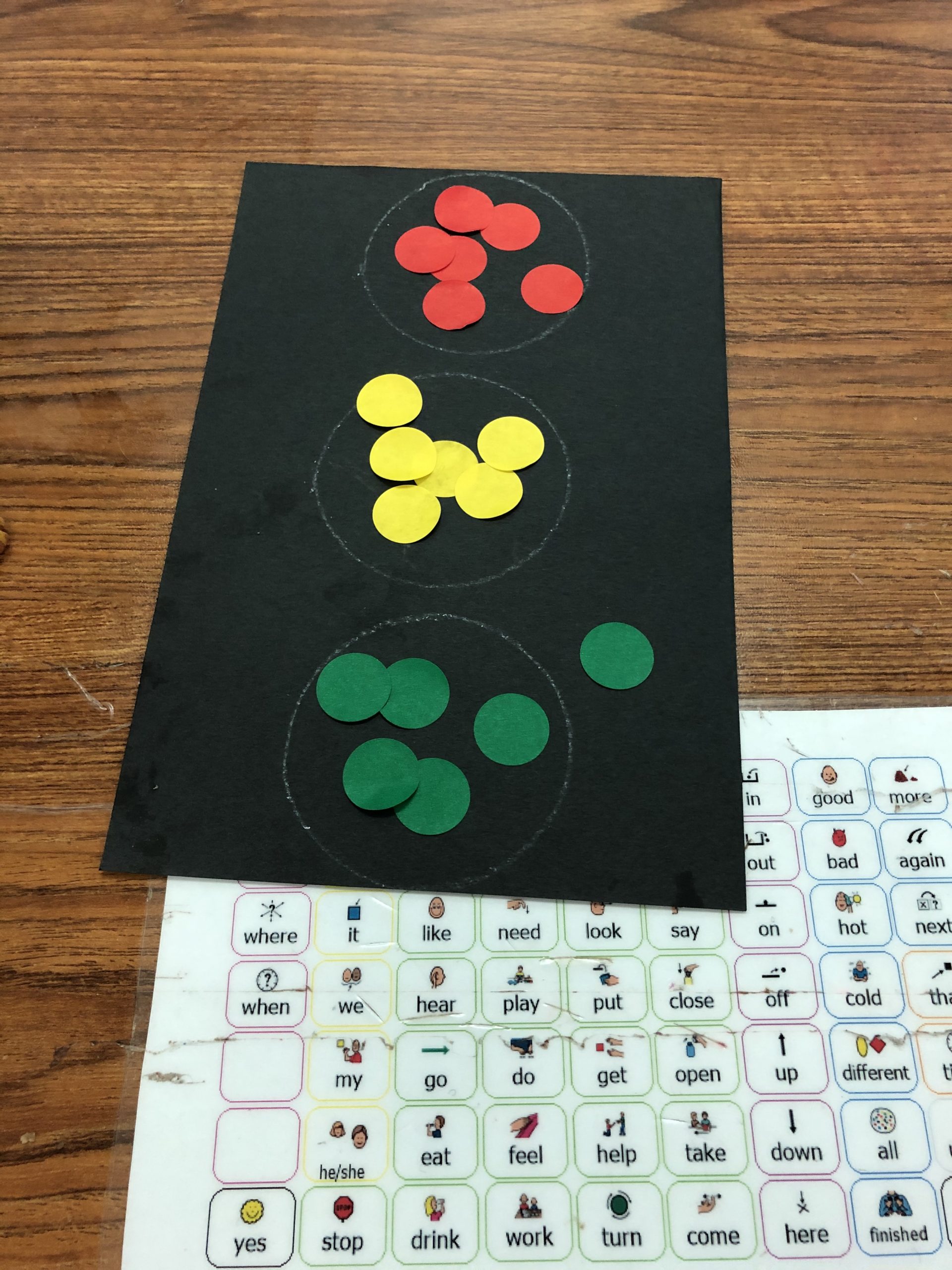
Each student was given a stoplight template and, after a model from an adult, placed all of the colored stickers onto their stoplight template. Hopefully the students placed the stickers in the right place based on color, but if not, that’s ok too – I am all about fostering independence and creativity and this is not a test!
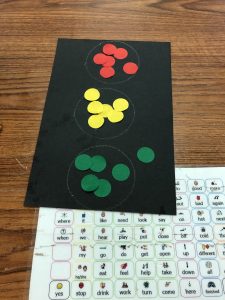
Student Created Stoplght
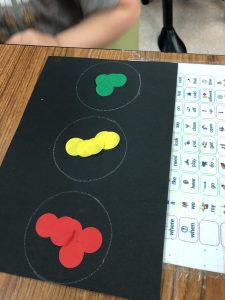
Student Created Stoplight
Additional Skills Addressed While Creating the Stoplights
While the students were making their stoplights, we were able to focus in on the topics of:
- Colors
- Shapes
- Location words (prepositions)
- Quantity (numbers, more, less)
Don’t forget all the Core Vocabulary!
And of course we used our core vocabulary communication boards to chat, modeling words, individually and in short phrases, such as:
- Put
- On
- More
- Where
- Help
- Want
- Like
- Not
- Different
- I
- My
- You
- Finished
- Here
- That
- Again
- Next
- See
- All
The Fun Doesn’t Stop There!
After students finish their stoplight you can:
- Help them write their name on their paper and send home to share with families.
- Laminate their stoplight to use in additional extension activities such as sorting by color.
- Use this sorting template to find items that are red, yellow and/or green in their environment.
- Watch some fun “stoplight videos” such as:
- Play “Red Light, Yellow Light, Green Light” to help get the wiggles out. You can use these visuals to further show students if they are to “GO”, “SLOW” or “STOP”.
- Play with cars and other vehicles, using your traffic light to tell the cars to “GO”, “SLOW down” or “STOP”
This Sounds Great! Where Can I Find These Resources?
If you are interested in doing these activities and/or reading the book about Garrett Morgan to your students I have linked them here for you to download:
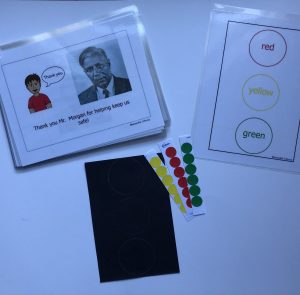
Garrett Morgan book and activities

Garrett Morgan Printable and activities
If you create stoplights in celebration of Garrett Morgan and his invention, I’d love to see it!
Post pictures in the comments below or tag me (@senseableliteracy) in posts online!
Until next time – Happy Reading!




Recent Comments