It’s 2001, my first year as a speech-language pathologist, and I’m meeting one of the students on my caseload. I can still see her smile, and I remember thinking that she might be the happiest kid I’ve ever met. I was the only SLP assigned to that school, so I knew I’d be supporting a wide range of students. I just never guessed one would change my life forever.
Everything changed the day I met Marianna. She was an energetic third grader who had lots of friends, and it took her forever to get down the hallway as everyone who passed, adults or kids, stopped her to say “Hi”, comment on her outfit, or ask how she was. It didn’t matter that she moved through the hallway in a wheelchair or that she used augmentative and alternative communication (AAC) to communicate. She was a third grader starting another day with her peers.
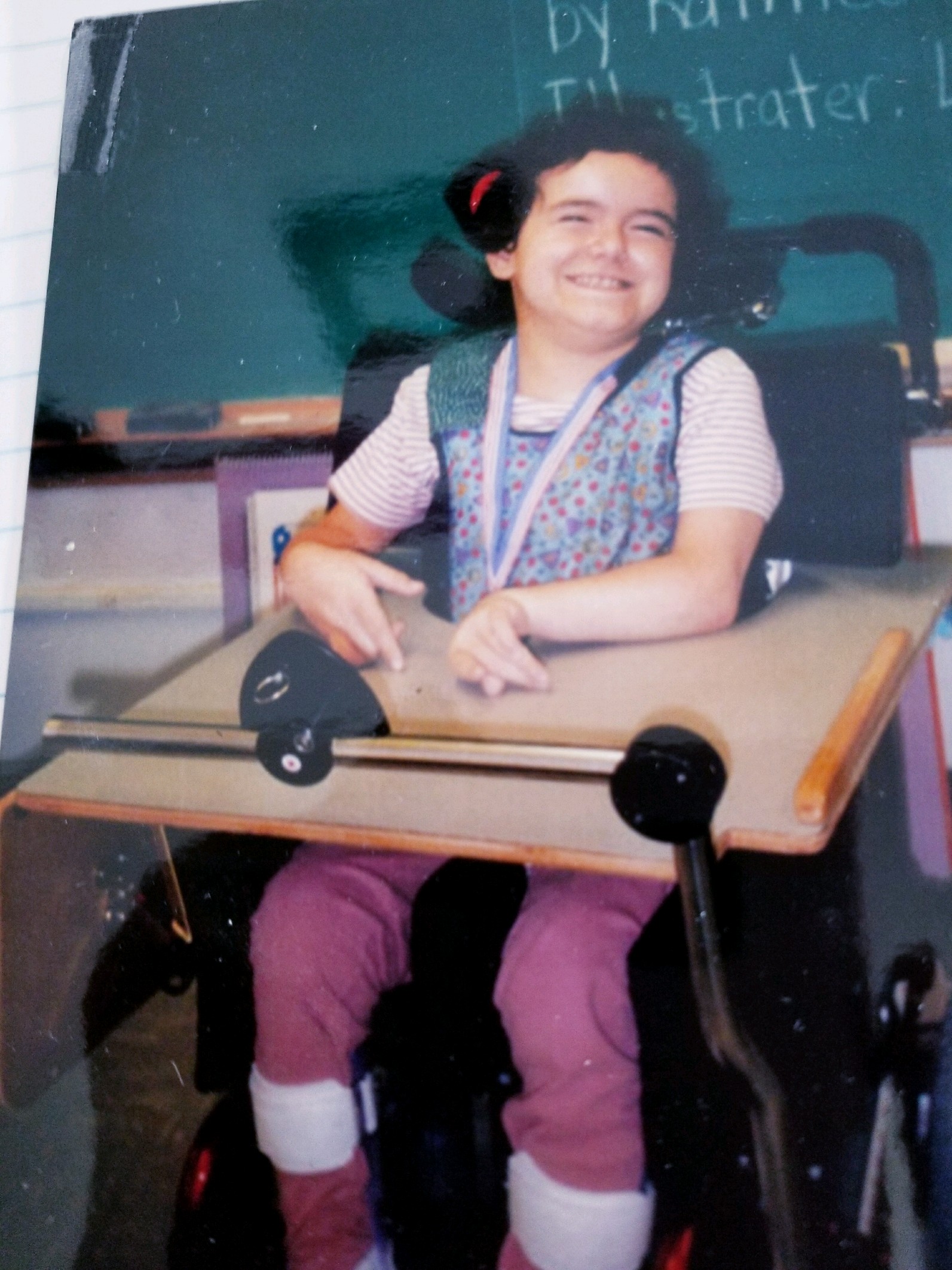
What struck me immediately was how easily she communicated with everyone, even when her AAC device wasn’t within reach. Watching her connect with a look, a grin, a shift of her body made me realize I’d been thinking about communication all wrong.
Marianna was in the general education classroom with a full-time aide, thriving academically and socially. I had never met a student who used AAC who was fully included, sitting beside same-aged peers and participating right alongside them. She sat toward the back of the room for space, her device mounted to her chair, her aide close by, classmates surrounding her at their desks. What I couldn’t stop noticing was how her inclusion felt normal, not performative, not fragile, just expected.
Each time I worked with Marianna, whether it was in the classroom or the speech room, it was clear to me that I was not the only one doing the teaching. I’ll never forget stiing with her, talking about a story that she was writing waiting while she composed the next part on her device. Her body could barely contain the excitement. With each hit of her switch, the anticipation built. She couldn’t wait to share her work with me, and I couldn’t wait to hear it.
I could tell a hundred stories about what Marianna taught me. But if I had to name the one truth that changed my trajectory, it’s this: access isn’t earned, it’s given.
No matter your role or title, you can always be both the teacher and the student.
What’s one thing a client has taught you?
Recent Comments