by Megan | Jan 20, 2024 | AAC, blog, tips, training
I want to share my favorite AAC tip with you…
This tip is specifically for those who use an iPad as their communication device. If you have worked with anyone, specifically children, who use an iPad, you know that the “home” button can be very distracting, especially since pressing it will take you out of your communication app. If only there were a way to keep that from happening…enter “Guided Access”!
Guided access is a built-in setting within the accessibility features of all iPads. Once it is set up and enabled, the home button is essentially disabled, and if a user presses the home button, they will be prompted to enter a passcode to disable guided access. Before I continue rambling on about the greatness of guided access, let me show you how to set it up.
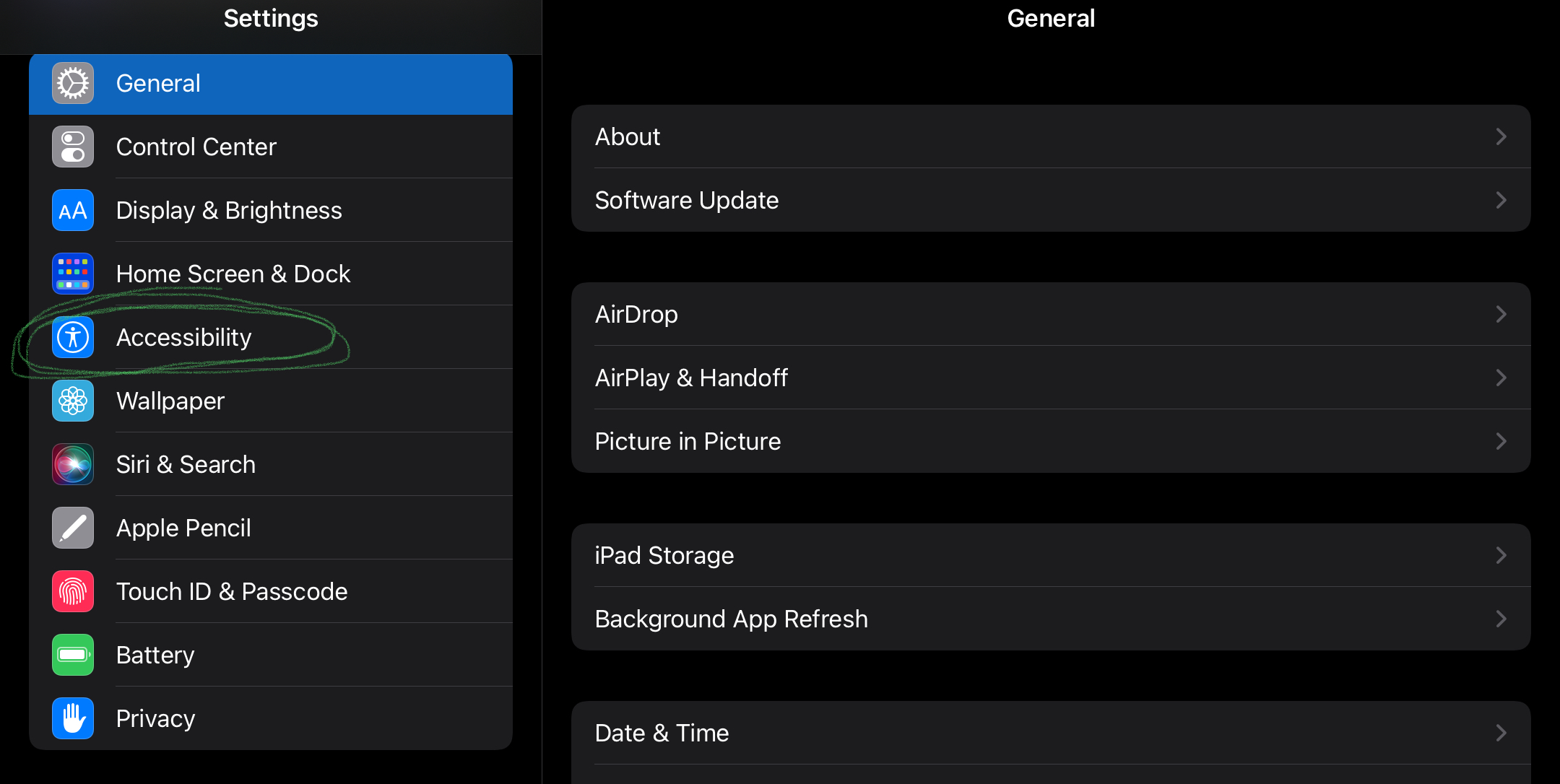
Open “settings” on the iPad.

On the left, scroll down to “accessibility” and select it.
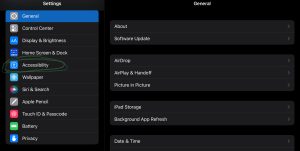
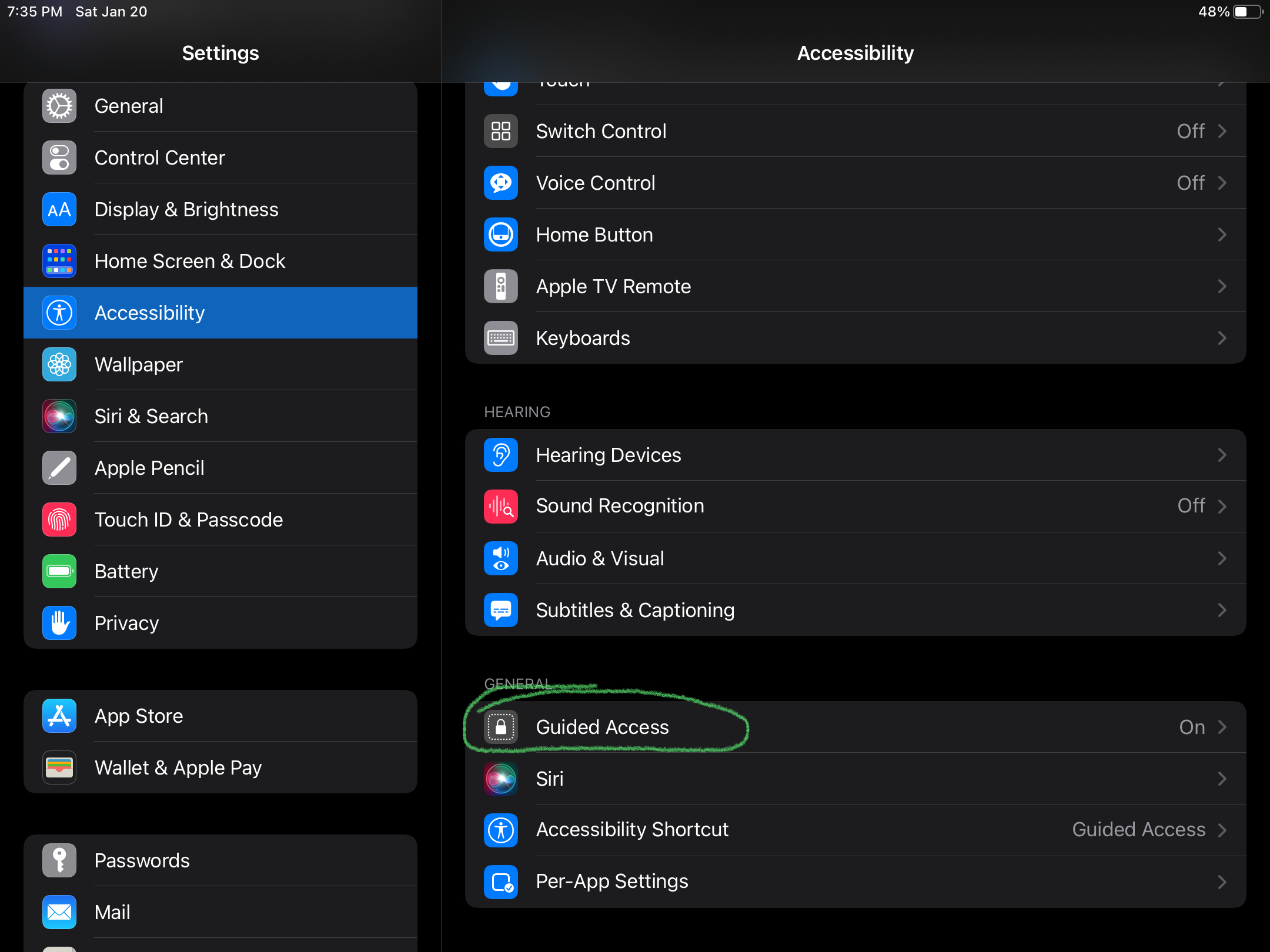
On the right, scroll down to “guided access” and select it.
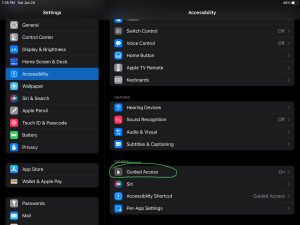
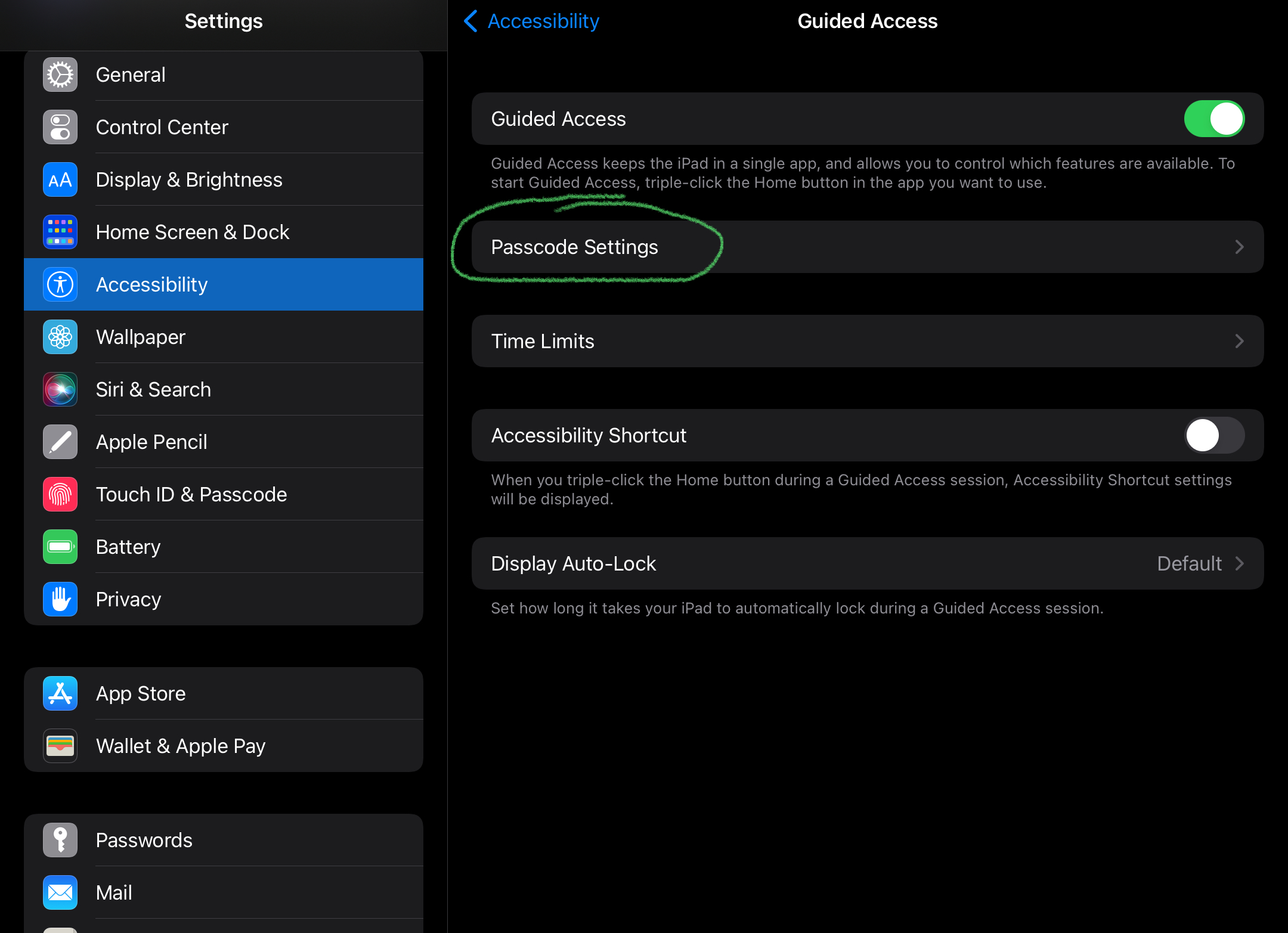
Once “guided access” is selected you can select “passcode settings” to set a passcode that will need to be entered to disable “guided access”. (You will be asked to re-enter the passcode to confirm.)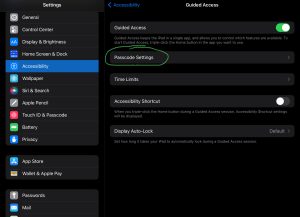
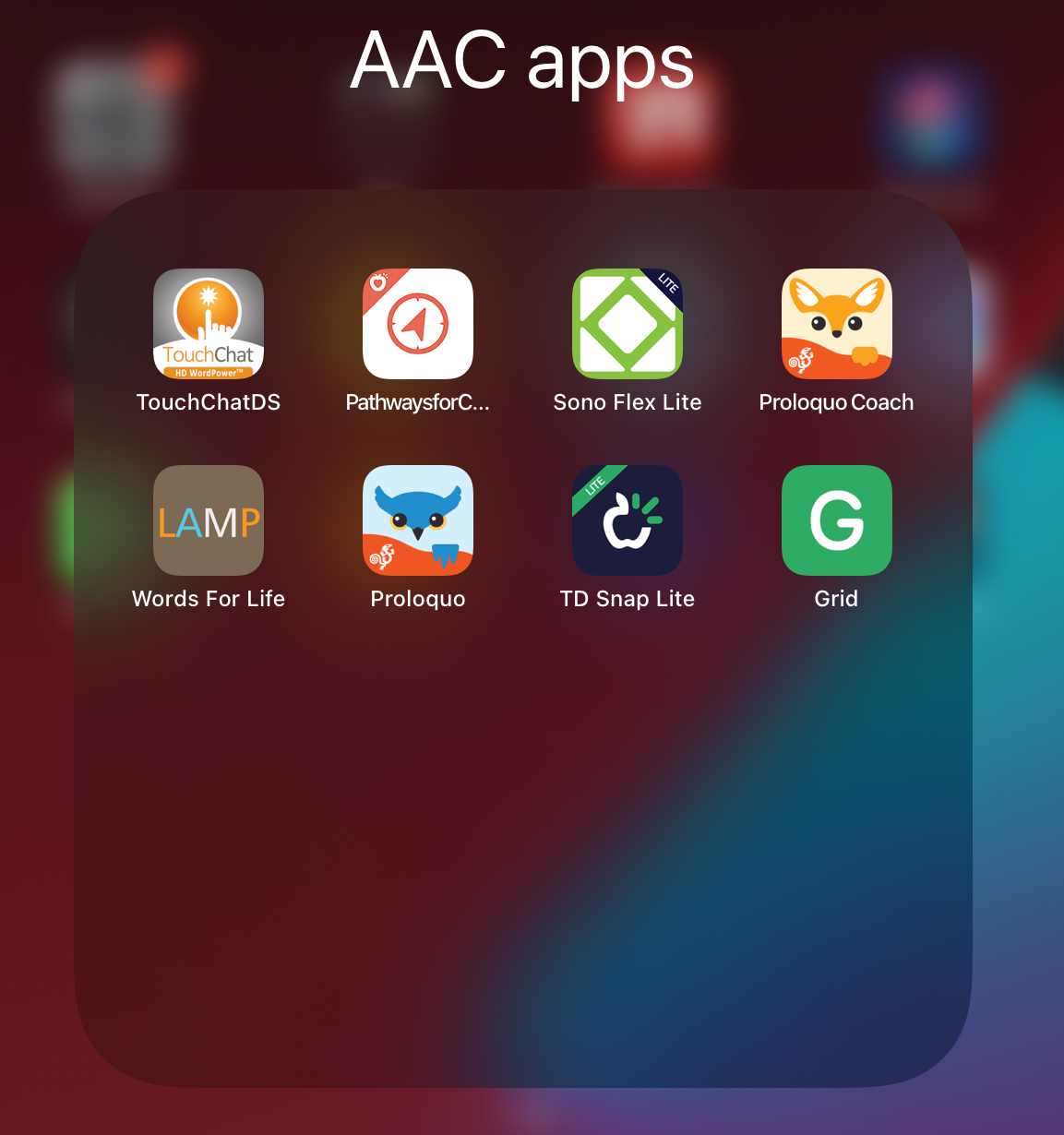
Once your passcode is set up, navigate to the communication app and open it.
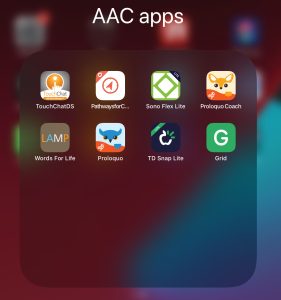
With the communication app open, click the home button three times (triple click) to activate “guided access”.
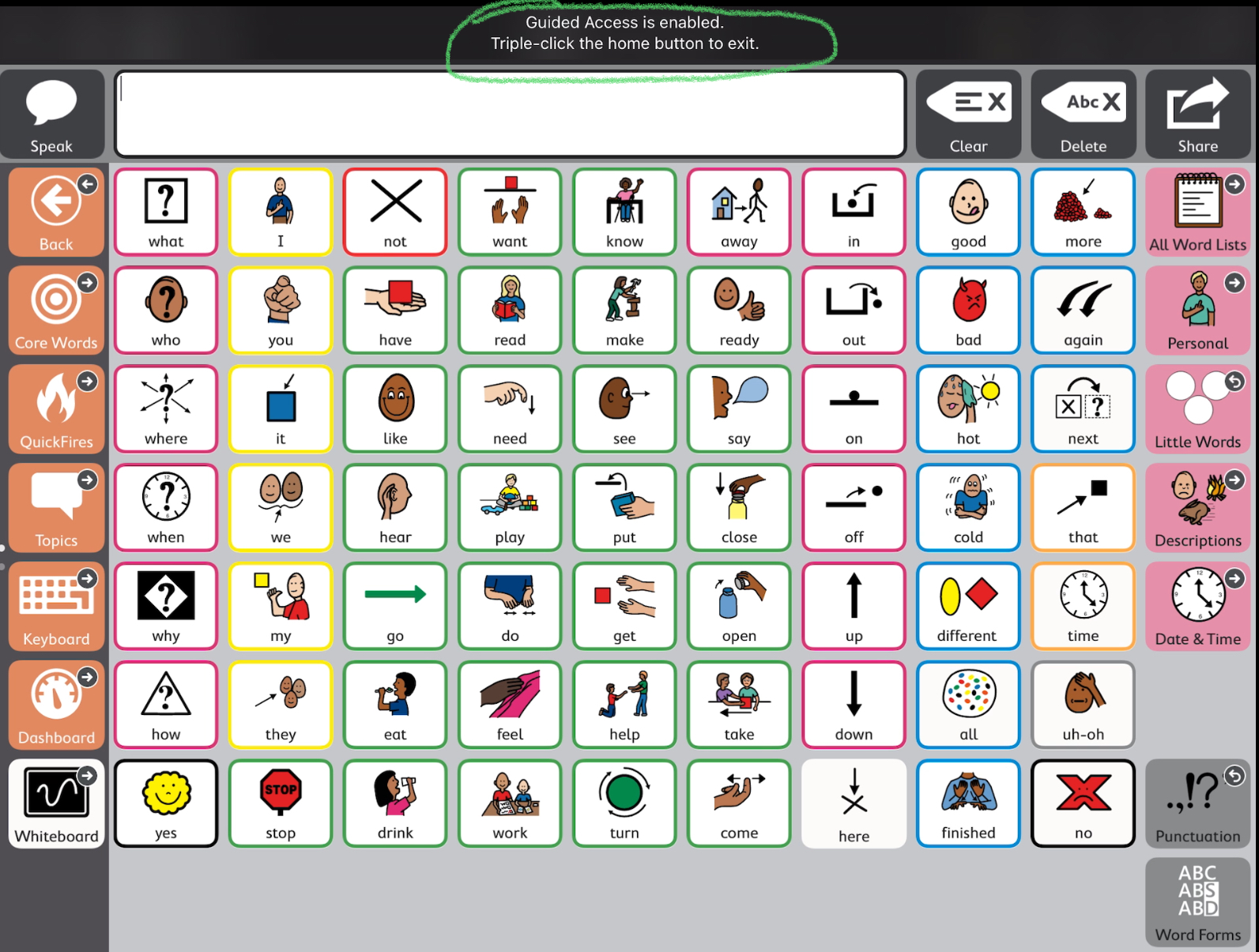
When guided access is enabled and the home button is pressed, a written prompt will appear at the top of the screen to triple-click the home button to disable it.
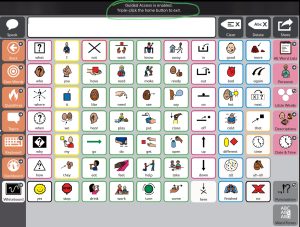
If you triple-click the home button, a pop-up will appear, prompting you to enter the passcode you set during setup.
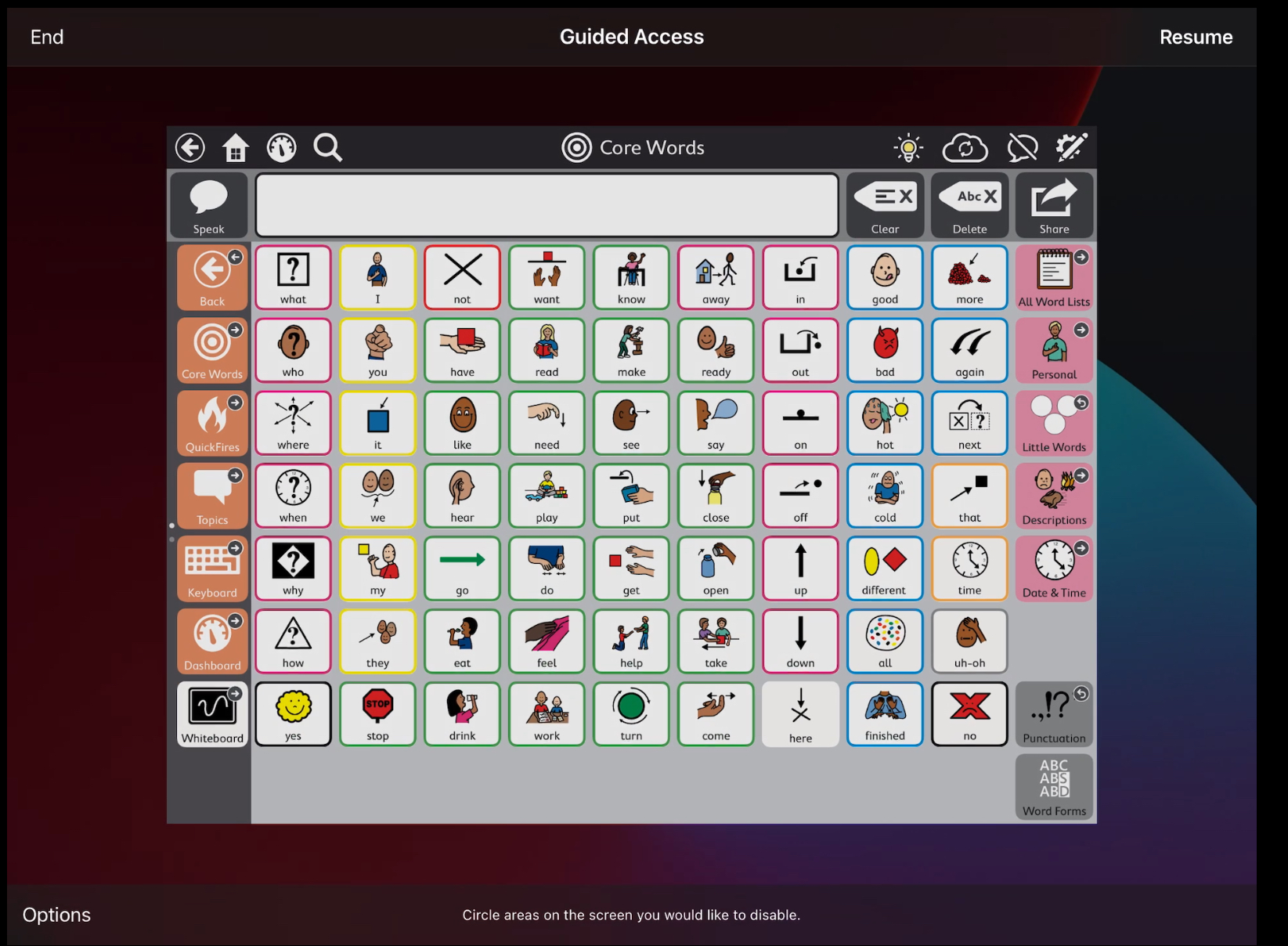
If you enter the correct passcode, you will be prompted to choose “end” or “resume” guided access.
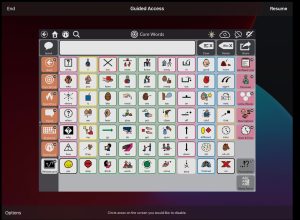
If an incorrect passcode is entered, you will have to wait a designated amount of time before an additional attempt.
Bonus tip!
If the iPad “dies” or runs out of charge, guided access is automatically disabled. Therefore, it never hurts to periodically check to see if guided access is enabled. To do so, just triple-click the home button. If guided access is enabled, the passcode pop-up will appear. If guided access is not enabled, triple-clicking the home button will reactivate it.
by Megan | Jan 13, 2024 | AAC, emergent literacy
How do I get staff to buy into modeling AAC and implementing emergent literacy strategies in their classrooms?
This is one of the questions that I am most frequently asked when talking to other speech-language pathologists (SLPs). While I agree that getting staff buy-in to model AAC and emergent literacy can sometimes feel like a challenge – but, it doesn’t have to! Here’s what I have proposed, introduced, and tried in classrooms I support to help motivate and encourage classroom teachers and staff to continue modeling AAC and implement emergent literacy strategies throughout their day:
- Make sure they understand the terminology.
Special education has 1 BILLION (if not more) acronyms and we often use them so regularly that we forget that everyone may need to learn what they all mean. When talking about different techniques and strategies, take the time to make sure that those you are talking to are clear on what you are saying. It does no good if one or more people leave a discussion about strategies to increase communication and literacy (or anything for that matter) wondering what it was that was discussed and what they can, or should do going forward. If you find yourself using acronyms often, it may be helpful to have a “cheat sheet” or “key” to share that reminds everyone what each acronym stands for.
- Reinforce what they are already doing.
No one likes to only hear what they aren’t doing and what they should do. And, I’m sure there are things that the classroom staff are already doing that are great! It is important to emphasize those things that are going well and that are successful – encouraging others and recognizing what they are doing well goes a long way in building rapport in any relationship!
- Show how they could easily add modeling AAC or emergent literacy into their established routines.
Sometimes, when we hear someone suggest that we “add” something to our day, we immediately stop listening and get defensive. All of us are already doing so much, especially in education, that the idea of adding one more thing is crazy. While this is true, and the last thing we want to do is add more to anyone’s plate – this is a great way to remind those we are supporting that language and literacy are not times of the day – they are always happening and are always around us. Taking the time to show staff simple ways that they can model AAC or implement an emergent literacy strategy into their daily routines can go a long way! Adding in these language and literacy moments doesn’t need to be anything long or time-consuming – it can be a quick mention of the letter of the day while reading instructions, a book, or on a walk about campus, or taking the time to point to a core word or two that naturally comes up during instruction, lunch, etc.
- Ask questions and listen to answers.
This might be the most important tip of all! In all collaborative relationships, it is imperative that everyone involved feels comfortable asking questions and knows that their thoughts, ideas, concerns, etc will be listened to. Take the time to ask questions so you can know how to best support each team, team member, classroom, etc. Ask what their concerns are, how they best learn, what they need more help with, how they like to receive feedback, what area(s) they would like to focus on, etc.
Taking the time to ask these questions and listen to the answers that are given will not only help to build the relationship, it will help guide how you can provide support and feedback as well as know how to help every team member set personal goals surrounding AAC modeling and/or emergent literacy implementation.
- Work together to brainstorm and establish personal goals focusing on these areas.
Once you have established that you are all on the same page, what’s going well, and where more support is needed, it’s time to set some goals. Depending upon how you support classrooms, you may set individual goals with each staff member or you may set goals with the team as a whole, or both. The great thing is that these goals can be personalized to fit everyone’s needs and adjusted as needed. When you are setting these goals, think of it just as you would writing goals for your students, making sure they are meaningful, measurable, and achievable. It’s up to you but I also like to discuss a reward that will be received when a goal is met – to me, this makes it extra motivating and meaningful. A reward could be something physical like a snack food, social such as a shout-out in the staff newsletter, or functional in the form of a set of printed and prepped visuals. Whatever they are, rewards should be as personal as the goals and chosen by the person receiving the reward.
While these are my top 5 tips for helping get classroom buy-in and what has helped me, it is a continual learning process, and keep in mind that some things may need to be added, deleted, tweaked, etc depending upon the teams you are supporting. If you are interested in learning more about this topic and getting access to interest surveys you can give to staff, data sheets, resource links, etc – check out my e-book “AAC & Emergent Literacy Challenge”. This ebook is filled with information on how to get started, strategies to make the challenge successful and fun, questionnaires to gather information and guide challenge creation and implementation, data collection sheets, and more!
If you have additional tips or strategies for classroom buy-in and support – drop them in the comments!
by Megan | Dec 16, 2023 | AAC, aided language input, aided language stimulation, blog, continuing education, core vocabulary, fringe vocabulary, modeling, prompt hierarchy
It’s the busiest time of the year! Wrapping up the year, buying gifts for all you love, finding time to celebrate with all your friends and family, you may feel like you are running around endlessly, the last thing you should have to worry about is making sure you have all of your continuing education units (CEUs) done to renew your licenses and certifications. 🤪
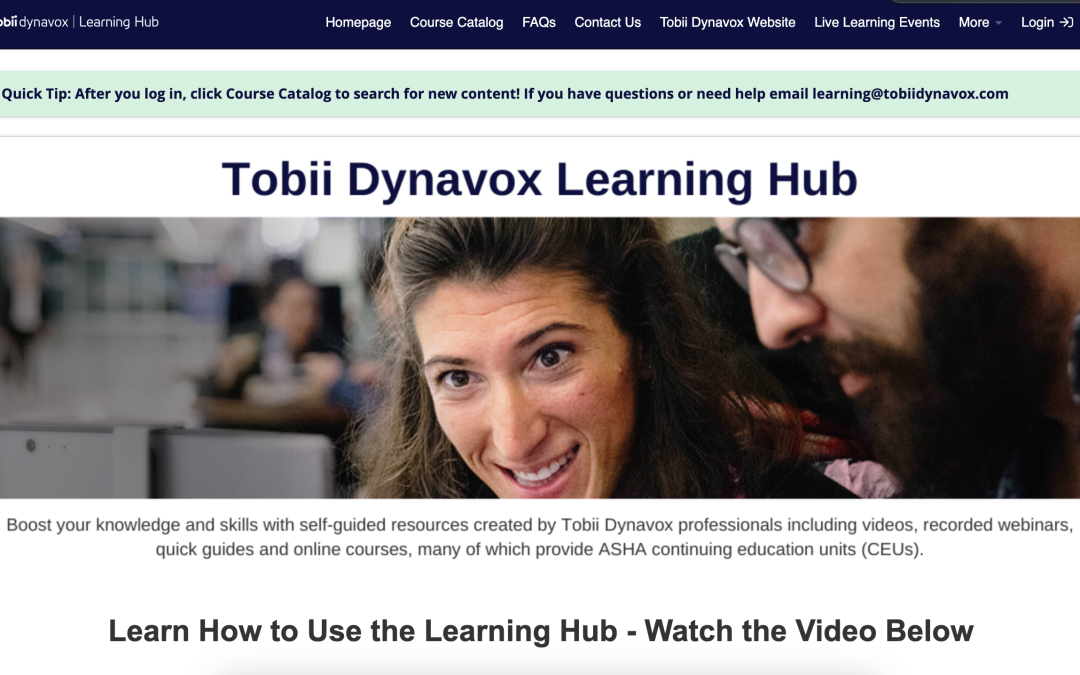
Before you close this window and start running around again, take the time to read to the end of this post, ‘cause I’ve got a way for you to rack up a bunch of CEUs for FREE! **Bonus if you want to learn more about AAC – these CEUs are AAC focused**
Ready to get started? Here we go!

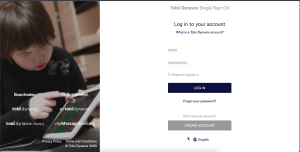
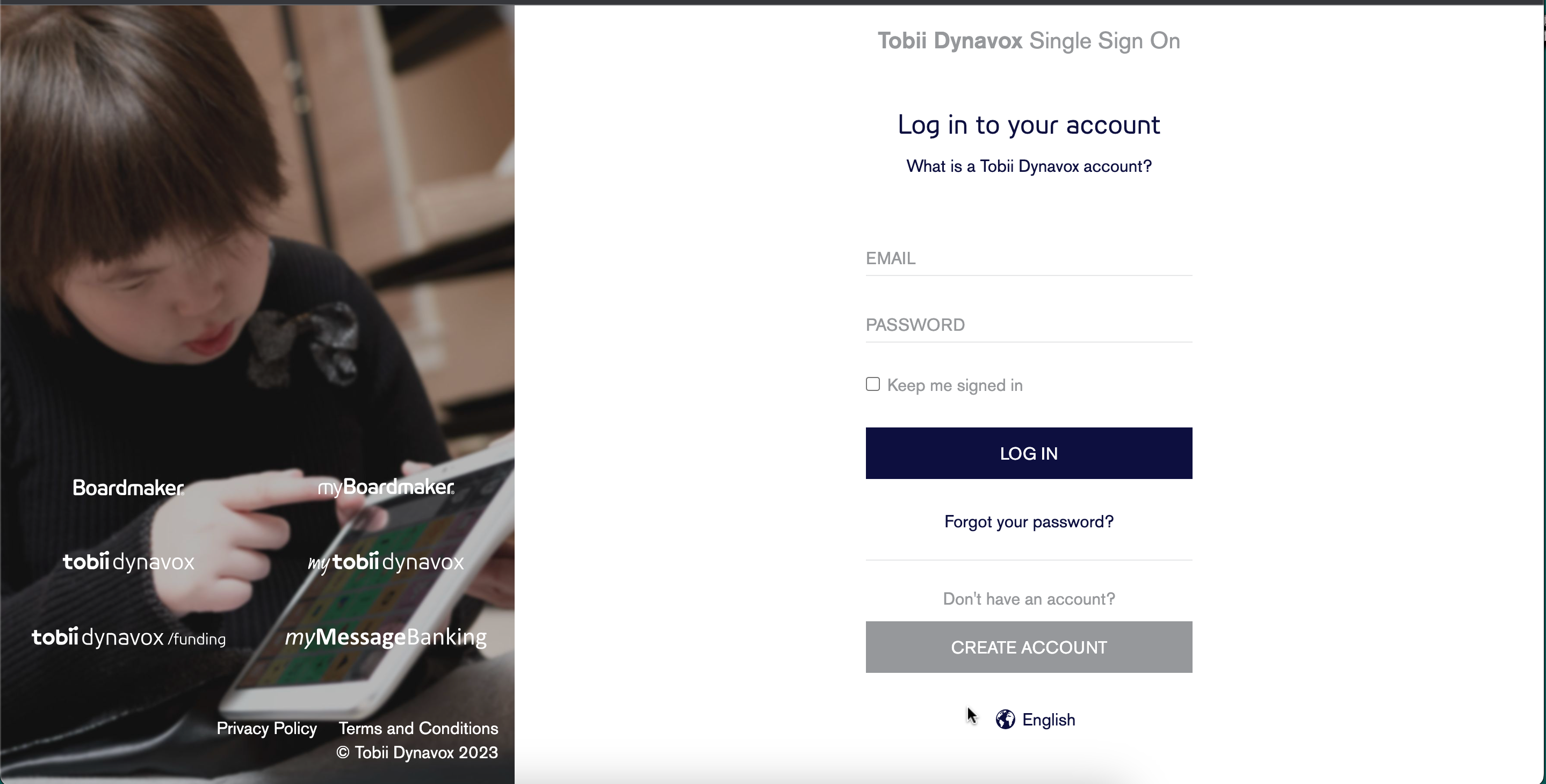
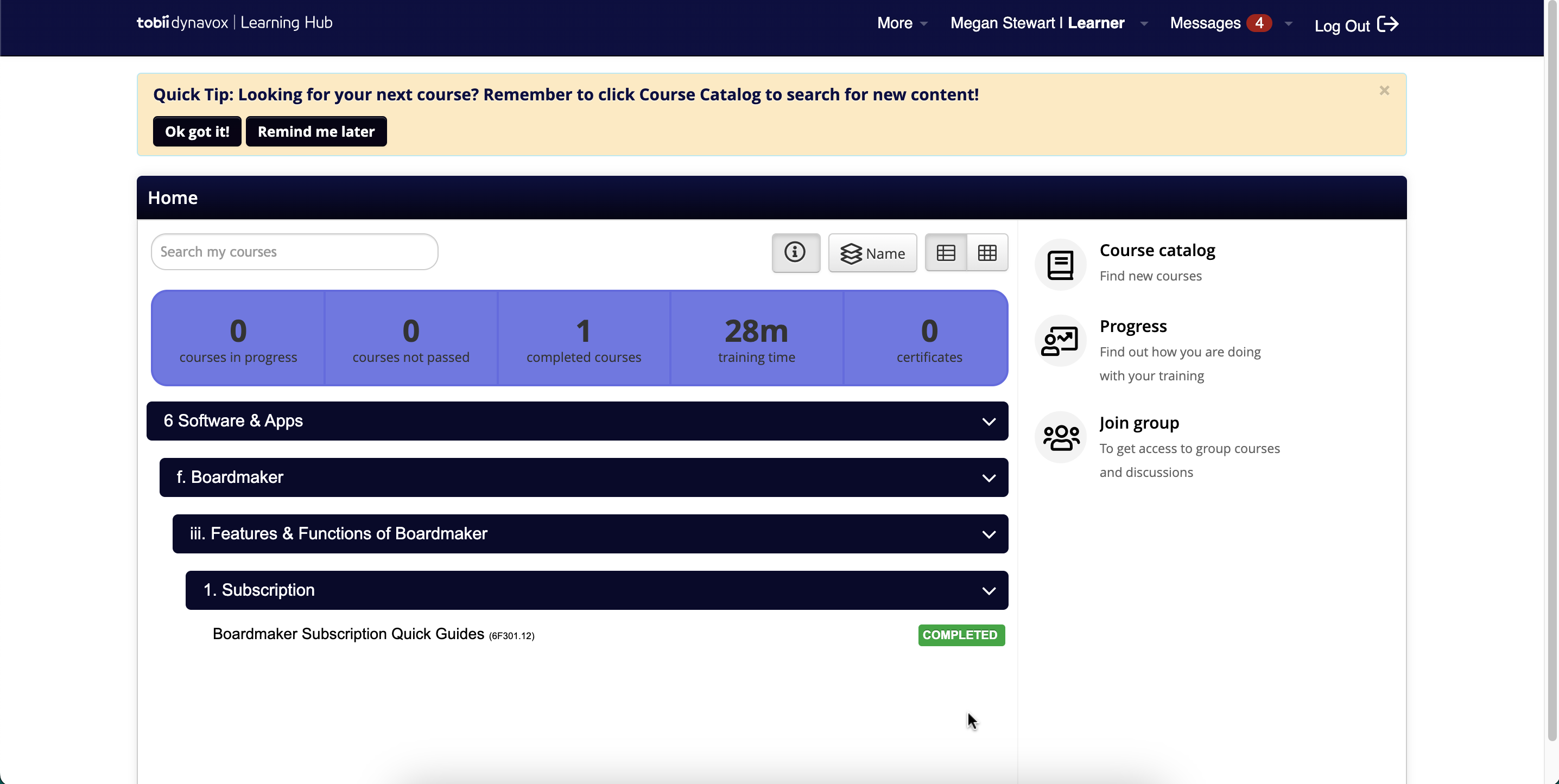
- You will be redirected to a login page where you can create an account or, if you have an account within any Tobii Dynavox or Boardmaker programs, use that account login and password.
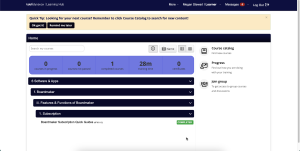
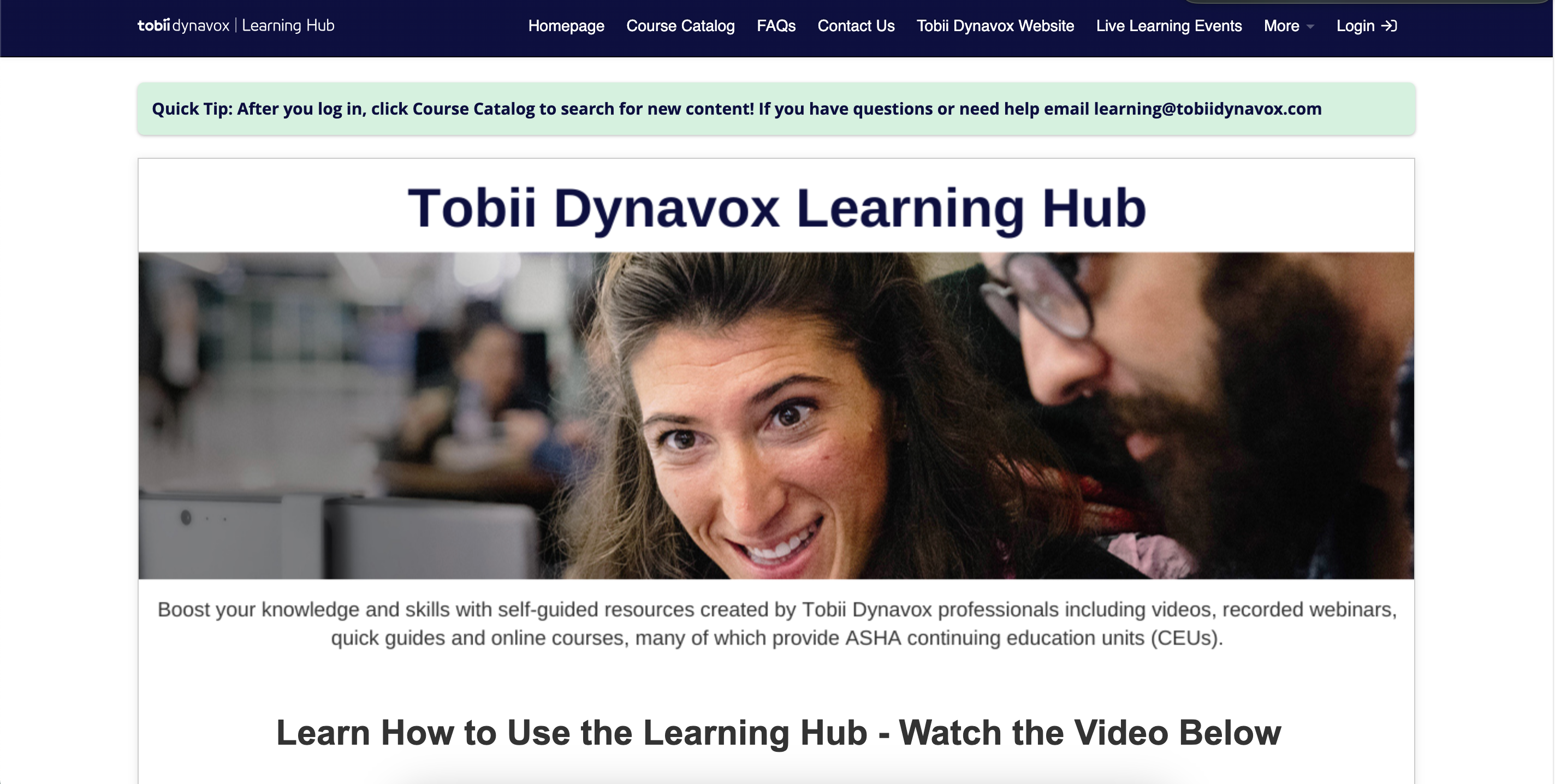
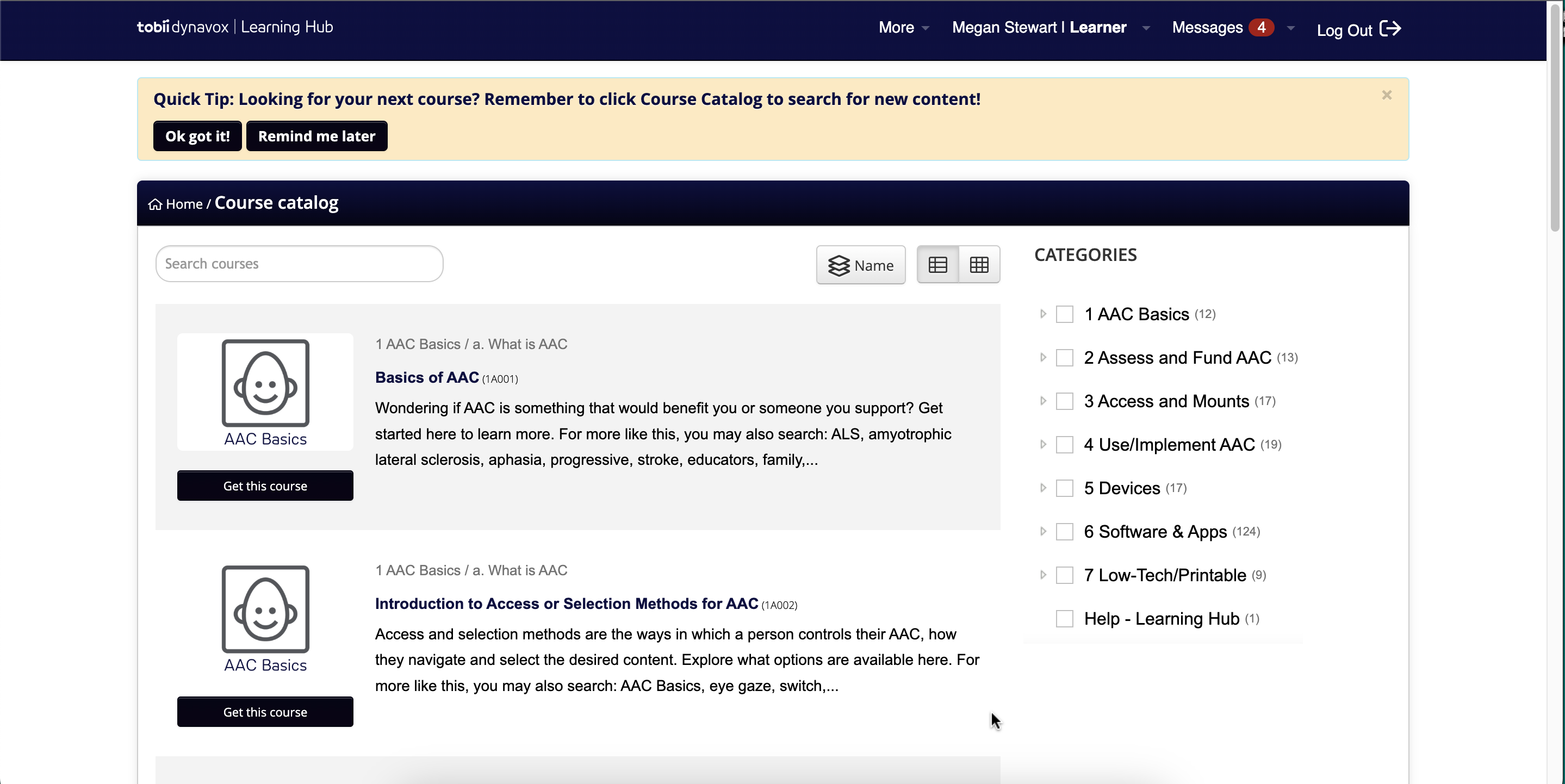
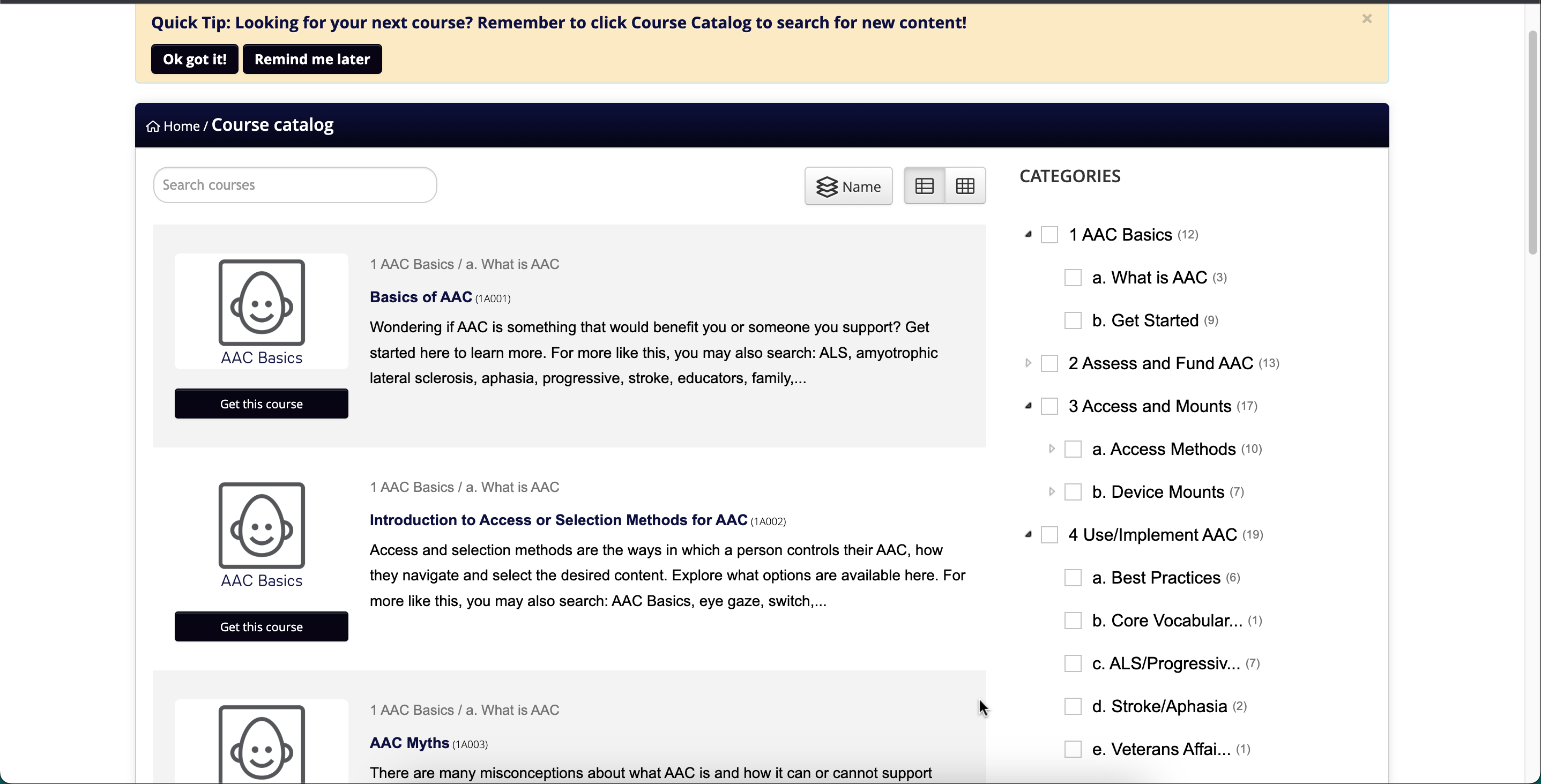
- After you log in you will be redirected to the Learning Hub, where you can start racking up those CEUs! Click on “Course Catalog” to see all the courses offered.
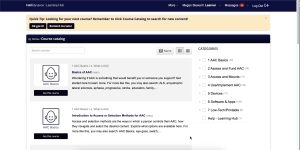
- Once you see the list of courses, you can also open the categories further to see additional specific courses.
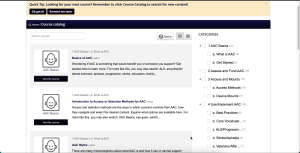
That’s it – you are ready to rack up a bunch of free CEUs to finish out your requirements for the end of the year, or whenever you need it!
If you work through any of these courses and find one that you really like, let us know in the comments so we can check it out too!
by Megan | Dec 29, 2020 | AAC, aided language input, aided language stimulation, core vocabulary, modeling, YouTube
Are you looking for fun ways to incorporate core vocabulary, early first words and literacy into therapy sessions and/or daily routines but not sure what books to read and/or how to focus on specific words while reading?
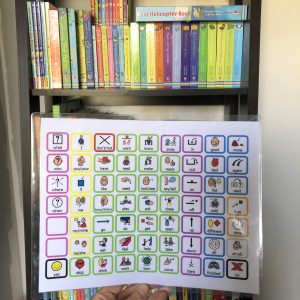
Core vocabulary and literacy – a perfect match!
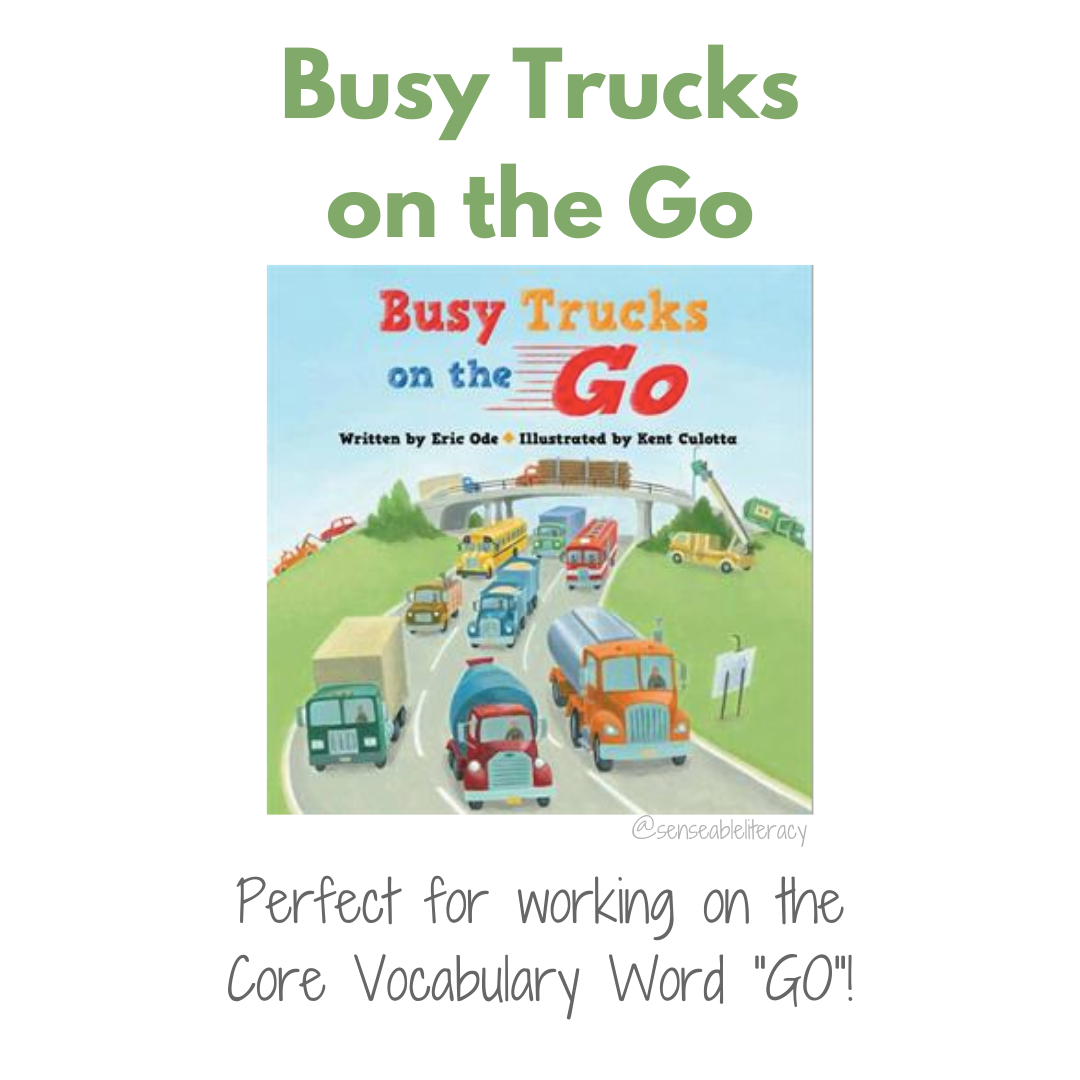
You’re in luck! I am going to introduce you to one of my favorite books to read, focusing on the core vocabulary word “GO”. I am also going to show you examples of how I might read this book with students to provide lots of opportunities for communication partners to model the word “GO” as well as opportunities for students to imitate and/or initiate communication with that word.
Ready? Here we GO!
Let me introduce you to “Busy Trucks on the Go” – a picture book filled with engaging scenes featuring various trucks and vehicles that kids may see throughout their day. The illustrations are narrated with simple rhyming text that labels the name of the vehicle as well as providing a clue as to the job the vehicle helps perform within the community. This mix of engaging, colorful illustrations and rhyming, rhythmic text make this book a fun read for kids and adults alike!
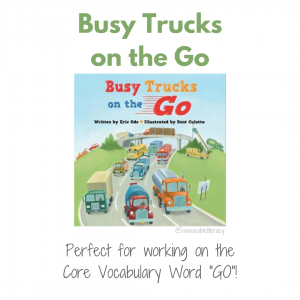
Something to note is that the word “GO” is not included frequently within the text and therefore, the reader should not rely on the text alone to provide opportunities for modeling “GO” for students. However, opportunities to model “GO” do appear frequently when looking at and chatting about the illustrations of the trucks and vehicles as well as the adventures of a boy and his dad as they move about town seeing the various vehicles.
Modeling Core Vocabulary while reading…
This book lends itself very easily to engaging in shared reading between an adult and student – sharing observations about the illustrations such as:
Where are the vehicles are “GO”ing?
The cement is “GO”ing out of the cement truck.
Dirt is “GO”ing in the dump truck.
Dad’s truck can not “GO”.
Water is “GO”ing out of the fire hose.
Where are the people are “GO”ing?
Remember…
Follow the lead of your students or whomever you are reading with during shared reading, modeling various vocabulary as you read. While you may be focusing on one core vocabulary word in particular, modeling a variety of words demonstrates that there are no “right” or “wrong” words and that you can say lots of different things about the same picture.
I need this book!
Ready to add this book to your library? Follow the link below to purchase this beautifully illustrated and engaging book:
Busy Trucks on the Go: https://c8314.paperpie.com/p/3737/busy-trucks-on-the-go
Remember – there is no right or wrong way to read a book – just keep reading!

By the way…
P.S. If you are a visual learner or just hang out on YouTube – you can watch this content come to life there: https://youtu.be/2rA-gROzCF0
by Megan | Dec 21, 2020 | AAC, aided language input, aided language stimulation, core vocabulary, modeling, Sensory, YouTube
Are you looking for fun ways to incorporate core vocabulary, early first words and literacy into therapy sessions and/or daily routines but not sure what books to read and/or how to focus on specific words while reading?
Core vocabulary and literacy – a perfect match!
You’re in luck! I am going to introduce you to one of my favorite books to read, focusing on the core vocabulary word “GO”. I am also going to show you examples of how I might read this book with students to provide lots of opportunities for communication partners to model the word “GO” as well as opportunities for students to imitate and/or initiate communication with that word.
Ready? Let’s GO!
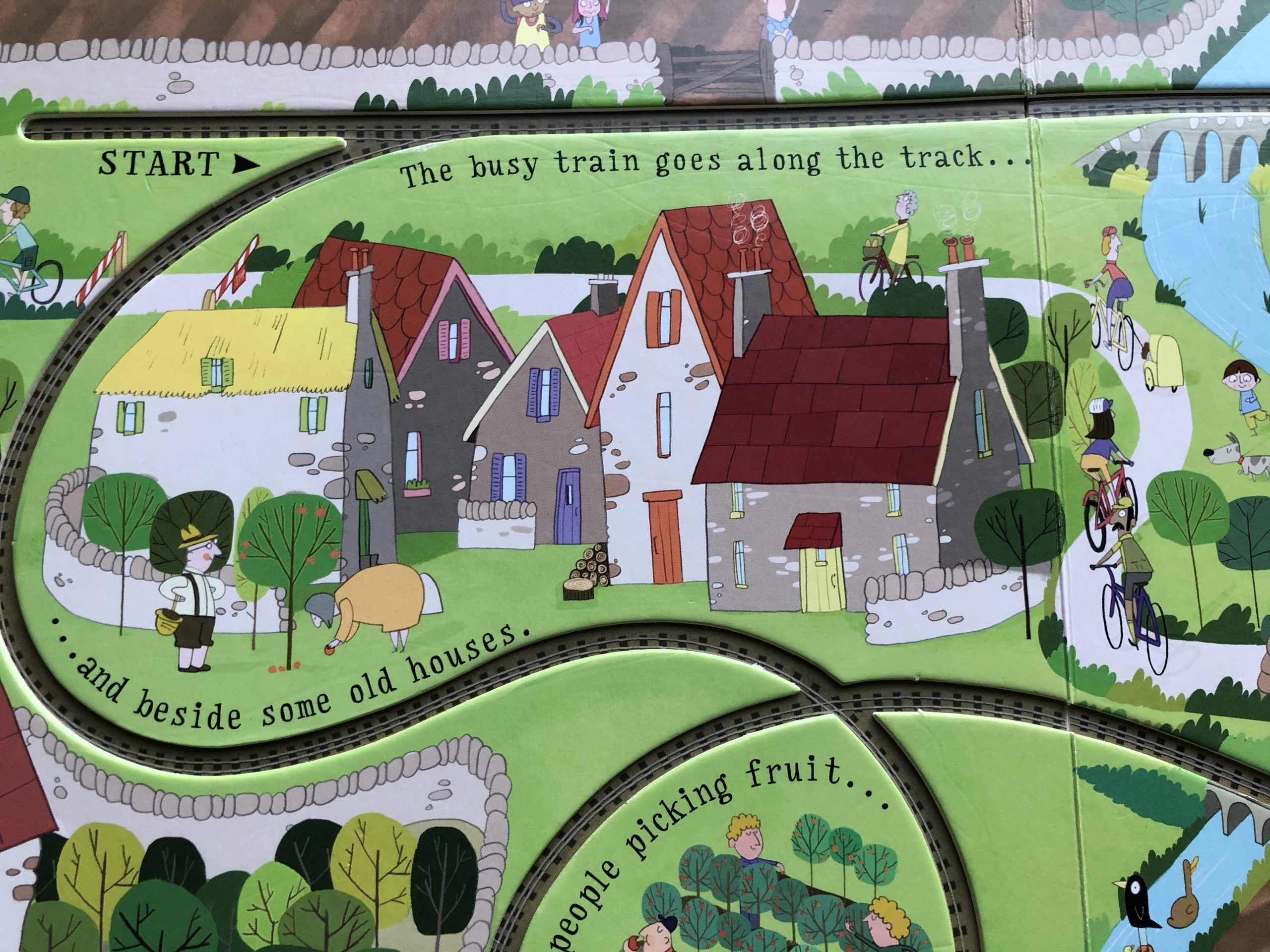
Let me introduce you to the “Busy Train Book” – it’s one book in a collection of Busy Books that include: Busy Car, Busy Helicopter, Busy Bug and one that is released around the holidays, Busy Santa. Each of these books includes a pull back and go vehicle that travels around four various tracks throughout the story book, with each page narrating the travels of the pull back and go vehicle.
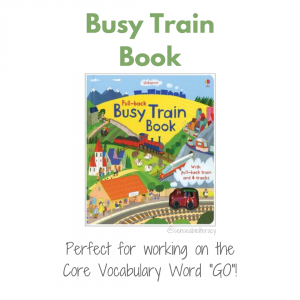
The “Busy Train Book”: Perfect for modeling the core vocabulary word “GO”.
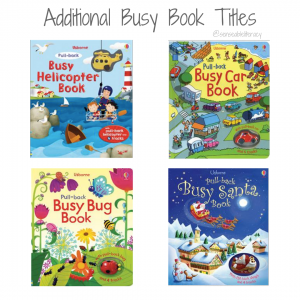
Additional Busy Book Titles including Busy Helicopter, Busy Car, Busy Bug, & Busy Santa
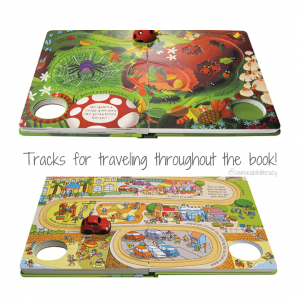
Each book has 4 tracks for traveling throughout the book!
The train in this book, and the vehicles in all the other Busy Books, are highly motivating and provide a built in opportunity to practice modeling and using the word “GO” multiple times on each page which is fantastic for early communicators – you can model “GO” while checking out the scenes around each track without reading the text.
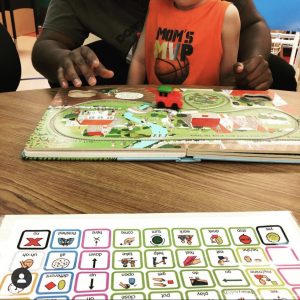
PreK student reading and playing with the “Busy Train” book
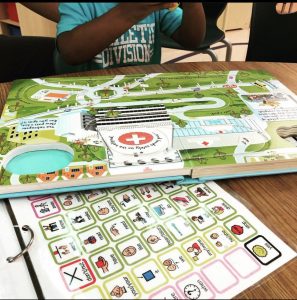
PreK student playing with and reading “Busy Helicopter” book.
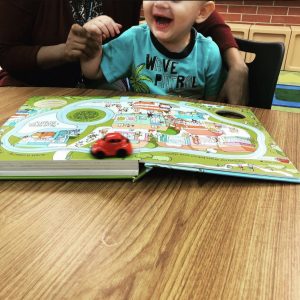
PreK student playing and reading the “Busy Car” Book
Incorporating Core Vocabulary while reading…
Opportunities to model “GO” are everywhere in the book and starts on the first page where the text encourages the readers to place the train on “start” and let it “GO”!
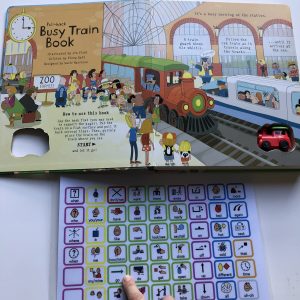
Modeling opportunities start on the first page!
Other opportunities to model “GO” include:
When starting the train on the track, say and model: “READY, SET, GO!”
While the train is moving along the track, say and model: “LOOK AT THE TRAIN GO!”
If the train stops you can say and model “GO” by saying “Let’s make the train GO again!”
The word “GO” is also in the text on 2 of the tracks – this is a natural opportunity to model “GO” while reading the text to build literacy skills.
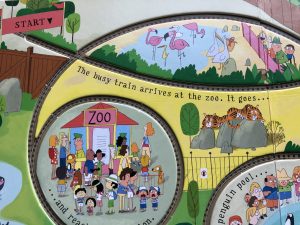
The word “GO” is featured in the text as well – providing extra opportunities for modeling and literacy.
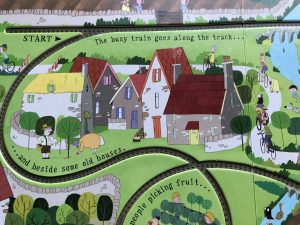
Text featuring the core vocabulary word “GO” provides extra opportunities for modeling and literacy exposure.
But that’s not all!

There are lots of additional Core Vocabulary to model while reading as well!
While this book lends itself to easy and frequent modeling of the core vocabulary word “GO”, there are lots of other core vocabulary words that can be modeled throughout this book, including:

There are many opportunities to model “LIKE” throughout the book!

There are many opportunities to model the core word “LOOK” while reading.

Don’t forget to ask questions while reading and modeling!

“TURN” is easy to incorporate often while reading.

A great opportunity to practice asking for help!
There are lots of prepositional concepts throughout the book to chat about as well!
Remember…
Follow the lead of your students or whomever you are reading with, modeling various vocabulary as you go. The illustrations within the book are beautiful visual scenes filled with lots of different objects, actions and places to explore and chat about!
I can’t wait to incorporate literacy, AAC & play!
Ready to add this book or others from the Busy Book collection to your library? Check them out here:
Remember – there is no right or wrong way to read a book – just keep reading!
Just keep reading!
One final note…
P.S. If you are a visual learner or just hang out on YouTube – you can watch this content come to life there: https://youtu.be/ScWO9dTYmfE









Recent Comments