by Megan | Mar 30, 2026 | AAC, aided language input, aided language stimulation, blog, books, emergent literacy, modeling, tips, training
If you’ve been wanting to start engaging in shared reading with an AAC user but aren’t sure where to begin, you are not alone.
For many parents, teachers, therapists, and support staff, shared reading can sound both wonderful and overwhelming. You may wonder:
- What book do I choose?
- What words do I model?
- How long do I read?
- What do I do if the child is not looking at the book?
- How will I know if I am “doing it right?”
All of those questions are valid.
The good news is that shared reading does not need to be complicated to be meaningful. You do not need a perfect lesson plan, a fancy setup, or a huge amount of time to get started. You just need to start.
If you missed my first post about shared reading, I shared more about what shared reading is and why it matters for AAC users. This post is the next step: how to begin in a way that feels realistic, supportive, and doable.
Start with one book, not a whole library
When people are just getting started with shared reading, it’s easy to overcomplicate choosing what book to read, but, it doesn’t have to be.
You do not need a huge stack of books. You do not need the perfect themed unit. You do not need to spend hours searching for just the right title.
Start with one book.
There are so many books out there that could be perfect for shared reading but you just need to chose one and start. I encourage you to pick a book that you like.
Yep, I said you.
Why? Because if you like it, you will be more animated when you read it, and you will be excited to share it with someone else. The learner you read with will feel your excitement and joy around reading this book, and what better feelings to build a connection around than excitement and joy!
If choosing a book you like still leaves you with too many options or you are still unsure if that is enough. You could also choose a book with one or more of these qualities:
- predictable or repeated lines
- engaging pictures
- simple, meaningful language
- a topic the child may enjoy
- opportunities for reaction, anticipation, or participation
Books with repetition can be especially helpful because they lower the load for everyone involved. The adult starts to feel more comfortable. The child starts to recognize the language and rhythm. The reading experience becomes more familiar and less demanding.
Starting with one book also gives you permission to slow down. Instead of rushing to do more, you can focus on making one shared reading experience feel more connected and accessible.
Choose 3 to 5 words to model
Another thing that can make shared reading feel intimidating is the pressure to model all the words.
Just like in any other routine, where you don’t have to model every word you say, you do not need to model every word in the book either.
In fact, it is usually much more helpful to choose just a few words to focus on. That might mean a few core words, a few fringe words connected to the story, or a combination of both.
For example, you might choose words like:
Or, depending on the book, you might add story-specific words if they are meaningful and/or motivating to the learner.
The goal is not to model every possible word. The goal is to make language feel visible, repeated, and connected to the experience.
When you narrow your focus to a few words, it becomes easier to model naturally and more often. That helps shared reading feel more manageable for the adult and more accessible for the AAC user.
Keep the environment supportive, not perfect
You do not need a picture-perfect reading corner to begin shared reading. What matters more is creating a supportive environment, and that can look very different depending on what you are reading, who you are reading with, where you are reading, etc. Remember the connection is the most important part, not the location.
That said, the environment still matters. When thinking about various locations for shared reading, keep these ideas in mind:
- Make sure the child is physically comfortable
- Think about positioning and access
- Reduce unnecessary sensory overwhelm
- Allow movement
- Adjust your pace to meet the learner where they are – some might need a slower pace, while some might do best when reading is fast and repetitive.
- Keep demands low and connection high
For some children, shared reading may happen best while sitting close together with the book open between you. For others, it may happen while they move around the room, bounce, pace, lie on the floor, or come in and out of the interaction.
Regardless of what it looks like, shared reading is still occurring.
Sometimes we get overwhelmed and don’t get started because we aim for an idealized reading setup instead of a supportive one. But shared reading can still be meaningful even when it looks flexible, messy, or different from what you expected.
It might not look how you expected at first
Shared reading may not look the way you imagined, especially at first.
The learner may not sit still.
They may not look at the book the whole time.
They may flip pages quickly.
They may only stay for one or two pages.
They may move away and come back.
They may laugh, vocalize, stim, protest, or seem interested in one small part of the experience and want to repeat it over and over again.
That does not mean you are failing.
Remember that we are looking for connection and connection looks different to everyone. Shared reading can look like the list above whether you are brand new to it or have been doing it for a long time.
When shared reading is new, or when a child has not been given access to reading in a way that truly meets their needs, it can take time for the experience to feel familiar and safe.
Instead of asking, “Does this look ‘right’?” it may be more helpful to ask:
- Were there any moments of connection?
- Did the child have access to the book and language to share about the book?
- Was the experience supportive rather than demanding?
- Is this something we would want to return to again?
Those are much more useful questions for reflection than whether the reading looked neat or traditional.
Focus on connection, not performance
Shared reading is not:
- A test.
- About getting through every page.
- Asking a bunch of comprehension questions.
- Getting the child to point, label, or answer on command.
Shared reading is:
- Connection.
- Being with the child in the book.
- Noticing what they notice.
- Modeling language in a meaningful context.
- Making literacy feel inviting instead of demanding.
When the goal shifts from performance to connection, shared reading becomes more accessible for everyone involved.
It also becomes easier to recognize participation in all its forms: a smile, a glance, a repeated button press, a page turn, a laugh, a request to read the same book tomorrow.
Those moments matter.
Repeat, repeat, repeat
If you take one thing from this post, let it be this: you do not need a new book every time.
Re-reading the same book is not boring. It is supportive.
Repetition helps:
- build familiarity
- lower pressure
- strengthen understanding
- create anticipation
- provide more opportunities for AAC modeling
- support participation
When a child already knows the rhythm of a book, they do not have to spend as much energy figuring out what is happening. That frees up space for connection, language, and engagement.
The adult benefits too. When you know the book well, it becomes easier to choose words to model, pace yourself, and feel more confident in the interaction.
If you want to make shared reading feel more doable, repetition is one of the best tools you have.
A simple way to start
If you are still feeling unsure, here is a simple framework to keep in mind:
One book.
A few words.
A supportive setup.
No pressure.
Repeat.
That is enough to begin.
Focus on consistency, not complexity.
You can start small and still make it meaningful
Sometimes people wait to start shared reading because they think they need more time, more training, more materials, or a better setup before they begin.
But often, what makes the biggest difference is not doing more. It is starting smaller.
- Read one book.
- Model a few words.
- Let the child move.
- Adjust your pace.
- Read it again.
That is a meaningful beginning.
And when that beginning is grounded in connection, access, and flexibility, it can grow into something really powerful over time.
Final thoughts
If you have been unsure how to start shared reading with AAC users, remember this:
- Starting small is enough.
- One book, a few modeled words, and repeated opportunities are a strong place to begin.
- Shared reading should feel inviting, not performative.
- Repetition builds confidence, familiarity, and access.
You do not need to do it perfectly. You just need to begin.
If you want a more supported roadmap for getting started, my e-book walks through shared reading with AAC users in a practical, affirming way and can help you feel more confident about what to do, what to model, and how to make the experience more accessible and meaningful.
by Megan | Mar 23, 2026 | AAC, aided language input, aided language stimulation, blog, books, emergent literacy, modeling, tips, training
When people think about reading with a child, they often picture sitting close, looking at the pages together, listening quietly, answering questions, and making it through the whole book from beginning to end.
But for many AAC users, reading together may not look like that at all.
It may look like glancing at a page and then looking away. It may look like listening while jumping on the trampoline or running around the room. It may look like smiling at a favorite line, reaching toward a picture, vocalizing during a repeated phrase, activating a word on an augmentative and alternative communication (AAC) device, turning a page, repeatedly opening and closing the book, flipping quickly through the pages, or only reading one or two pages.
And all of that is still reading together; it all still counts.
All of these examples are just some of the reasons why I love talking about shared reading, and why it matters so much.
For AAC users, shared reading is about so much more than “reading the story.” It is an opportunity for connection, communication, language modeling, literacy learning, and participation in an experience that should belong to every child.
What is shared reading?
Shared reading is exactly what it sounds like: reading a book together in a way that invites connection, interaction, and participation.
It is not about asking a bunch of questions to quiz them on what they know, getting through every page, expecting one type of response, or any response at all. Instead, shared reading is a back-and-forth experience where the adult and child engage with the book together through pictures, words, AAC modeling, gestures, reactions, repeated lines, page turns, facial expressions, comments, and shared attention and enjoyment.
For AAC users, shared reading can be a powerful way to support both communication and literacy in a meaningful, accessible way.
My favorite part is that shared reading does not have to be rigid to be effective; in fact, it’s better if it’s not. It can be playful. It can be sensory-filled. It can be brief. It can be repeated. It can be adapted to meet the child where they are. It can look different from one child to the next.
That flexibility is part of what makes it so powerful.
Shared reading is more than story time
Shared reading is not a passive activity—something nice to do if there is time, or something mostly meant for entertainment.
Shared reading offers so much more than that.
It’s an opportunity to build language through meaningful language modeling.
It’s an opportunity to expose children to books, print, ideas, and vocabulary.
It’s an opportunity to create predictable routines around literacy.
It’s an opportunity to connect with another person around something enjoyable.
It’s an opportunity for a child to participate in literacy before they can read conventionally.
These are important opportunities for any child, but for AAC users, they are especially vital.
Shared reading creates access to language-rich, literacy-rich experiences right now, not later. It does not ask children to prove they are “ready” before they get invited in.
Shared reading is a literacy experience
Sometimes there is an unspoken belief that literacy instruction begins only after a child can attend for longer periods, identify letters, answer comprehension questions, or use AAC in a more conventional way.
But literacy does not begin only once a child “looks” ready.
Shared reading is a perfect way to introduce and build literacy from the very beginning.
When AAC users are included in shared reading experiences, they are being exposed to:
- books and print
- vocabulary and concepts
- story structure
- repeated language patterns
- connections between spoken language, AAC, pictures, and meaning
They are also learning something deeper: that books are for them too – and that message matters.
Shared reading helps lay the foundation for later reading and writing, but it continues to be valuable as learners continue to build their literacy skills. It gives children access to ideas, language, and literacy experiences before, during, and after conventional reading skills are in place.
Shared reading is also a communication experience
Another reason I love shared reading is that books are an incredibly natural place for AAC modeling.
During shared reading, we can model:
- core words like “look, turn, more, again, go, stop, like”
- fringe vocabulary connected to the story
- comments and reactions
- feelings
- actions
- opinions
- protests
And because favorite books are often read again and again, that language gets repeated in a meaningful context.
That repetition is powerful. It strengthens connections between the reader, the child, and the language being modeled. It also lowers pressure and builds familiarity. It gives learners more opportunities to see, hear, and experience language without needing to perform on cue.
Shared reading gives us another opportunity to use AAC in natural contexts and routines —not just for requesting, or answering questions, but noticing, commenting, enjoying, wondering, and most importantly, connecting.
Participation does not need to look one specific way
When thinking about what shared reading looks like, many of us may need to keep widening our lens.
Too often, shared reading is treated as successful only if a child:
- sits still
- looks at the book the whole time
- answers comprehension questions
- points to the “right” picture
- stays until the very end
But meaningful participation can look very different.
For AAC users, participation might mean:
- leaning in during a favorite part
- anticipating a repeated line
- smiling, laughing, or vocalizing
- turning the page, whether it is “time” to or not
- pressing a familiar word on AAC, even if it doesn’t seem relevant at the time
- choosing the same book again tomorrow
- protesting a part they do not like
- moving in and out of the interaction and/or area while still staying connected
These moments matter. They signal engagement and interest.
They are no less meaningful because they do not fit a narrow or traditional picture of what reading together is “supposed” to look like. In fact, when we recognize these moments as real participation, we make more room for authentic engagement and less room for compliance-based expectations.
Shared reading can support regulation and connection
Those moments are worth noticing.Shared reading is not only about literacy and language skills. It can also be a social and regulating experience.
There is something powerful about sitting with another person, sharing a familiar book, hearing a repeated phrase, anticipating what comes next, and being invited into the experience without pressure.
For many children, that rhythm and predictability can feel grounding.
This is why sensory supports matter. Positioning matters. Pacing matters. Emotional safety matters. Physical comfort matters.
Sometimes the most meaningful part of shared reading is not a correct answer or a measurable response. Sometimes it is that a child stays close a little longer. They relax into the routine. They re-engage after stepping away for a moment. They reach for the book again later. They smile at a favorite page.
Shared reading is a place to presume potential
One of the reasons I care so deeply about shared reading for AAC users is that it reflects something bigger: the belief that all children deserve access to rich literacy experiences.
Not later.
Not once they prove themselves.
Not once they meet a specific goal.
Now.
When we offer shared reading opportunities in thoughtful, accessible, supportive ways, we are sending a powerful message:
You belong here.
Books are for you.
Language is for you.
Literacy is for you.
That is the kind of message all children should receive over and over again.
You do not have to do this perfectly
If shared reading feels intimidating, I want to say this clearly: you do not have to do it perfectly for it to matter.
You do not need the perfect book.
You do not need the perfect setup.
You do not need a child to attend in one specific way.
You do not need to ask all the right questions.
You just need a starting point, a willingness to connect, and the belief that this experience is worthwhile.
Start with one book.
Read it again.
Model a few words.
Slow down.
Notice what the child notices.
Let the experience belong to both of you.
That is enough to begin.
Final thoughts
Shared reading matters for AAC users because it is not just story time; it’s so much more.
It is access.
It is connection.
It is communication.
It is literacy.
It is belonging.
And every child deserves that.
If shared reading with AAC users is something you want to feel more confident about, I created my e-book “Shared Reading with AAC Users: A Neurodiversity Affirming Guide” to help. Inside, I share practical, neurodiversity-affirming ways to make shared reading more accessible, meaningful, and enjoyable so you can feel empowered to start reading with your AAC users right away.
by Megan | Dec 31, 2025 | AAC, blog, modeling, prompt hierarchy, tips, training
It’s 2001, my first year as a speech-language pathologist, and I’m meeting one of the students on my caseload. I can still see her smile, and I remember thinking that she might be the happiest kid I’ve ever met. I was the only SLP assigned to that school, so I knew I’d be supporting a wide range of students. I just never guessed one would change my life forever.
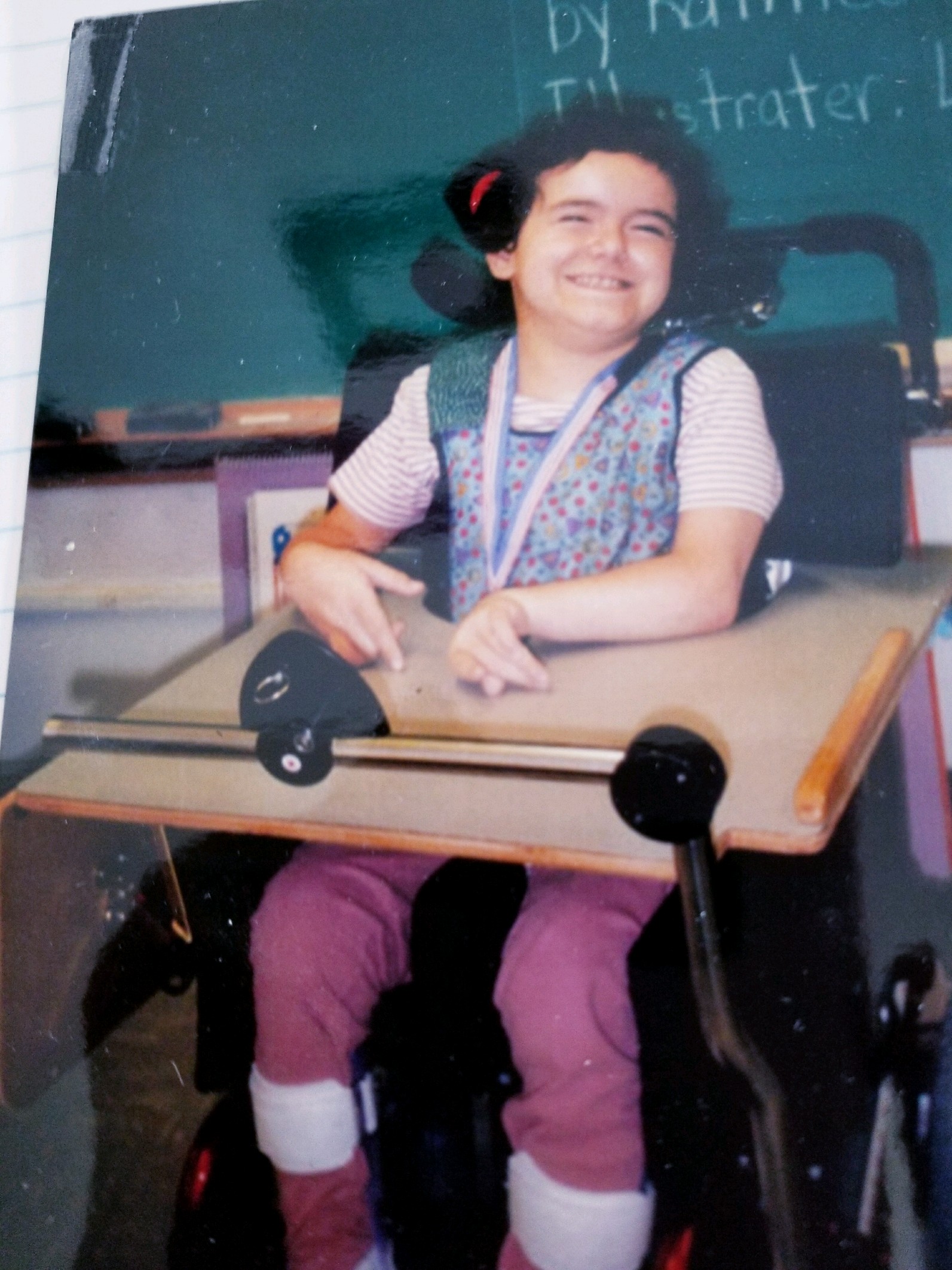
Everything changed the day I met Marianna. She was an energetic third grader who had lots of friends, and it took her forever to get down the hallway as everyone who passed, adults or kids, stopped her to say “Hi”, comment on her outfit, or ask how she was. It didn’t matter that she moved through the hallway in a wheelchair or that she used augmentative and alternative communication (AAC) to communicate. She was a third grader starting another day with her peers.
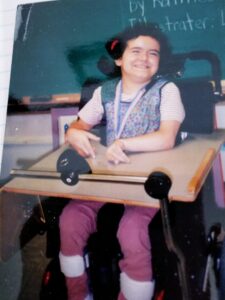
What struck me immediately was how easily she communicated with everyone, even when her AAC device wasn’t within reach. Watching her connect with a look, a grin, a shift of her body made me realize I’d been thinking about communication all wrong.
Marianna was in the general education classroom with a full-time aide, thriving academically and socially. I had never met a student who used AAC who was fully included, sitting beside same-aged peers and participating right alongside them. She sat toward the back of the room for space, her device mounted to her chair, her aide close by, classmates surrounding her at their desks. What I couldn’t stop noticing was how her inclusion felt normal, not performative, not fragile, just expected.
Each time I worked with Marianna, whether it was in the classroom or the speech room, it was clear to me that I was not the only one doing the teaching. I’ll never forget stiing with her, talking about a story that she was writing waiting while she composed the next part on her device. Her body could barely contain the excitement. With each hit of her switch, the anticipation built. She couldn’t wait to share her work with me, and I couldn’t wait to hear it.
I could tell a hundred stories about what Marianna taught me. But if I had to name the one truth that changed my trajectory, it’s this: access isn’t earned, it’s given.
No matter your role or title, you can always be both the teacher and the student.
What’s one thing a client has taught you?
by Megan | Jan 20, 2024 | AAC, blog, tips, training
I want to share my favorite AAC tip with you…
This tip is specifically for those who use an iPad as their communication device. If you have worked with anyone, specifically children, who use an iPad, you know that the “home” button can be very distracting, especially since pressing it will take you out of your communication app. If only there were a way to keep that from happening…enter “Guided Access”!
Guided access is a built-in setting within the accessibility features of all iPads. Once it is set up and enabled, the home button is essentially disabled, and if a user presses the home button, they will be prompted to enter a passcode to disable guided access. Before I continue rambling on about the greatness of guided access, let me show you how to set it up.
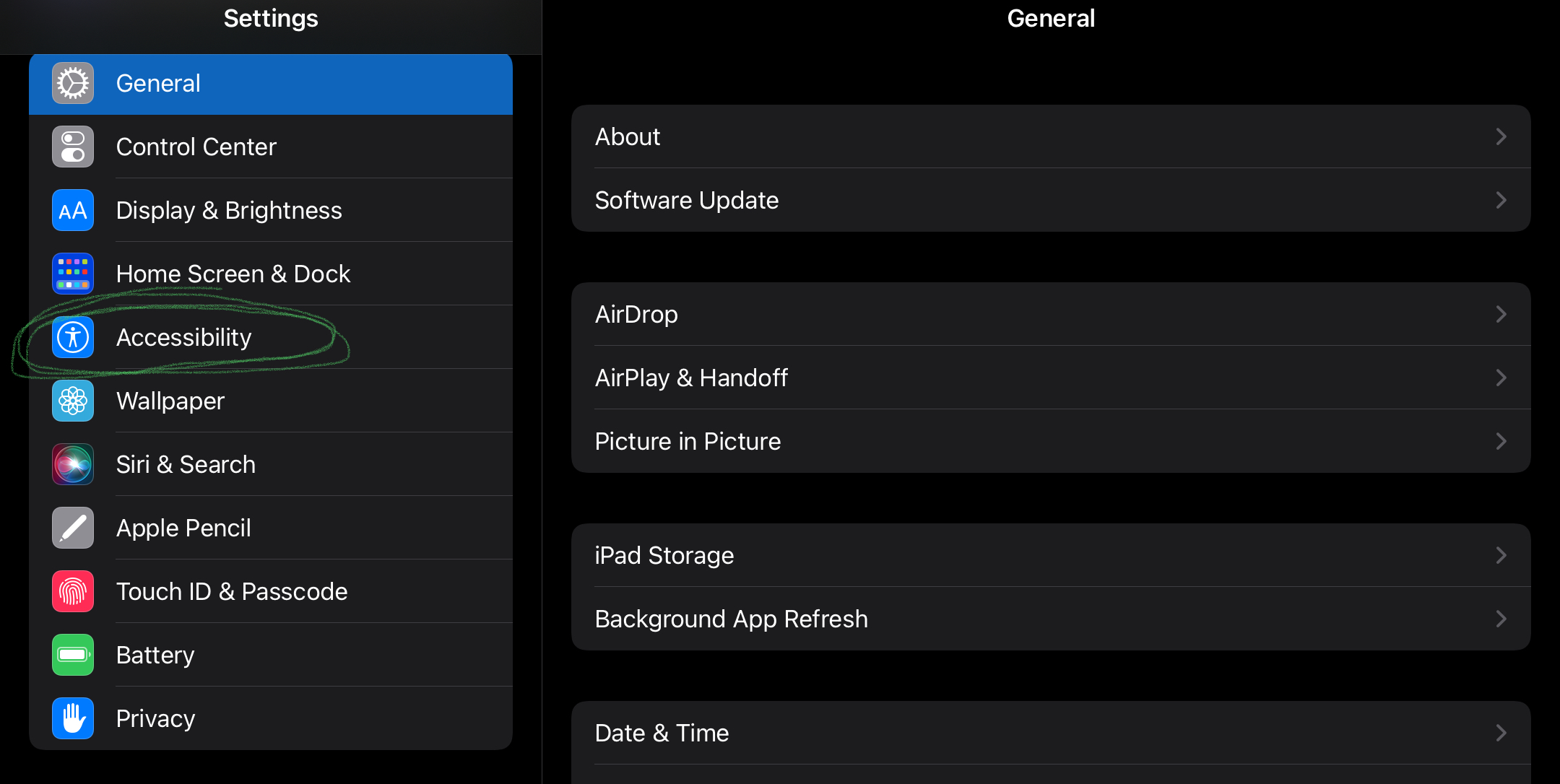
Open “settings” on the iPad.

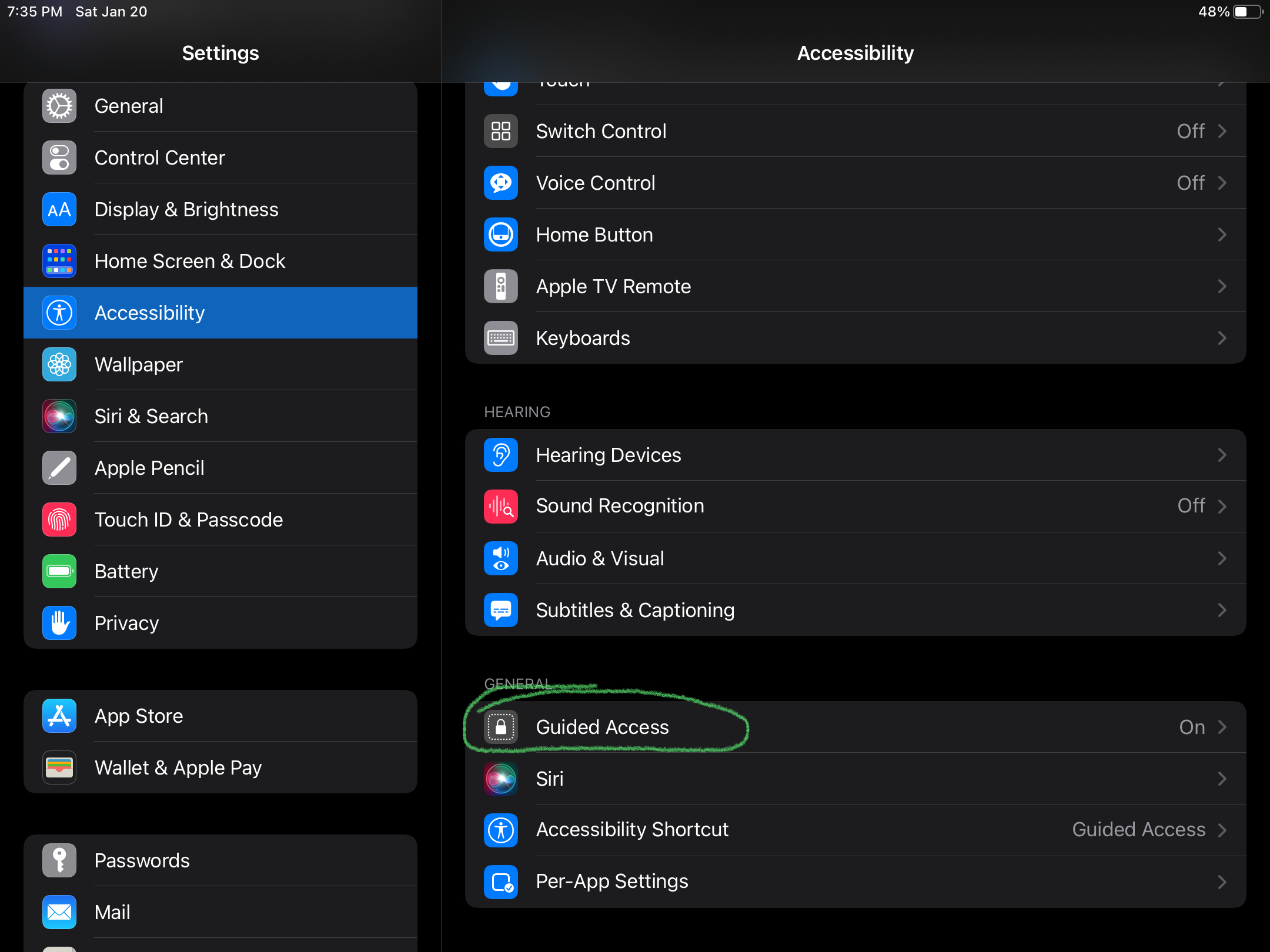
On the left, scroll down to “accessibility” and select it.

On the right, scroll down to “guided access” and select it.
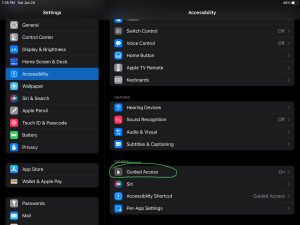
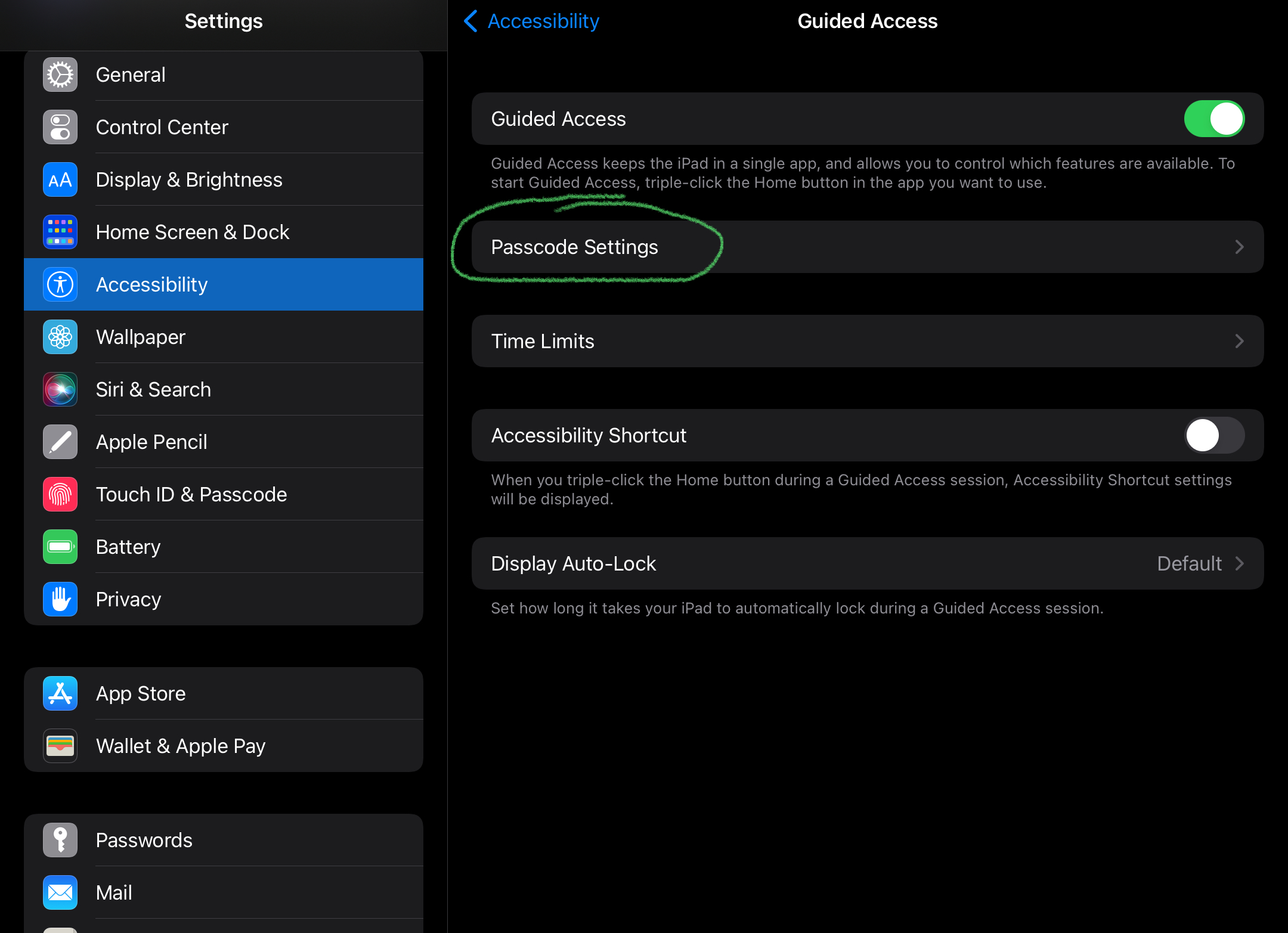
Once “guided access” is selected you can select “passcode settings” to set a passcode that will need to be entered to disable “guided access”. (You will be asked to re-enter the passcode to confirm.)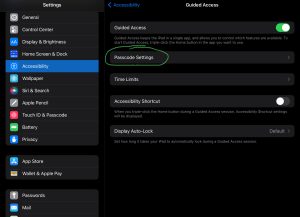
Once your passcode is set up, navigate to the communication app and open it.
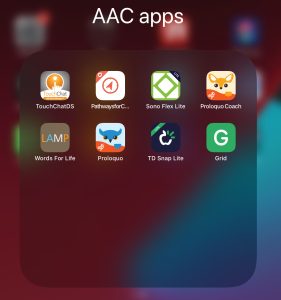
With the communication app open, click the home button three times (triple click) to activate “guided access”.
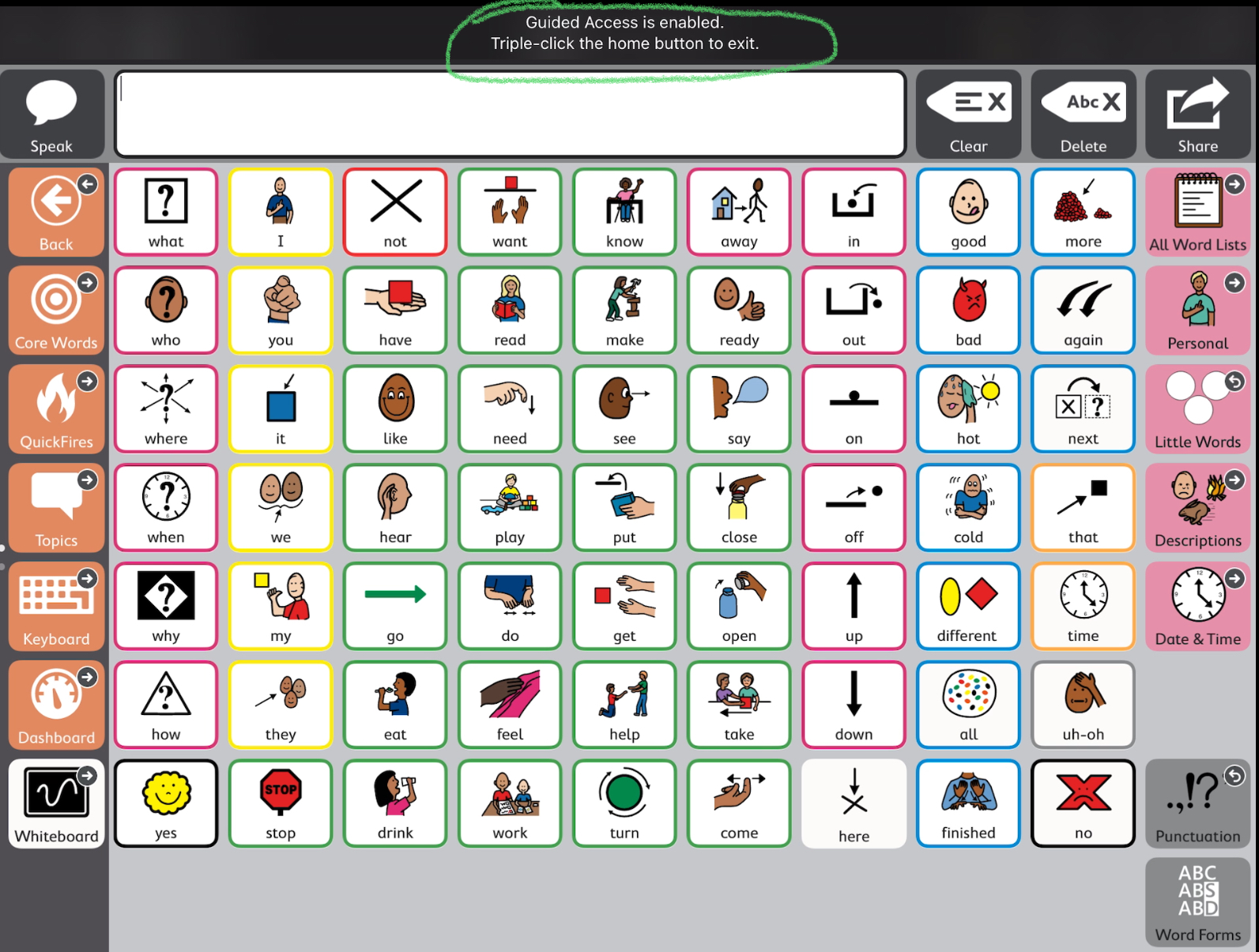
When guided access is enabled and the home button is pressed, a written prompt will appear at the top of the screen to triple-click the home button to disable it.
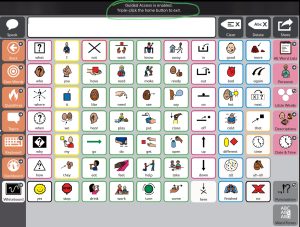
If you triple-click the home button, a pop-up will appear, prompting you to enter the passcode you set during setup.
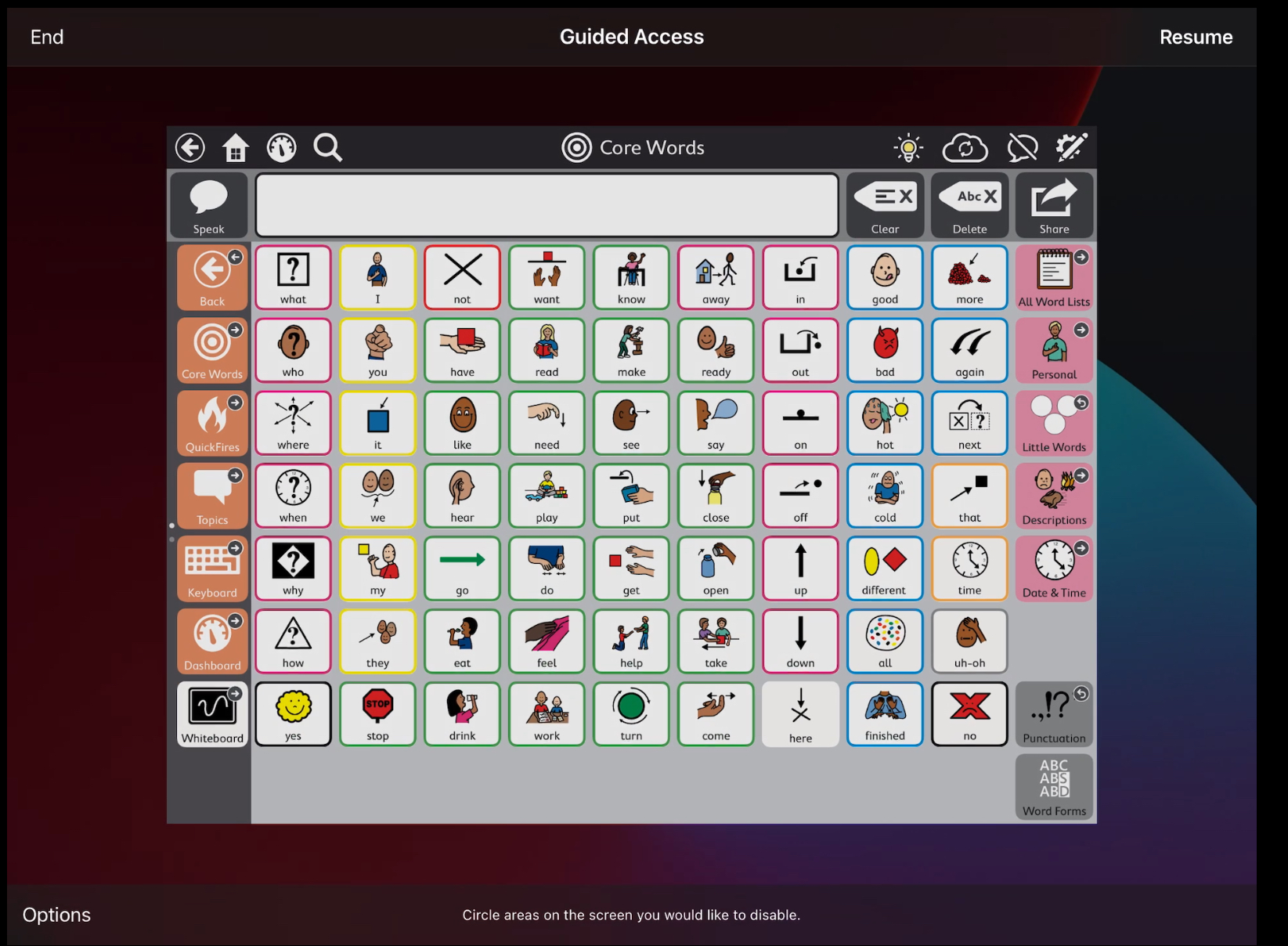
If you enter the correct passcode, you will be prompted to choose “end” or “resume” guided access.

If an incorrect passcode is entered, you will have to wait a designated amount of time before an additional attempt.
Bonus tip!
If the iPad “dies” or runs out of charge, guided access is automatically disabled. Therefore, it never hurts to periodically check to see if guided access is enabled. To do so, just triple-click the home button. If guided access is enabled, the passcode pop-up will appear. If guided access is not enabled, triple-clicking the home button will reactivate it.
by Megan | Jan 13, 2024 | AAC, emergent literacy
How do I get staff to buy into modeling AAC and implementing emergent literacy strategies in their classrooms?
This is one of the questions that I am most frequently asked when talking to other speech-language pathologists (SLPs). While I agree that getting staff buy-in to model AAC and emergent literacy can sometimes feel like a challenge – but, it doesn’t have to! Here’s what I have proposed, introduced, and tried in classrooms I support to help motivate and encourage classroom teachers and staff to continue modeling AAC and implement emergent literacy strategies throughout their day:
- Make sure they understand the terminology.
Special education has 1 BILLION (if not more) acronyms and we often use them so regularly that we forget that everyone may need to learn what they all mean. When talking about different techniques and strategies, take the time to make sure that those you are talking to are clear on what you are saying. It does no good if one or more people leave a discussion about strategies to increase communication and literacy (or anything for that matter) wondering what it was that was discussed and what they can, or should do going forward. If you find yourself using acronyms often, it may be helpful to have a “cheat sheet” or “key” to share that reminds everyone what each acronym stands for.
- Reinforce what they are already doing.
No one likes to only hear what they aren’t doing and what they should do. And, I’m sure there are things that the classroom staff are already doing that are great! It is important to emphasize those things that are going well and that are successful – encouraging others and recognizing what they are doing well goes a long way in building rapport in any relationship!
- Show how they could easily add modeling AAC or emergent literacy into their established routines.
Sometimes, when we hear someone suggest that we “add” something to our day, we immediately stop listening and get defensive. All of us are already doing so much, especially in education, that the idea of adding one more thing is crazy. While this is true, and the last thing we want to do is add more to anyone’s plate – this is a great way to remind those we are supporting that language and literacy are not times of the day – they are always happening and are always around us. Taking the time to show staff simple ways that they can model AAC or implement an emergent literacy strategy into their daily routines can go a long way! Adding in these language and literacy moments doesn’t need to be anything long or time-consuming – it can be a quick mention of the letter of the day while reading instructions, a book, or on a walk about campus, or taking the time to point to a core word or two that naturally comes up during instruction, lunch, etc.
- Ask questions and listen to answers.
This might be the most important tip of all! In all collaborative relationships, it is imperative that everyone involved feels comfortable asking questions and knows that their thoughts, ideas, concerns, etc will be listened to. Take the time to ask questions so you can know how to best support each team, team member, classroom, etc. Ask what their concerns are, how they best learn, what they need more help with, how they like to receive feedback, what area(s) they would like to focus on, etc.
Taking the time to ask these questions and listen to the answers that are given will not only help to build the relationship, it will help guide how you can provide support and feedback as well as know how to help every team member set personal goals surrounding AAC modeling and/or emergent literacy implementation.
- Work together to brainstorm and establish personal goals focusing on these areas.
Once you have established that you are all on the same page, what’s going well, and where more support is needed, it’s time to set some goals. Depending upon how you support classrooms, you may set individual goals with each staff member or you may set goals with the team as a whole, or both. The great thing is that these goals can be personalized to fit everyone’s needs and adjusted as needed. When you are setting these goals, think of it just as you would writing goals for your students, making sure they are meaningful, measurable, and achievable. It’s up to you but I also like to discuss a reward that will be received when a goal is met – to me, this makes it extra motivating and meaningful. A reward could be something physical like a snack food, social such as a shout-out in the staff newsletter, or functional in the form of a set of printed and prepped visuals. Whatever they are, rewards should be as personal as the goals and chosen by the person receiving the reward.
While these are my top 5 tips for helping get classroom buy-in and what has helped me, it is a continual learning process, and keep in mind that some things may need to be added, deleted, tweaked, etc depending upon the teams you are supporting. If you are interested in learning more about this topic and getting access to interest surveys you can give to staff, data sheets, resource links, etc – check out my e-book “AAC & Emergent Literacy Challenge”. This ebook is filled with information on how to get started, strategies to make the challenge successful and fun, questionnaires to gather information and guide challenge creation and implementation, data collection sheets, and more!
If you have additional tips or strategies for classroom buy-in and support – drop them in the comments!

by Megan | Dec 16, 2023 | AAC, aided language input, aided language stimulation, blog, continuing education, core vocabulary, fringe vocabulary, modeling, prompt hierarchy
It’s the busiest time of the year! Wrapping up the year, buying gifts for all you love, finding time to celebrate with all your friends and family, you may feel like you are running around endlessly, the last thing you should have to worry about is making sure you have all of your continuing education units (CEUs) done to renew your licenses and certifications. 🤪
Before you close this window and start running around again, take the time to read to the end of this post, ‘cause I’ve got a way for you to rack up a bunch of CEUs for FREE! **Bonus if you want to learn more about AAC – these CEUs are AAC focused**
Ready to get started? Here we go!

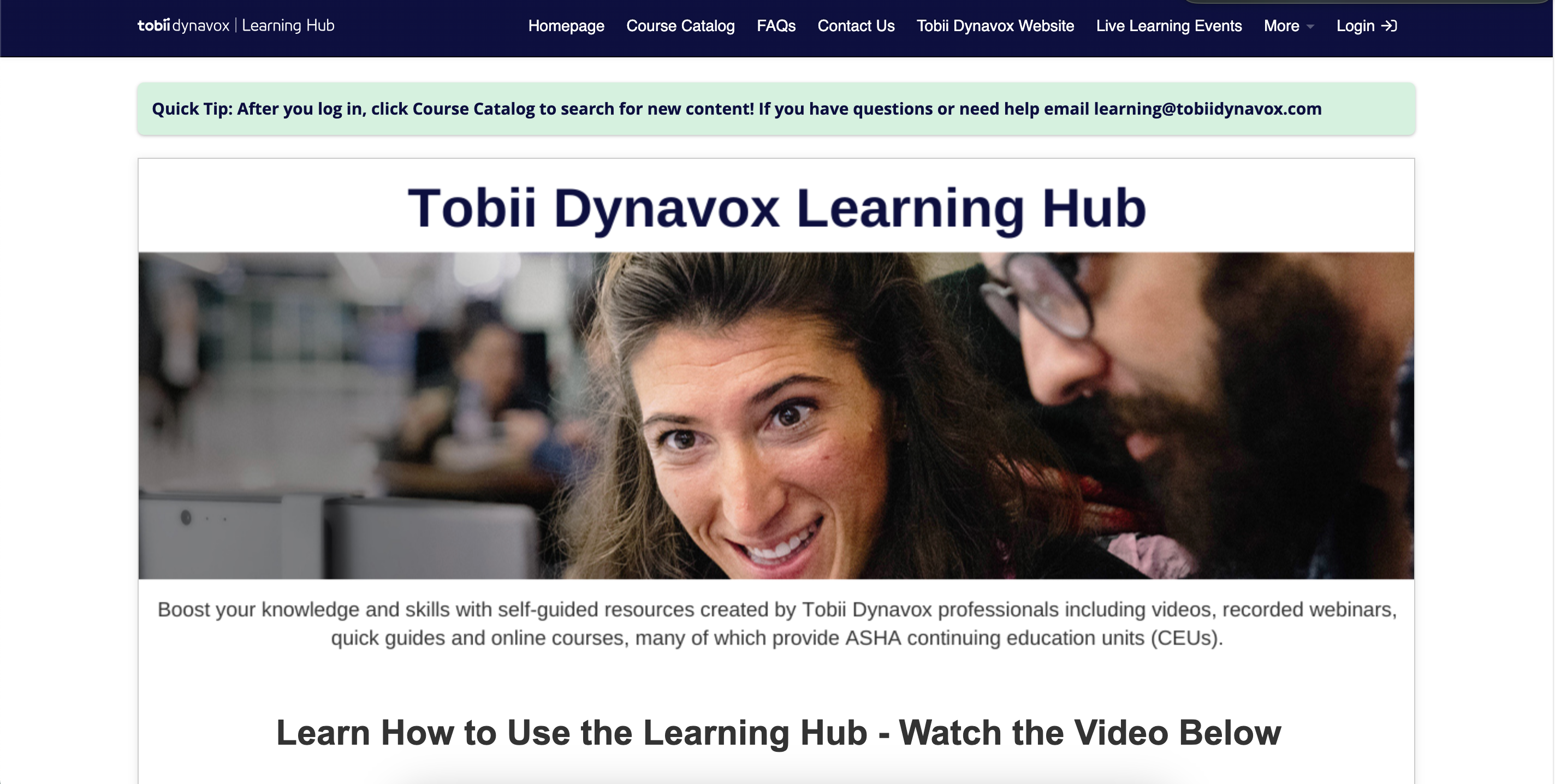
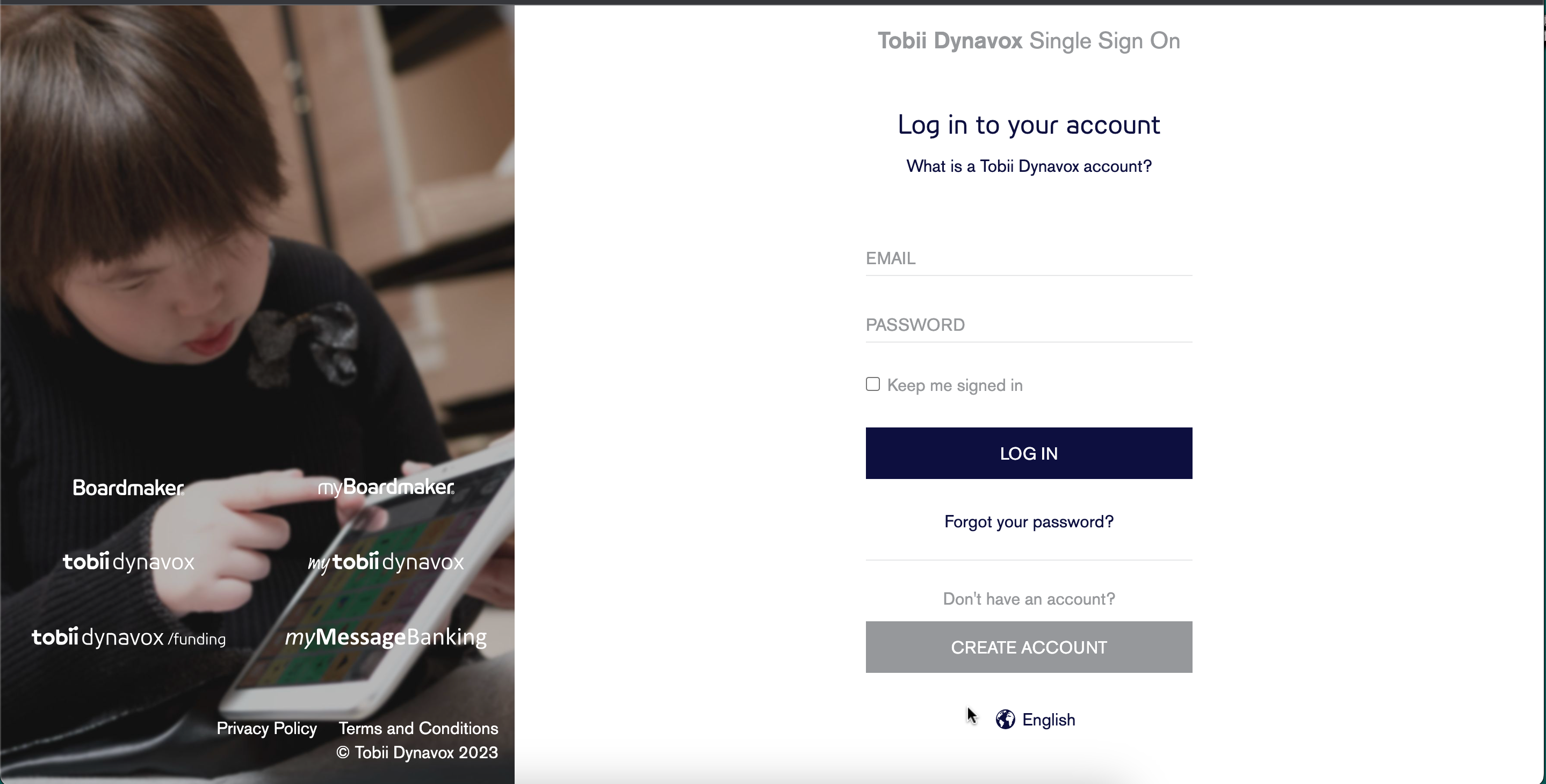
- You will be redirected to a login page where you can create an account or, if you have an account within any Tobii Dynavox or Boardmaker programs, use that account login and password.

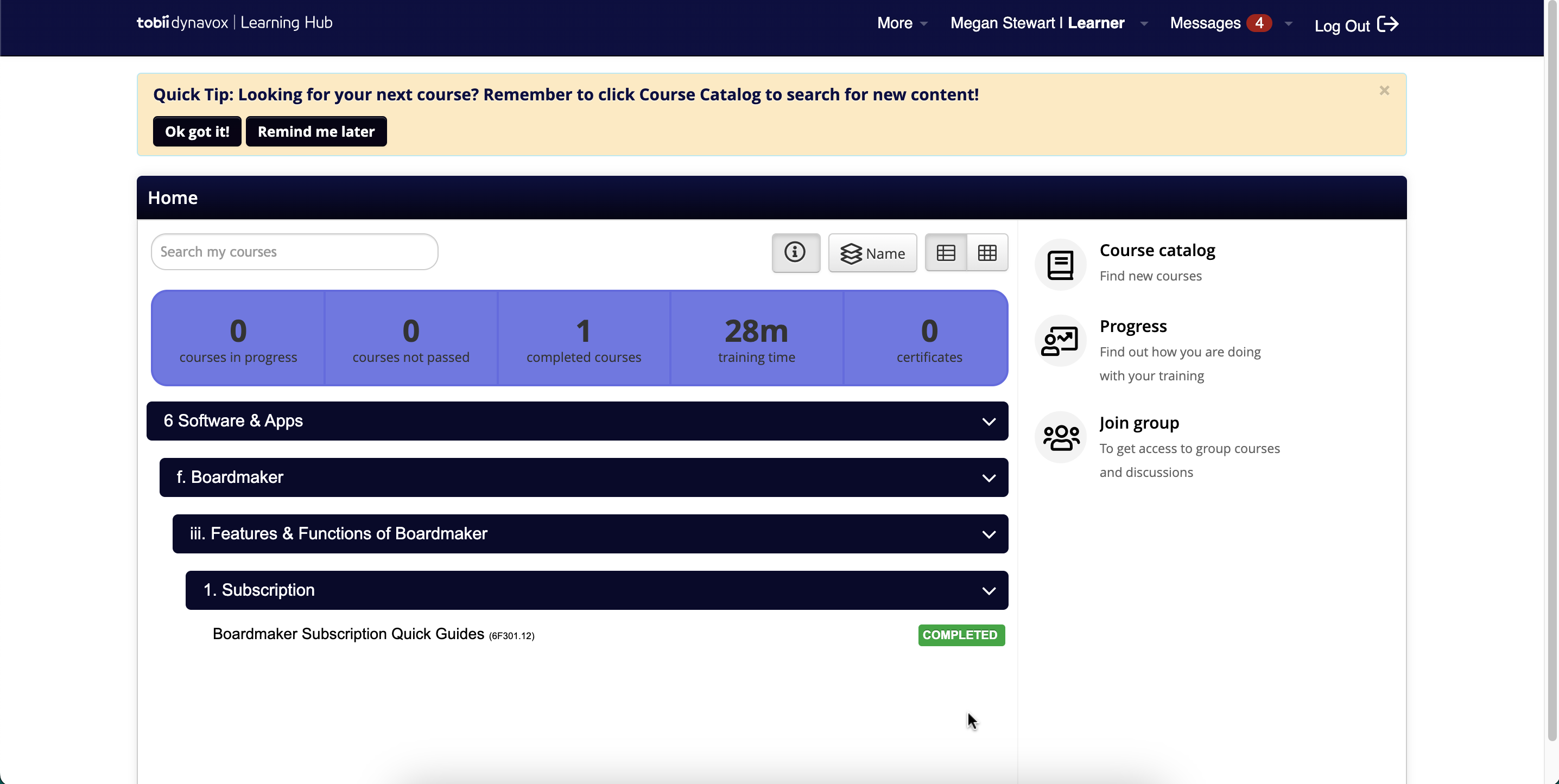
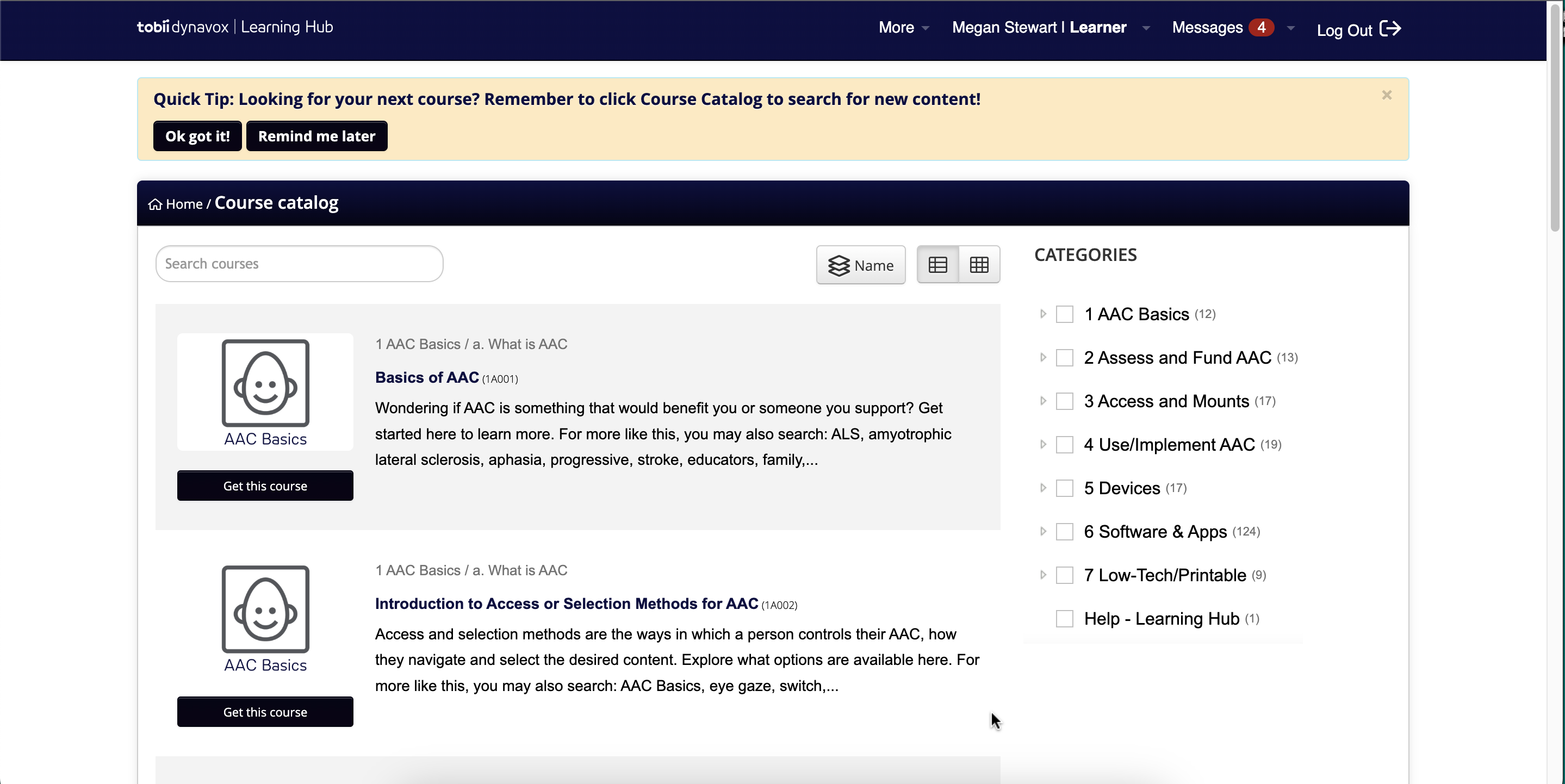
- After you log in you will be redirected to the Learning Hub, where you can start racking up those CEUs! Click on “Course Catalog” to see all the courses offered.

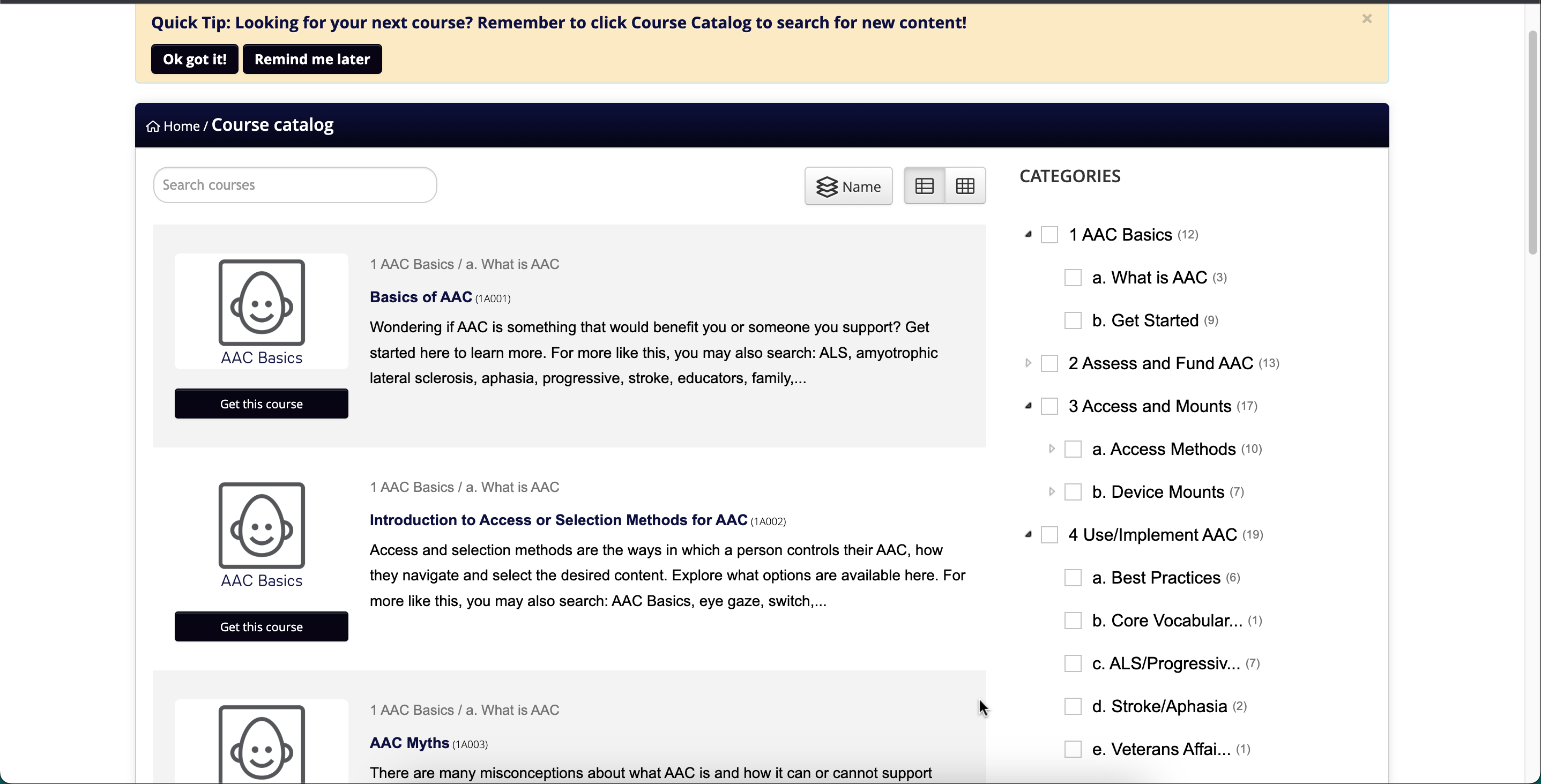
- Once you see the list of courses, you can also open the categories further to see additional specific courses.
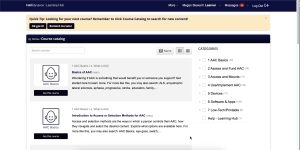
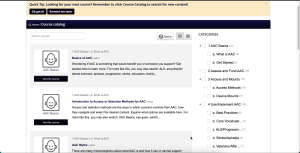
That’s it – you are ready to rack up a bunch of free CEUs to finish out your requirements for the end of the year, or whenever you need it!
If you work through any of these courses and find one that you really like, let us know in the comments so we can check it out too!

Recent Comments